
Personal development is often discussed in relation to personal goals, wellbeing, or lifestyle improvement. However, for leaders, entrepreneurs, and senior decision-makers, personal development carries a deeper meaning.
Leaders who wish to explore this further often begin by speaking with a business consultant in Ireland who understands the pressures facing SME founders.
Many SME owners initially focus on external strategy through business consulting or operational improvements. However, as complexity increases, many leaders realise that sustainable performance depends on personal clarity, discipline, and leadership behaviour.
At this stage, structured support such as business consulting or business mentoring services is often combined with personal development work to strengthen both strategy and leadership capability.
Leaders who invest in personal development operate with greater clarity, consistency, and control under pressure.
What Is Personal Development?
Personal development for business leaders is the process of improving self-awareness, behaviour, and decision-making to lead more effectively as business complexity increases.
Research from Harvard Business Review regularly highlights the connection between self-awareness, leadership behaviour, and organisational performance.
Leadership development research consistently shows that self-awareness and behavioural discipline are strongly linked to long-term organisational performance.
Personal development therefore focuses on strengthening the inner qualities that influence leadership behaviour.
Self-Awareness in Leadership Decision-Making
Leaders who understand their own behaviour, motivations, and decision patterns are better able to manage complex situations.
Self-awareness allows leaders to recognise:
• how they react under pressure
• how their communication affects others
• which habits support effective leadership
• which behaviours may limit organisational progress
When leaders become more aware of their patterns, they can adjust their behaviour to create stronger relationships and clearer decision-making.
Strengthening Leadership Capability
Personal development also supports leadership capability.
As organisations grow, leaders must transition from individual contributors to strategic decision-makers. This transition requires different skills, including delegation, strategic thinking, and team development.
Personal development programmes help leaders build these capabilities gradually.
Structured leadership programmes such as Genius Unlocked are designed to build disciplined leadership habits over time.
These programmes often focus on strengthening the personal qualities that underpin effective leadership.
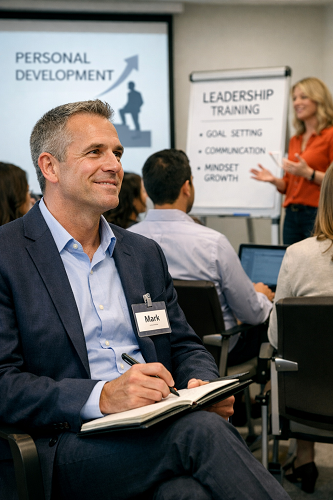
Personal Development Consultant: What Do They Provide?
A personal development consultant works with individuals to help them strengthen the personal capabilities that influence leadership performance.
For example, a founder may struggle to delegate responsibility because they feel personally responsible for every decision. Another leader may avoid difficult conversations with team members, allowing problems to grow over time.
Instead, leaders benefit from examining the personal habits and decision patterns that shape their behaviour.
Structured Personal Growth
Personal development consultants help individuals examine their habits, assumptions, and leadership styles in a structured way.
This often involves:
• identifying behavioural patterns
• clarifying personal values
• strengthening communication skills
• improving decision-making discipline
Through these discussions, leaders gain greater clarity about how their personal behaviour influences the organisation.
This awareness often leads to practical changes that improve both leadership effectiveness and team dynamics.
Supporting Long-Term Leadership Growth
Personal development is not a one-time activity. It is an ongoing process that evolves as leaders encounter new challenges.
Consultants therefore help individuals build habits that support long-term growth.
These habits may include:
• regular reflection on leadership decisions
• seeking feedback from trusted advisors
• strengthening emotional resilience
• maintaining balance between professional and personal priorities
Many entrepreneurs also complement personal development work with structured Business Mentoring for SME Owners support, which allows them to learn directly from experienced advisors who have navigated similar challenges.
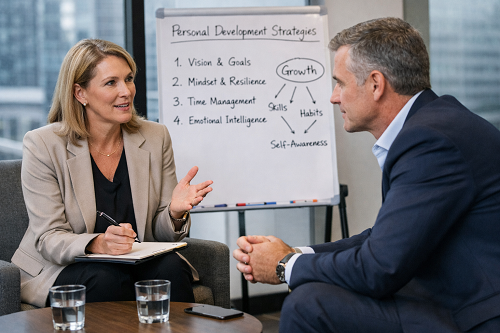
Personal and Life Coach: How Are They Different?
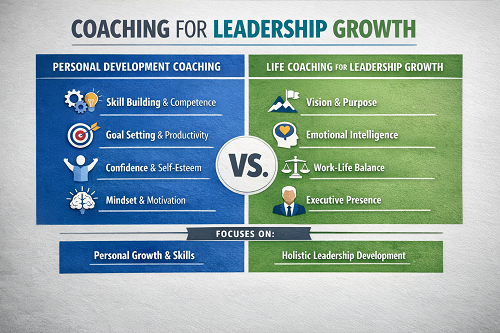
The terms personal development coaching and life coaching are sometimes used interchangeably. While both focus on helping individuals grow, they often operate in slightly different contexts.
Understanding the distinction can help leaders choose the type of support that best matches their goals.
In many cases, the difference lies in the focus of the conversation.
Life coaching typically focuses on broader life goals such as personal wellbeing, relationships, and lifestyle balance. Personal development coaching tends to concentrate more heavily on leadership behaviour, decision-making, and professional growth.
The Focus of Life Coaching
Life coaching usually addresses broader personal questions that influence overall wellbeing and satisfaction.
Common life coaching topics include:
• clarifying personal goals
• improving work–life balance
• strengthening confidence
• building healthier habits
• navigating life transitions
For individuals seeking greater personal clarity or motivation, life coaching can provide useful guidance.
These conversations often focus on helping individuals define the life they want to create and identifying practical steps that support those aspirations.
The Focus of Personal Development Coaching
Personal development coaching, especially when aimed at entrepreneurs or senior leaders, tends to focus on the behaviours and mindset that influence leadership performance.
Topics frequently explored in personal development work include:
• decision-making patterns
• emotional resilience
• leadership communication
• personal discipline
• strategic thinking
Once these patterns become clear, leaders can begin to change them.
Many founders combine personal development work with business mentoring relationships that provide practical insights from experienced entrepreneurs.
When Leaders Benefit from Each Approach
Both approaches can complement one another.
Life coaching may be helpful when individuals are navigating major life transitions or seeking greater personal balance.
Personal development coaching becomes particularly valuable when leadership responsibilities increase and the quality of decisions directly affects the organisation’s success.
For many entrepreneurs, improving personal awareness and behaviour ultimately strengthens the entire organisation.
How Personal Development Impacts Leadership Performance
Personal development has a direct influence on leadership performance.
Organisations are shaped not only by strategy and systems but also by the behaviour of the individuals who lead them. The attitudes, communication style, and decision patterns of leaders often influence the culture of the entire organisation.
When leaders invest in personal growth, the effects frequently extend beyond the individual.
Teams become more aligned. Communication improves. Strategic decisions become clearer.
Personal Development as a Leadership Advantage
Leadership behaviour directly influences organisational performance. Personal development improves decision quality, communication, and team alignment.
Personal development also helps leaders respond better to complexity. As businesses grow, leaders face more competing priorities, more difficult conversations, and more scrutiny. Without deliberate self-development, it becomes easy to rely on old habits that no longer fit the scale of the organisation.
Structured development work helps leaders replace reactive habits with more deliberate ones.
Self-Reflection and Decision Quality
One of the most important outcomes of personal development is improved self-reflection.
Leaders who regularly evaluate their own behaviour gain insight into how their actions affect others.
For example, a leader who recognises a tendency to react defensively to criticism can consciously work to respond more constructively. Over time, this change can transform team dynamics.
Self-reflection therefore strengthens decision quality because leaders become more aware of the assumptions and emotions that influence their judgement.
Emotional Intelligence in Leadership
Emotional intelligence plays a crucial role in leadership effectiveness.
Leaders with strong emotional awareness are better able to manage conflict, communicate clearly, and build trust within their teams.
Personal development programmes often focus on strengthening emotional intelligence by helping leaders recognise:
• their emotional responses to stress
• how their behaviour influences team morale
• how to communicate difficult messages effectively
These capabilities help create environments where employees feel supported and motivated.
Developing Leadership Confidence
Confidence is another important aspect of leadership.
However, confidence in leadership does not mean ignoring uncertainty. Instead, it involves the ability to evaluate complex situations calmly and make decisions with clarity.
Personal development helps leaders build this confidence by strengthening their understanding of both their strengths and their limitations.
Over time, leaders who engage in structured personal development become more comfortable navigating uncertainty.
In many cases, entrepreneurs also seek guidance from a business consultant in Ireland who can provide strategic perspective alongside personal growth.
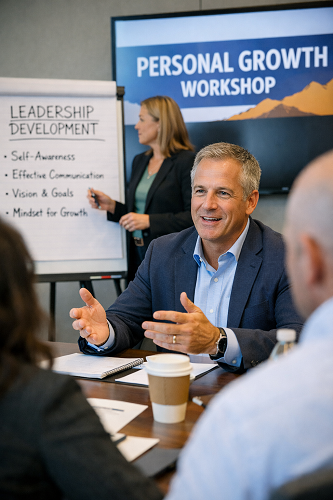
Situations Where Leaders Invest in Personal Development
Leaders typically seek personal development support at specific pressure points:
• transitioning from founder-led decisions to team-based leadership
• managing increased complexity as the business scales
• improving communication with senior teams
• preparing for succession or leadership restructuring
• handling sustained pressure, uncertainty, or burnout
These situations often signal the need for more structured leadership development.
Understanding Behavioural Patterns
Every leader develops behavioural patterns over time. These patterns influence how they communicate, respond to pressure, and make decisions.
For example, some leaders may:
• avoid difficult conversations
• delay decisions during uncertainty
• take on too much responsibility
• react defensively when challenged
Individually, these behaviours may appear minor. Over time, however, they can shape the entire culture of the organisation.
A founder who avoids confrontation may allow underperformance to continue for months. A leader who refuses to delegate may unintentionally slow organisational growth.
By recognising these patterns, leaders can begin to change them.
Personal development consultants often use structured feedback, reflective questioning, and leadership assessments to help individuals identify these patterns.
Why Feedback Matters
Feedback plays a critical role in developing self-awareness.
Yet many leaders receive very little honest feedback. Employees may hesitate to speak openly with senior executives because they fear negative consequences.
As a result, leaders may believe their communication style is clear and supportive when, in reality, it may create confusion or tension.
Structured leadership feedback helps address this problem.
Leaders who actively seek feedback gain valuable perspective on how their behaviour affects others. Over time, this process strengthens both leadership effectiveness and organisational trust.
The Role of Reflection
Reflection is another essential element of self-awareness.
Leaders who take time to reflect on their decisions and behaviour often develop deeper insight into their leadership style.
Reflection can involve simple practices such as:
• reviewing important decisions after major meetings
• considering alternative approaches to leadership challenges
• examining emotional responses during conflict
• evaluating how communication affects team performance
Through reflection, leaders gradually recognise patterns that influence their effectiveness.
Over time, this awareness allows them to adjust their behaviour deliberately rather than reacting automatically to circumstances.

Building Emotional Resilience
Leadership often involves navigating uncertainty, pressure, and constant decision-making. In these situations, emotional resilience becomes essential.
Emotional resilience refers to the ability to remain calm, focused, and constructive during periods of stress or difficulty.
Without resilience, leaders may react impulsively to setbacks or allow short-term frustration to influence strategic decisions.
Developing emotional resilience helps leaders maintain clarity even when circumstances become challenging.
Developing Consistent Leadership Habits
Personal development becomes meaningful when it translates into daily behaviour. Many leaders understand the importance of reflection, discipline, and emotional awareness. However, without consistent habits, these insights rarely influence long-term performance.
Consistent leadership habits help transform ideas into practical action.
Over time, disciplined habits create stability inside the organisation because leaders respond to challenges with greater consistency.
Managing Pressure and Uncertainty
Entrepreneurs and executives frequently face situations where information is incomplete and outcomes remain uncertain.
Major strategic decisions may involve financial risk, team dynamics, and long-term organisational consequences.
In these moments, emotional resilience allows leaders to remain composed and analytical.
Rather than reacting emotionally, resilient leaders pause, gather information, and evaluate the situation carefully before acting.
This disciplined approach helps organisations avoid reactive decisions that may create larger problems later.
Learning from Setbacks
Setbacks are inevitable in business. Markets change, strategies fail, and unexpected challenges appear.
Leaders who lack resilience may interpret setbacks as personal failure. This perspective can lead to hesitation or excessive caution in future decisions.
Resilient leaders approach setbacks differently.
Instead of focusing on failure, they examine what can be learned from the experience. A strong mindset for SME leaders helps transform mistakes into opportunities for improvement.
This perspective also helps teams remain motivated because mistakes are treated as learning opportunities rather than reasons for blame.
Strengthening Emotional Stability
Personal development programmes often include techniques designed to strengthen emotional stability.
• mindfulness practices
• stress-management strategies
• improved communication habits
• better prioritisation of responsibilities
Although these methods may appear simple, their impact on leadership effectiveness can be significant.
Leaders who manage stress effectively tend to communicate more clearly, make more balanced decisions, and maintain stronger relationships with their teams.
Many founders also benefit from combining personal development work with private advisory support, where sensitive leadership challenges can be discussed confidentially.

Communication Mastery for Leaders
Communication is one of the most visible expressions of leadership. Every decision, instruction, and strategic message passes through communication before it influences the organisation.
Leaders who communicate effectively tend to create organisations where teams feel aligned and confident in the direction of the business.
When communication is unclear, the opposite often occurs. Teams may become uncertain about priorities, responsibilities, or expectations.
Clarity in Leadership Communication
Clarity is the foundation of strong communication.
Leaders frequently operate in complex environments involving financial pressures, operational challenges, and strategic decisions. If these ideas are communicated vaguely, teams struggle to translate them into practical action.
Clear communication usually involves:
• explaining priorities in simple language
• outlining expectations for roles and responsibilities
• confirming understanding during discussions
• summarising key decisions after meetings
These habits may appear straightforward, yet they significantly improve organisational alignment.
When employees understand both the direction of the company and their role within it, performance tends to improve.
Listening as a Leadership Skill
Many discussions about communication focus on speaking. However, listening is equally important.
Leaders who listen carefully gain valuable insight into how their organisation is functioning. Employees often notice operational challenges long before senior management becomes aware of them.
Active listening involves:
• allowing others to speak without interruption
• asking clarifying questions
• acknowledging different viewpoints
• demonstrating openness to feedback
These behaviours create a culture where employees feel comfortable sharing concerns or ideas.
Over time, organisations with strong communication habits tend to identify problems earlier and respond more effectively.
Many SME founders also strengthen communication skills through business mentoring relationships, where experienced advisors challenge assumptions and offer perspective.

Handling Criticism as a Founder
For founders and senior leaders, the ability to handle criticism constructively is essential.
Without this ability, leaders may become defensive or dismissive. Over time, this behaviour discourages honest feedback and weakens decision-making.
Personal development helps leaders view criticism differently.
In situations where leadership pressure becomes personal, confidential Personal Advisory for Business Leaders may also provide valuable perspective.
Separating Emotion from Feedback
Criticism often triggers emotional responses. Leaders may feel that criticism challenges their competence or authority.
However, constructive criticism rarely reflects personal failure. Instead, it usually highlights an opportunity to improve.
Leaders who separate emotional reactions from feedback can evaluate criticism more objectively.
This approach allows them to ask useful questions such as:
• Is there truth in this feedback?
• What assumptions might I have missed?
• How can this insight improve future decisions?
By focusing on learning rather than defending, leaders strengthen both their personal development and organisational performance.
In many growing organisations, founders combine personal development work with guidance from a trusted business advisor in Ireland who understands the practical challenges facing SMEs.
Encouraging Open Dialogue
Healthy organisations encourage open discussion.
If employees feel that criticism will lead to negative consequences, they may remain silent even when problems emerge.
Leaders therefore play a crucial role in shaping the environment around feedback.
They can encourage constructive dialogue by:
• acknowledging criticism calmly
• thanking individuals for raising concerns
• evaluating suggestions thoughtfully
• explaining decisions transparently
These behaviours demonstrate that feedback is valued rather than punished.
When employees see leaders respond constructively to criticism, they become more willing to share ideas and concerns.
Some leaders also explore sensitive feedback topics with a business consultant for SMEs, who can provide objective perspective without internal organisational pressure.

Personal Discipline and Structure
Leadership often involves balancing multiple responsibilities simultaneously. Without strong personal discipline, leaders may struggle to manage priorities effectively.
Personal discipline refers to the ability to maintain consistent habits that support long-term goals.
For entrepreneurs and executives, discipline is closely connected to how time, attention, and energy are managed.
Leaders seeking structured accountability often explore professional structured Business Coaching for SME Owners support for decision-making and leadership development.
Why Consistency Matters More Than Intensity
Small, repeated improvements often have greater impact than occasional large efforts.
This is where personal structure becomes important. Development needs rhythm.
Useful routines may include:
• weekly reflection on decisions
• monthly review of leadership habits
• regular feedback conversations
• scheduled time for strategic thinking
These routines are simple, but they create lasting change. Over time, consistent habits strengthen confidence, clarity, and leadership maturity.
Managing Priorities
Leaders frequently face competing demands. Strategic decisions, operational challenges, team management, and external relationships all require attention.
Without clear prioritisation, leaders may become overwhelmed or distracted by urgent but less important tasks.
Personal development often focuses on helping leaders identify which activities create the greatest impact.
Effective prioritisation typically involves:
• defining clear strategic objectives
• delegating operational responsibilities where possible
• scheduling focused time for strategic thinking
• limiting unnecessary distractions
By concentrating on high-impact activities, leaders maintain momentum while avoiding burnout.
Building Productive Habits
Personal discipline is supported by daily habits.
These habits help leaders maintain focus even during demanding periods.
Examples include:
• starting the day with clear priorities
• scheduling uninterrupted time for important work
• reviewing key decisions regularly
• maintaining consistent reflection routines
Over time, these habits create structure that supports both personal growth and organisational stability.
Long-Term Growth Planning
Personal development is most effective when it is approached as a long-term process rather than a short-term activity.
Professional leadership development standards are also supported by the Chartered Management Institute, which provides guidance on management capability and long-term growth.
Because of this, personal development must evolve alongside the organisation.
Personal Development and Organisational Culture
Leadership behaviour strongly influences organisational culture. Employees often observe how senior leaders communicate, handle pressure, and respond to mistakes.
When leaders prioritise personal development, they demonstrate a commitment to continuous improvement. This behaviour encourages teams to adopt similar attitudes toward learning and growth.
Over time, this environment supports innovation and collaboration.
Many organisations therefore view personal development not only as an individual activity but also as an investment in organisational culture and long-term performance.
Setting Long-Term Development Goals
Leaders often benefit from defining personal development goals that extend beyond immediate business priorities.
These goals might include:
• strengthening strategic thinking
• improving communication skills
• developing stronger emotional resilience
• building governance awareness
• preparing for succession planning
By identifying long-term development objectives, leaders create a roadmap for personal growth that supports the future direction of the organisation.
Continuous Learning
Successful leaders often share a commitment to continuous learning.
This learning may involve reading, attending leadership programmes, or working with experienced advisors who challenge assumptions and provide perspective.
Learning from others allows leaders to expand their thinking and avoid repeating mistakes that others have already encountered.
Over time, continuous learning strengthens leadership capability and helps organisations adapt to changing market conditions.

Why Experienced Advisors Matter for Leadership Growth
Personal development becomes significantly more effective when guided by experienced advisors.
Leaders benefit from external perspective because internal environments often limit honest feedback. As responsibility increases, fewer people challenge decision-making directly.
Experienced advisors bring:
• objective insight into leadership behaviour
• pattern recognition from working with multiple organisations
• structured frameworks for decision-making and communication
• accountability that ensures development translates into action
This external perspective helps leaders move from awareness to consistent behavioural change.
When Should You Invest in Personal Development Support?
Consider structured personal development support when:
• Leadership responsibility increases
• Decision pressure intensifies
• Behavioural blind spots emerge
• Communication friction increases
• Emotional strain rises
Early development strengthens future performance.
FAQ
Personal development in leadership focuses on improving self-awareness, decision-making, communication, and emotional resilience to enhance organisational performance.
No. Life coaching focuses on broader personal goals, while personal development for leaders focuses on behaviour, mindset, and decision-making in a professional context.
When decision pressure increases, communication challenges emerge, or leadership responsibilities expand.
Yes. Leadership behaviour directly affects team alignment, decision quality, and organisational stability.
No. It complements strategy by improving how leaders execute decisions, not what decisions are made.
Work With an Experienced Business Advisor
If leadership demands are increasing, the challenge is not strategy alone. It is how decisions are made under pressure.
Personal development strengthens:
• decision clarity
• communication discipline
• emotional resilience
• leadership consistency
Explore our private advisory services and build the behavioural discipline required to lead effectively as complexity grows.
This is not self-improvement.
This is leadership capability.