
Leadership often carries an invisible weight. While organisations may appear structured from the outside, many critical decisions ultimately rest with a small number of individuals. Founders, executives, and senior leaders frequently operate in environments where the pressure to make the right decision is constant.
Many founders facing complex leadership decisions begin by speaking with a business consultant in Ireland who understands the pressures associated with growth, governance, and strategic responsibility.
Personal advisory is different from traditional consulting or coaching. It focuses on helping individuals navigate complex professional and personal decisions while maintaining clarity, resilience, and strategic perspective.
Personal advisory provides a confidential environment where leaders can examine these questions without organisational constraints.
This pillar explores the role of personal advisory support, how it differs from other forms of coaching or mentoring, and why many senior leaders rely on trusted advisors to help them navigate complex professional and personal challenges.
What Does a Personal Advisor Do?
Personal advisory is a structured, confidential engagement focused on supporting leaders in navigating complex personal and professional decisions.
It sits between:
- business strategy
- leadership development
- personal direction
Unlike coaching, which focuses on behaviour, or mentoring, which provides experience, personal advisory focuses on clarity.
It helps leaders:
- step back from daily pressure
- think long-term
- evaluate decisions beyond immediate outcomes
- align business with personal direction
For leadership development, many leaders also explore the Business Coaching for SME Owners.
Supporting Complex Decision-Making
Senior leaders frequently encounter decisions that carry both professional and personal consequences.
Examples may include:
- whether to expand the organisation into new markets
- whether to sell or exit the business
- how to structure leadership succession
- how to manage conflicts within the leadership team
These decisions often involve uncertainty and competing priorities. Personal advisors help leaders examine these situations carefully before taking action.
Through structured discussions, advisors help leaders clarify their thinking and consider different perspectives.
This process allows leaders to make decisions with greater confidence.
Providing Confidential Perspective
Confidentiality is one of the most valuable aspects of personal advisory relationships.
Leaders cannot always discuss sensitive issues openly within their organisations. Conversations with colleagues or board members may carry political implications.
A personal advisor provides a neutral perspective that allows leaders to speak candidly.
This confidential environment encourages deeper reflection on issues that might otherwise remain unaddressed.
Helping Leaders Maintain Strategic Perspective
Operational demands can easily consume a leader’s attention.
Emails, meetings, and immediate challenges often leave little time for reflection. Over time, this constant activity can narrow a leader’s perspective.
Personal advisors help leaders reconnect with the broader strategic context.
By creating space for reflection, advisors encourage leaders to step back from immediate pressures and evaluate long-term priorities.
This perspective is particularly valuable when organisations are experiencing rapid growth or significant change.
Many founders combine personal advisory discussions with structured Executive Coaching for Senior Leaders to strengthen both strategic clarity and leadership performance.

Personal Mentor: When Is It Appropriate?
While personal advisors provide structured guidance, many leaders also benefit from relationships with personal mentors.
Mentorship differs slightly from advisory work. A mentor typically shares personal experience and practical insights based on their own career journey. Rather than analysing a specific decision framework, mentors often provide perspective drawn from real-world experience.
For leaders navigating unfamiliar situations, this perspective can be extremely valuable.
Some founders complement advisory discussions with experienced business mentoring services, gaining perspective from leaders who have navigated similar journeys.
The Role of Personal Mentorship
Mentors often serve as trusted guides who help leaders interpret complex situations.
Their role may involve:
- sharing lessons learned from similar challenges
- providing encouragement during difficult transitions
- offering informal guidance on leadership decisions
- helping individuals broaden their professional networks
Because mentors typically have extensive experience in leadership roles, their advice can help individuals avoid common mistakes.
When Leaders Benefit Most From Mentorship
Personal mentorship tends to be particularly valuable during periods of transition.
Examples include:
- early stages of leadership responsibility
- rapid career advancement
- starting a new business
- preparing for organisational succession
During these transitions, leaders may face unfamiliar challenges. Mentors can provide reassurance and perspective drawn from their own experience.
Some leaders complement advisory conversations with experienced Business Mentoring for SME Owners.
Mentorship vs Advisory Support
Although mentorship and advisory relationships share similarities, they serve different purposes.
Mentorship usually involves informal guidance based on personal experience. Personal advisory, by contrast, tends to follow a more structured approach that focuses on analysing decisions and exploring strategic implications.
Both relationships can coexist effectively.
Many leaders maintain mentorship relationships while also working with advisors who help them examine complex decisions in greater depth.

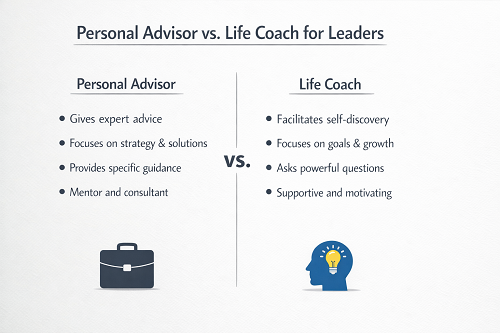
Personal Advisory vs Life Coaching
The terms personal advisory and life coaching are sometimes used interchangeably. Although they share certain similarities, they serve different purposes and operate in different contexts.
Life coaching generally focuses on helping individuals improve aspects of their personal lives. A life coach may help clients clarify personal goals, strengthen habits, or develop confidence in areas such as relationships, wellbeing, or personal growth.
Personal advisory, by contrast, typically operates within the context of leadership and professional responsibility.
While personal advisory may address personal questions, those questions often intersect with strategic decisions about business, leadership, and long-term direction.
For founders and senior executives, the boundary between professional and personal decision-making is often blurred. Their identity, financial exposure, and personal values may all influence the choices they make for their organisations.
Personal advisory recognises this complexity.
In situations where operational systems or strategy require deeper analysis, structured business consulting services support may also be appropriate.
The Focus of Life Coaching
Life coaching usually focuses on helping individuals achieve personal goals and improve overall wellbeing.
Common life coaching topics include:
- improving personal confidence
- developing better habits
- managing work–life balance
- setting meaningful life goals
- building resilience during life transitions
Life coaching typically emphasises motivation and personal development techniques.
For many individuals, this support can be valuable in helping them clarify personal priorities and strengthen their sense of purpose.
The Focus of Personal Advisory
Personal advisory addresses questions that arise from leadership responsibility.
These questions often involve strategic or professional implications, such as:
- balancing business risk with personal risk
- preparing for leadership succession
- deciding whether to sell or expand a business
- managing conflicts within leadership teams
- redefining identity after exiting a company
Rather than focusing solely on personal wellbeing, personal advisory helps leaders examine how their personal decisions influence the organisations they lead.
When Leaders Choose Personal Advisory
Many leaders turn to personal advisory support when they encounter decisions that require both professional judgement and personal clarity.
Examples include:
- founders preparing for partial or full exit
- executives considering significant career changes
- leaders managing complex stakeholder relationships
- entrepreneurs navigating rapid business growth
In these situations, personal advisory conversations help leaders examine their options carefully while maintaining a broader strategic perspective.
Leaders exploring questions of personal direction often complement advisory discussions with structured Personal Development for Business Leaders programmes that strengthen self-awareness and resilience.
When Should a Founder Seek Confidential Personal Support?
Founders and senior leaders frequently carry responsibilities that few others inside the organisation fully understand. While leadership teams and advisors may provide operational support, certain decisions remain deeply personal.
These decisions often involve risk, identity, and long-term direction.
Confidential personal advisory support becomes particularly valuable during moments when leaders must evaluate choices that affect both the organisation and their own future.
In particularly sensitive situations, confidential private advisory engagement provides a secure environment for honest reflection and strategic clarity.
Navigating Major Strategic Decisions
One situation where founders often seek personal advisory support is during major strategic decisions.
These decisions may involve:
- entering new markets
- restructuring the organisation
- accepting external investment
- pursuing mergers or acquisitions
Each of these choices can significantly alter the trajectory of the business.
Advisory conversations allow founders to examine potential outcomes carefully before committing to a particular path.
This structured reflection often leads to clearer, more confident decision-making.
Managing Leadership Isolation
Leadership isolation is a common experience among founders.
As businesses grow, founders may feel that fewer people fully understand the pressures they face. Employees may look to them for answers, investors may expect decisive action, and stakeholders may depend on their judgement.
In this environment, leaders may hesitate to express uncertainty openly.
Confidential advisory relationships provide a space where founders can discuss their concerns honestly.
By speaking openly about challenges, leaders often gain new insights that strengthen their ability to guide the organisation.
Preparing for Organisational Transition
Another time when founders seek personal advisory support is during periods of transition.
Transitions may include:
- stepping back from operational leadership
- preparing for succession
- restructuring the leadership team
- redefining personal goals after business success
These transitions can be emotionally complex.
Founders may feel both excitement about new opportunities and uncertainty about their future role.
Advisory conversations help leaders explore these feelings while considering the strategic implications of their decisions.
Founders navigating major transitions often benefit from structured Business Coaching for SME Owners support that strengthens leadership clarity during periods of change.

Situations Where Leaders Seek Personal Advisory
Personal advisory becomes particularly valuable in situations such as:
- uncertainty about long-term direction
- feeling misaligned despite business success
- preparing for transition, exit, or succession
- balancing business demands with personal priorities
- navigating high-pressure decisions with long-term impact
These are not operational issues. They are leadership and identity questions.
When Leaders Benefit from Personal Advisory
Personal advisory becomes valuable when:
• making high-stakes decisions with personal consequences
• preparing for exit or succession
• experiencing leadership isolation
• managing investor or board pressure
• navigating career or identity transition
Founder Isolation and Decision Pressure
Many founders begin their entrepreneurial journey surrounded by collaborators, partners, or early supporters. However, as the organisation grows and leadership responsibility becomes more concentrated, founders often experience increasing levels of isolation.
This isolation rarely appears suddenly. Instead, it develops gradually as the founder becomes the central decision-maker in the organisation.
Employees look to the founder for direction. Investors expect strategic leadership. Customers depend on the company’s stability. Over time, the founder may realise that very few people share the full weight of these responsibilities.
Personal advisory support can play an important role in helping leaders manage this pressure.
Why Founder Isolation Occurs
Founder isolation typically emerges from the structure of leadership itself.
In growing organisations, the founder often holds ultimate authority for critical decisions such as:
- long-term strategy
- financial risk management
- leadership appointments
- organisational restructuring
- investor relationships
Because these decisions influence the entire organisation, founders may feel reluctant to discuss their uncertainties openly.
While senior executives can provide operational input, the founder may still carry the final responsibility.
This concentration of authority can create emotional distance between the founder and the rest of the organisation.
The Impact of Decision Pressure
Decision pressure can influence leadership behaviour in several ways.
Some leaders become overly cautious, delaying decisions because the consequences feel significant. Others may become overly decisive, moving quickly without fully evaluating the risks.
Both reactions can create instability.
Sustained decision pressure may also affect a leader’s wellbeing. Long hours, constant responsibility, and limited opportunities for reflection can gradually reduce clarity of thinking.
Personal advisory relationships help leaders process these pressures in a structured way.
By discussing decisions openly with a trusted advisor, founders gain the opportunity to evaluate options calmly before committing to a course of action.
Creating Space for Reflection
One of the most valuable functions of personal advisory support is the creation of reflective space.
Leaders rarely schedule time to step back and evaluate their own decision-making processes. Instead, their time is consumed by meetings, operational demands, and immediate organisational challenges.
Advisory conversations encourage leaders to pause and examine broader questions such as:
- whether current strategies remain aligned with long-term goals
- how leadership responsibilities should evolve as the company grows
- what risks the organisation should accept or avoid
These conversations help leaders maintain clarity during periods of complexity.
Many founders also strengthen their decision-making discipline through structured Mindset for SME Leaders development programmes that address pressure, resilience and leadership confidence.

Balancing Business Risk with Personal Risk
Entrepreneurs and executives frequently face decisions that carry both organisational and personal consequences.
While business leaders are accustomed to managing commercial risk, the personal dimension of these decisions is sometimes overlooked.
For founders especially, the boundary between business risk and personal risk can be extremely thin.
The same decision that shapes the organisation’s future may also influence the founder’s financial security, reputation, and long-term career direction.
In many cases, founders also value the perspective of a trusted business advisor in Ireland who can provide independent guidance on leadership decisions and organisational direction.
Understanding Business Risk
Business risk refers to uncertainties that affect the organisation itself.
These may include:
- market competition
- operational challenges
- financial volatility
- regulatory changes
- technological disruption
Strategic leaders evaluate these risks carefully when developing organisational plans.
However, even well-structured business strategies can place personal pressure on the individuals responsible for implementing them.
Understanding Personal Risk
Personal risk relates to the impact that leadership decisions have on the individual leader.
For founders, personal risk may involve:
- financial exposure tied to the business
- reputation within the industry
- professional credibility
- personal relationships affected by business commitments
- long-term career trajectory
These factors often influence how leaders evaluate strategic opportunities.
Balancing these considerations requires careful reflection.
The Role of Personal Advisory
Personal advisory conversations help leaders examine both sides of these decisions.
Rather than focusing solely on financial outcomes, advisors encourage leaders to consider the broader implications of their choices.
For instance, when evaluating a potential business sale, advisory discussions may explore questions such as:
- what role the founder wishes to play after the transaction
- how the founder defines success beyond financial outcomes
- whether the timing aligns with personal goals and values
By examining these factors together, leaders are able to make decisions that align both organisational strategy and personal priorities.
Leaders often integrate these personal risk discussions with long-term Life Purpose for Business Leaders exploration to ensure that business decisions align with broader personal direction.

Leadership Loneliness
Leadership often looks confident from the outside. But in reality, many founders and executives experience isolation as responsibilities grow and trusted sounding boards become fewer.
With pressure from employees, investors, and stakeholders, leaders may feel unable to openly discuss uncertainty, leading to increased decision pressure and reduced clarity.
Confidential advisory relationships help address this by providing a neutral, trusted space to explore strategic challenges, leadership issues, and personal concerns without internal risk.
This external perspective improves decision-making, broadens thinking, and supports resilience, making it especially valuable for SME leaders navigating growth and complexity.

Advisory During Exit Planning
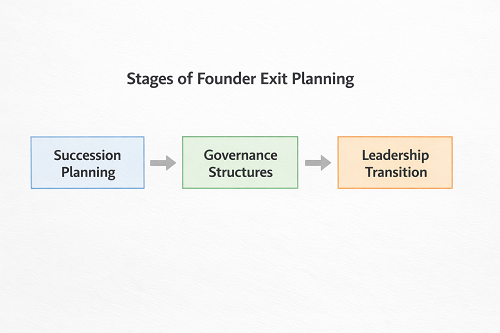
For many founders, building a successful organisation represents years of dedication, risk, and personal investment. Eventually, however, leaders may begin considering the possibility of exiting the business.
Exit planning involves more than financial negotiations.
It also requires careful reflection on personal goals, leadership succession, and the long-term future of the organisation.
Personal advisory support can play a critical role during this stage.
Evaluating Exit Options
Founders may consider several exit pathways, including:
- selling the company to a strategic buyer
- merging with another organisation
- transferring ownership to internal leadership
- pursuing private equity investment
Each option carries different implications for both the organisation and the founder personally.
Advisory discussions help leaders examine these options thoughtfully before entering formal negotiations.
Preparing the Organisation for Transition
Successful exit planning requires more than identifying a buyer.
The organisation itself must be prepared for transition.
This preparation may include:
- strengthening leadership structures
- improving governance processes
- documenting key operational systems
- ensuring financial transparency
Advisors help founders assess whether these elements are in place before initiating an exit process.
Preparing early often increases both organisational stability and company valuation.
Managing Identity Beyond the Business
For many entrepreneurs, the business becomes deeply intertwined with personal identity.
Years of dedication, risk, and achievement often create a strong psychological connection between the founder and the organisation they built.
While this connection can be a source of motivation, it can also create challenges when leaders begin considering new directions.
Managing identity beyond the business becomes an important part of long-term personal planning.
Some founders also strengthen leadership awareness through programmes such as Genius Unlocked, which explore mindset, leadership identity, and strategic thinking.
When Business Identity Becomes Personal Identity
Entrepreneurs frequently invest not only financial resources but also emotional energy into their companies.
As a result, success and failure in the business may feel deeply personal.
This connection can make transitions such as retirement, exit, or reduced operational involvement particularly complex.
Leaders may ask themselves questions such as:
- Who am I if I am no longer running the company?
- What purpose will guide my work in the future?
- How will my relationships change after stepping back?
Personal advisory conversations provide space to explore these questions thoughtfully.

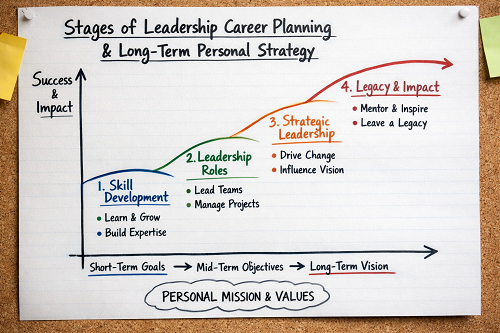
Long-Term Personal Strategic Planning
Strategic thinking should not apply only to organisations. Leaders also benefit from applying strategic thinking to their own lives and careers.
Long-term personal strategic planning encourages leaders to reflect on how their professional achievements connect with broader life goals.
Rather than reacting to circumstances, leaders can deliberately design the next stage of their journey.
Planning Beyond Immediate Success
Successful founders often spend years focused on building and scaling their organisations.
However, once the business reaches stability or transition, leaders may find themselves asking what comes next.
Personal strategic planning may include considerations such as:
- long-term financial independence
- future leadership opportunities
- personal interests outside business
- legacy and impact
Advisory discussions help leaders explore these possibilities in a structured way.
Aligning Professional and Personal Goals
Strategic planning becomes most powerful when professional and personal priorities are aligned.
This arrangement allows the leader to maintain strategic influence while pursuing new interests.
By thinking carefully about these possibilities, leaders can design a future that reflects both their achievements and their evolving aspirations.
Leaders navigating complex transitions often work with a business consultant for SMEs who understands the intersection between strategic risk and leadership responsibility.
Why Experienced Advisors Matter for Leadership Clarity
Effective personal advisory depends on experience.
Advisors who have worked with founders and senior leaders understand:
• decision pressure at senior level
• governance and investor dynamics
• transition challenges (exit, succession, scaling)
• balancing commercial and personal risk
This experience allows them to challenge assumptions and guide clearer decisions.
Without this depth, advisory risks becoming generic discussion rather than structured thinking.
When Should You Invest in Personal Advisory?
Consider personal advisory when:
• Strategic decisions feel heavy
• Personal and business risk overlap
• Identity feels uncertain
• Succession planning begins
• Leadership stress increases
Support at the right time strengthens long-term clarity.
FAQ
Personal advisory provides confidential, structured support for leaders making complex decisions involving both professional and personal factors.
Coaching focuses on development and performance. Personal advisory focuses on decision clarity and strategic judgement.
Yes. Confidentiality is central, allowing leaders to discuss sensitive issues openly.
Founders, executives, and senior leaders facing high-stakes decisions or transitions.
During periods of growth, transition, or increased decision pressure.
Work With an Experienced Business Advisor
If you are carrying the weight of complex decisions, the issue is not capability. It is perspective.
Personal advisory provides:
• clarity under pressure
• structured thinking for high-stakes decisions
• confidential space for honest reflection
• alignment between business and personal direction
Explore our private advisory services and strengthen your ability to make clear, confident decisions.
This is not coaching.
This is decision clarity.