
Executive coaching operates at the highest level of leadership development. Unlike general business coaching, it focuses specifically on senior decision-makers who carry strategic, reputational and organisational responsibility.
Senior leaders often begin by seeking external perspective from an executive business consultant in Ireland to navigate increasing organisational complexity.
As complexity increases, leadership pressure intensifies. Decisions affect investors, boards, teams and external stakeholders simultaneously. In this environment, isolated decision-making becomes risky.
Executive coaching provides structured reflection, behavioural calibration and strategic clarity for leaders operating under sustained pressure.
Leaders often complement executive coaching with structured business coaching frameworks that strengthen accountability and decision-making.
What Is Executive Coaching?
Executive coaching is a structured professional engagement designed to improve leadership judgement, behavioural discipline and strategic decision quality at senior level.
Unlike mentoring, executive coaching does not rely primarily on shared experience. Instead, it focuses on strengthening cognitive clarity and behavioural maturity.
An executive coach typically works with:
• CEOs
• Managing Directors
• Founders transitioning to board-level roles
• Senior leadership teams
• Board members
The focus extends beyond performance metrics. It includes leadership presence, communication discipline, conflict management and executive resilience.
For broader leadership development, many organisations also explore the Business Coaching for SME Owners.

The Core Objectives of Executive Coaching
Executive coaching commonly aims to strengthen:
• Decision clarity under pressure
• Strategic alignment
• Emotional regulation
• Delegation discipline
• Stakeholder communication
• Conflict navigation
Importantly, executive coaching addresses behaviour patterns that may not be visible internally.
Executive Coaching vs Business Coaching
While business coaching focuses broadly on growth and performance, executive coaching concentrates on leadership behaviour at senior level.
Business coaching strengthens operational clarity.
Executive coaching strengthens executive judgement.
In reality, the two may overlap. However, executive coaching includes greater emphasis on:
• Board-level communication
• Reputation management
• Leadership presence
• Governance maturity
How Executive Coaching Improves Leadership Performance
Executive coaching improves leadership performance by strengthening:
• Decision-making consistency
• Communication clarity
• Delegation effectiveness
• Conflict management
• Strategic focus
Rather than introducing new systems, coaching improves how leaders operate within existing structures.
Executive Coaching as Behavioural Calibration
Professional executive coaching standards are commonly benchmarked against frameworks developed by the International Coaching Federation.
Executive coaching is not primarily about skill acquisition. Senior leaders already possess competence. The challenge at executive level is behavioural calibration.
Small shifts in tone, timing or authority can influence:
• Board confidence
• Investor trust
• Leadership team morale
• External perception
At senior level, behaviour amplifies.
Decision-Making Under Cognitive Load
Executives operate under sustained cognitive load. Information volume increases. Time reduces. Pressure intensifies.
As a result, decision shortcuts emerge.
Executive coaching slows decision-making when necessary. It introduces structured questioning:
- The assumptions that may be driving the choice
- Any potential downside exposure connected to the decision
- Whether the response is reactive or considered
- The nature of the urgency, whether genuine or emotional
The Visibility Multiplier
As leaders rise, visibility multiplies impact.
A brief reaction in a board meeting can influence long-term perception. A dismissive tone in a leadership session can erode confidence. Silence during conflict can signal avoidance.
Executive coaching helps leaders become conscious of behavioural signals.
Increased awareness reduces unintended impact on teams, boards and stakeholders.

Executive Coaching Ireland: What Should Leaders Expect?
Leaders in Ireland operate within a unique governance and business landscape. While executive coaching principles remain consistent globally, context matters.
Irish SMEs and mid-sized organisations often combine informal leadership history with increasing regulatory expectation.
As a result, executive coaching in Ireland frequently focuses on:
• Governance maturity
• Board communication
• Founder-to-executive transition
• Stakeholder management
• Regulatory awareness
Expect coaching to be structured and deliberate.
Cultural Context and Leadership Style
Leadership styles in Ireland often blend relational warmth with strong independence.
Executive coaching may therefore address:
• Balancing collegiality with authority
• Managing peer relationships within leadership teams
• Transitioning from founder familiarity to executive discipline
As organisations scale, leadership style must evolve.
Coaching supports that evolution without eroding authenticity.
When Executive Coaching Becomes Essential
Executive coaching becomes particularly valuable when:
• Board pressure increases
• Succession planning begins
• Public visibility rises
• Internal conflict intensifies
• Decision fatigue accumulates
At this stage, executive performance affects organisational stability directly.
Situations Where Senior Leaders Seek Executive Coaching
Executive coaching is most effective when leadership pressure begins to affect clarity, behaviour or decision quality.
Common scenarios include:
• Scaling beyond founder-led decision making into structured leadership teams
• Preparing for board-level accountability or investor scrutiny
• Managing leadership team conflict or misalignment
• Transitioning from operational involvement to strategic oversight
• Navigating succession, exit planning or role evolution
These situations often emerge gradually. Early coaching support prevents behavioural patterns from becoming structural risks.
Governance Maturity in the Irish Context
In Ireland, many mid-sized organisations evolve from founder-led origins into more structured governance environments. This transition is rarely smooth.
Founders may still influence culture heavily. At the same time, boards expect increasing formality.
Executive coaching in this context often addresses:
• Transition from informal authority to formal accountability
• Managing long-standing relationships professionally
• Introducing reporting discipline without cultural shock
• Balancing growth ambition with regulatory compliance
This tension requires behavioural precision.
Confidential Reflection in Close Business Communities
Ireland’s business community is relatively interconnected. Reputation travels quickly. As a result, leaders often guard vulnerability.
Executive coaching provides a confidential environment where uncertainty can be explored safely.
Without that protected space, hesitation may remain hidden until it surfaces publicly.
This confidentiality layer aligns closely with themes explored in Personal Advisory.
Scaling Expectations
As organisations expand beyond 50–100 employees, expectations change.
Board reporting must improve. Strategic alignment must tighten. Leadership visibility increases.
Executive coaching ensures that behavioural maturity rises alongside structural growth.
Without that alignment, growth introduces instability.
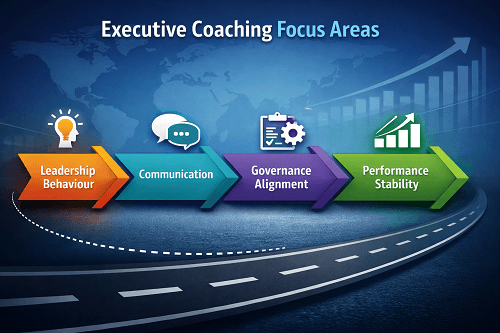
Executive Coaching Dublin: Choosing the Right Advisor
Selecting an executive coach in Dublin requires more than reviewing credentials. Senior leaders operate under pressure, scrutiny and expectation. Therefore, the coaching relationship must combine discretion, commercial understanding and behavioural depth.
Proximity can be helpful. However, capability matters more than geography.
Why Experienced Executive Coaches Matter at Senior Level
At executive level, leadership challenges are rarely theoretical. They involve real financial exposure, governance pressure and reputational risk.
Experienced executive coaches bring:
• Exposure to board-level dynamics and investor expectations
• Understanding of governance and organisational complexity
• Ability to challenge senior leaders without destabilising confidence
• Structured coaching frameworks grounded in real-world leadership scenarios
Less experienced coaching may focus on encouragement. At senior level, leaders require precision, challenge and accountability.
The quality of coaching directly influences the quality of decision-making.
Understanding the Irish Leadership Context
Leadership within Ireland often blends strong relational culture with increasing regulatory expectation. As organisations scale, governance maturity must rise alongside performance ambition.
An executive coach operating within Dublin should understand:
• Irish corporate governance expectations
• Board-level communication norms
• Founder-to-executive transition challenges
• Investor relationship dynamics
• Regulatory oversight in growth-stage firms
This context allows coaching conversations to remain commercially grounded.
Experience vs Reputation
In practice, reputation alone does not determine coaching effectiveness. What matters is the ability to challenge senior thinking without destabilising confidence.
When evaluating an executive coach, consider:
• Board-level exposure
• Experience working with growth-stage SMEs
• Ability to handle conflict calmly
• Confidentiality discipline
• Structured coaching methodology
Moreover, the coach should demonstrate commercial fluency. Without understanding financial exposure, risk discussion remains superficial.
The Importance of Challenge
Senior leaders rarely lack encouragement. They often lack constructive challenge.
An effective executive coach in Dublin must be able to:
• Question assumptions directly
• Hold silence when necessary
• Address behavioural blind spots
• Reinforce accountability consistently
Comfort alone does not create leadership growth. However, challenge must remain respectful and structured.

Executive Business Coach vs Leadership Consultant
Although the terms are sometimes used interchangeably, executive business coaching and leadership consulting operate differently.
In situations where operational systems require deeper analysis, organisations may combine executive coaching with structured business consulting services.
Both influence senior performance. However, their methods diverge.
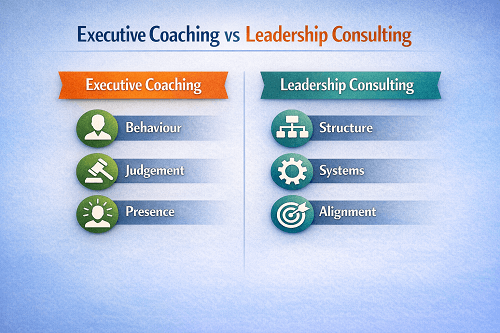
Core Distinction
An executive business coach strengthens the leader.
A leadership consultant strengthens the system.
Coaches focus on:
• Decision quality
• Behaviour under pressure
• Executive presence
• Accountability discipline
• Strategic clarity
Leadership consultants typically focus on:
• Organisational structure
• Team frameworks
• Process alignment
• Performance systems
• Change management programmes
Both roles can be valuable. The key difference lies in the level of intervention.
Behavioural Development vs Structural Design
Executive coaching concentrates on how the leader thinks and behaves. It examines patterns such as conflict avoidance, over-control or reactive communication.
By contrast, leadership consulting often introduces:
• Leadership competency models
• Organisational redesign
• Succession frameworks
• Cultural diagnostics
Therefore, coaching strengthens internal judgement. Consulting strengthens structural clarity.
Where structural redesign is required alongside behavioural development, organisations often combine executive coaching with formal Business Consulting support.
When Executive Coaching Is More Appropriate
Executive coaching is most suitable when:
• Decision fatigue appears
• Communication patterns erode trust
• Delegation becomes inconsistent
• Board-level pressure increases
• Leadership confidence fluctuates
In these cases, the bottleneck is behavioural.
When Leadership Consulting Is More Appropriate
Leadership consulting may be more suitable when:
• Reporting systems are unclear
• Organisational roles lack definition
• Cultural integration is required
• Change programmes must be designed
Here, structural alignment is the priority.
Psychological Safety vs Organisational Architecture
Leadership consultants frequently redesign organisational architecture. They clarify structure, reporting lines and process flows.
Executive coaches focus instead on psychological safety at senior level.
They examine:
• Whether executives feel safe challenging each other
• Whether dissent is expressed constructively
• Whether authority suppresses contribution
• Whether avoidance patterns exist
Even well-designed structures fail if behavioural safety is absent.
Sustainability of Change
Consulting projects often conclude once systems are implemented. However, behavioural discipline determines whether change endures.
Executive coaching reinforces:
• Follow-through
• Consistency of tone
• Long-term accountability
• Personal ownership
Where change programmes stall, coaching frequently identifies behavioural drift rather than structural flaw.
Corporate Executive Coaching: When Is It Needed?
Executive coaching is often associated with individual leaders. However, in corporate settings, it operates at a broader level. It strengthens senior behaviour within complex governance structures.
Corporate executive coaching becomes necessary when organisational scale amplifies leadership impact.
Small behavioural weaknesses that were manageable at 20 employees can destabilise performance at 120.
When Scale Increases Visibility
As organisations grow, leadership visibility expands. Decisions are scrutinised. Internal communication travels faster. Mistakes carry greater consequence.
At this stage, corporate executive coaching often focuses on:
• Board-level presence
• Crisis communication
• Investor alignment
• Strategic consistency
• Reputation management
Pressure increases. Therefore, behavioural discipline must increase as well.
In complex environments, a trusted business advisor in Ireland may complement coaching with governance oversight.
Leadership Teams Under Strain
Corporate executive coaching is frequently introduced when leadership teams begin to fragment.
Symptoms may include:
• Strategic meetings that feel unproductive
• Escalating tension between executives
• Misalignment on growth priorities
• Defensive communication patterns
Where team misalignment begins to affect strategic stability, structured Business Advisory for SME Owners oversight can reinforce governance discipline.
Transition from Founder-Led to Board-Led Structure
Corporate executive coaching is particularly valuable when businesses transition from founder-led structures to board-led governance.
At this stage:
• Informal authority must formalise
• Emotional loyalty must evolve into accountability
• Reporting must become structured
• Strategic debate must mature
Crisis and Reputation Management
In some cases, corporate executive coaching begins during instability.
Examples include:
• Regulatory investigation
• Media exposure
• Investor dispute
• Senior leadership exit
During crisis, leaders often default to reactive behaviour.
Coaching slows reaction. It introduces discipline.
Measured response protects reputation.

Career and Business Coach: How Do They Overlap?
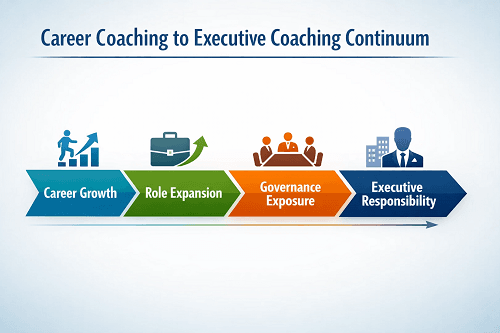
The distinction between career coaching and executive coaching is subtle but important.
Career coaching often focuses on progression. Executive coaching focuses on performance at senior level.
However, overlap exists.
Where Career and Executive Coaching Intersect
Both disciplines may address:
• Confidence under scrutiny
• Communication style
• Strategic positioning
• Decision resilience
• Role transition
Identity and Authority
Career transitions frequently trigger identity tension.
An executive promoted internally may struggle to:
• Recalibrate peer relationships
• Assert authority
• Delegate to former equals
• Accept new visibility
In such cases, coaching must examine internal alignment.
This naturally connects to deeper Personal Development work.
Where leadership transition begins to affect identity and internal confidence, structured Personal Development for Business Leaders support can reinforce long-term behavioural maturity.
When Career Coaching Becomes Executive Coaching
Career coaching becomes executive coaching when:
• Strategic impact increases
• Board interaction becomes frequent
• Organisational visibility expands
• Risk exposure rises
At senior levels, career decisions influence entire organisations.
Therefore, coaching must expand beyond ambition.
It must include governance awareness.
Coaching Senior Leadership Teams
Executive coaching is often associated with one-to-one engagement. However, at senior level, leadership rarely operates in isolation. Decisions are shaped collectively. Therefore, coaching senior leadership teams becomes a strategic intervention.
When cohesion weakens at the top, instability filters downward.
Some executives also work alongside experienced business mentoring services advisors who provide perspective drawn from real leadership experience.
From Individual Strength to Collective Alignment
A leadership team may consist of highly capable individuals. Yet capability does not guarantee alignment.
Common friction points include:
• Conflicting growth priorities
• Unclear authority boundaries
• Competing departmental interests
• Different risk tolerances
• Communication style clashes
Over time, these tensions erode trust.
Executive coaching at team level focuses on alignment rather than personality correction. The objective is disciplined collaboration.
Establishing Decision Clarity
Many senior teams struggle not with intelligence, but with clarity.
Meetings may end without:
• Clear ownership
• Defined timelines
• Agreed escalation routes
• Explicit strategic alignment
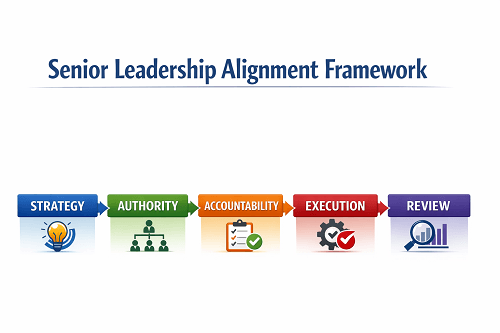
Team coaching introduces structure into decision-making. It clarifies:
• Who decides
• Who contributes
• Who executes
• Who reviews
As a result, ambiguity decreases.
When leadership misalignment begins to affect operational performance, structured Business Mentoring for SME Owners strategy must be supported by behavioural cohesion at senior level.
Managing Conflict Productively
Healthy conflict strengthens strategy. Unmanaged conflict weakens it.
Senior leadership teams often avoid confrontation in order to preserve relationships. However, suppressed disagreement resurfaces indirectly.
Executive coaching introduces:
• Constructive dissent frameworks
• Escalation discipline
• Direct communication norms
• Conflict debrief processes
When leaders learn to disagree openly, decision quality improves.
Accountability at Team Level
Individual accountability is insufficient if collective accountability fails.
Coaching senior teams often includes:
• Shared KPI visibility
• Joint commitment tracking
• Transparent performance discussion
• Cross-functional responsibility
This reinforces governance discipline without overcomplication.
Executive Presence Development
Executive presence is often described vaguely. In reality, it is behavioural consistency under visibility.
Presence influences how leaders are perceived in boardrooms, investor meetings and crisis situations.
Importantly, presence is not about charisma. It is about credibility.
The Components of Executive Presence
Executive presence typically reflects:
• Clarity of speech
• Measured tone
• Composure under pressure
• Controlled body language
• Strategic brevity
• Confident silence
Each component affects perception.
When presence weakens, authority diminishes.
Authority Without Aggression
Executives sometimes confuse assertiveness with dominance. However, sustainable authority relies on calm clarity.
Coaching helps leaders:
• Speak decisively without dismissiveness
• Invite challenge without losing control
• Admit uncertainty without weakening credibility
This balance strengthens board confidence and executive credibility.
Where executive presence begins to affect board confidence, structured Strategic Management & Governance for SMEs discipline ensures behavioural maturity aligns with oversight expectations.
Managing Energy and Emotional Regulation
Executive presence also depends on emotional regulation.
Leaders operating under pressure may:
• React impulsively
• Display frustration visibly
• Withdraw during tension
• Overcompensate verbally
Visibility in Crisis
Executive presence becomes critical during instability.
Stakeholders observe:
• Tone during announcements
• Body language during questioning
• Consistency of messaging
• Emotional steadiness
Coaching prepares leaders before crisis occurs.
Prepared leaders respond rather than react.

Managing Board Relationships as an Executive
Board relationships shape executive credibility more than operational performance alone. A strong business can still suffer if trust at board level erodes.
Executive coaching often focuses heavily on this dimension because it sits at the intersection of governance, authority and communication.
Best practice guidance on board oversight and director responsibilities is widely outlined by the Institute of Directors.
Understanding the Board’s Perspective
Executives operate inside the business. Board members operate above it.
That difference creates tension.
Boards typically prioritise:
• Risk oversight
• Long-term sustainability
• Financial discipline
• Governance compliance
• Strategic coherence
Executives, by contrast, often focus on:
• Operational execution
• Immediate performance
• Team morale
• Market responsiveness
Misalignment between these lenses can create friction.
Executive coaching helps leaders interpret board scrutiny as governance discipline rather than personal criticism.
In situations involving confidential leadership challenges, structured private advisory discussions may provide a secure environment for reflection.
Improving Reporting Discipline
Board relationships deteriorate quickly when reporting lacks clarity.
Common issues include:
• Inconsistent data presentation
• Overly defensive narrative
• Excessive operational detail
• Lack of strategic framing
Coaching strengthens:
• Structured board papers
• Clear executive summaries
• Transparent risk disclosure
• Concise performance analysis
Clarity reduces tension.
Navigating Challenge Without Defensiveness
Boards exist to challenge. However, executives may interpret challenge as distrust.
Executive coaching examines behavioural responses such as:
• Defensive tone
• Over-explaining
• Avoiding direct answers
• Minimising risk disclosure
When leaders respond calmly and directly, credibility strengthens.
Silence can be powerful. So can brevity.
Measured communication builds confidence.
Authority Within Oversight
Executives must balance confidence with accountability.
Too much defensiveness weakens authority. Too much dominance undermines governance.
Coaching helps leaders:
• Accept scrutiny without insecurity
• Maintain composure under questioning
• Clarify decision rationale
• Reinforce accountability publicly
This balance preserves trust.
Preventing Executive Burnout
Executive performance deteriorates quietly before it collapses visibly. Burnout rarely begins dramatically. Instead, it accumulates gradually through sustained pressure.
Executive coaching addresses burnout not through motivation, but through structural recalibration.
Leaders navigating complex growth stages often seek support from a business consultant for SMEs who can help align leadership development with organisational strategy.

Recognising Early Indicators
Early burnout indicators may include:
• Irritability under minor stress
• Decision fatigue
• Reduced strategic clarity
• Withdrawal from discussion
• Overworking to compensate
High performers often ignore these signals.
This becomes evident when cognitive load begins to affect judgement.
The Cost of Ignored Fatigue
Fatigue influences:
• Risk tolerance
• Emotional regulation
• Communication tone
• Conflict response
• Delegation behaviour
When energy declines, reaction replaces reflection.
Executive coaching introduces recovery discipline before performance drops significantly.
Structural vs Emotional Burnout
Burnout can be emotional. However, it is often structural.
Common structural causes include:
• Excessive decision centralisation
• Poor delegation systems
• Unclear role boundaries
• Lack of board support
• Constant crisis management
Coaching addresses these systemic contributors.
Protecting Cognitive Clarity
Executive coaching strengthens:
• Delegation maturity
• Decision batching
• Meeting discipline
• Reporting simplification
• Boundary setting
By reducing noise, clarity improves.
Clarity protects performance.
Sustainable Leadership
Sustainable leadership requires:
• Strategic pacing
• Controlled availability
• Structured rest
• Honest feedback channels
Burnout prevention is not indulgent. It is strategic.
Organisations suffer when leaders collapse under unmanaged pressure.
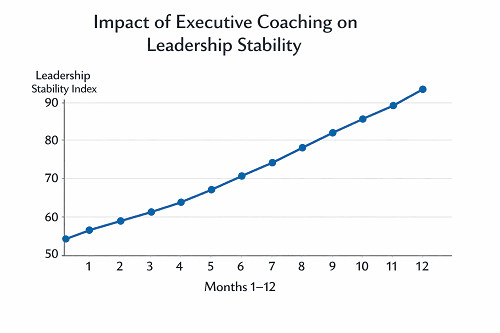
When Should You Invest in Executive Coaching?
Executive coaching is appropriate when:
• Responsibility has increased
• Board pressure is rising
• Strategic decisions carry material risk
• Leadership visibility is expanding
• Emotional load is intensifying
Early support prevents long-term strain.
FAQ
Executive coaching focuses on behavioural calibration and decision-making, while mentoring shares experience and guidance based on past situations.
Most engagements last between 3 to 12 months, depending on leadership complexity and objectives.
No. It is relevant for founders, directors, senior managers and leadership teams operating under high responsibility.
Indirectly, yes. It improves decision quality, communication and leadership alignment, which influence overall performance.
When leadership pressure increases, governance expectations rise or decision-making begins to affect organisational stability.
Work With an Experienced Business Advisor
If your leadership responsibilities are increasing and decisions carry greater consequence, executive coaching becomes necessary.
Not later. Now.
Executive coaching provides:
• sharper decision-making
• stronger communication
• behavioural discipline under pressure
• sustained leadership performance
Explore our private advisory services and access structured, confidential executive support.
This is not development.
This is leadership precision.