
Strategic management and governance are often discussed in large corporate environments. Yet they are just as important for growing small and medium-sized businesses. As organisations expand, decisions become more complex. Markets evolve, teams grow, and financial stakes increase. Without structured oversight, growth can quickly become difficult to manage.
Many organisations navigating governance challenges begin by working with a business consultant in Ireland who understands the strategic and structural pressures facing growing SMEs.
Strategic management consulting helps organisations develop clear plans for growth, often alongside structured business development frameworks. These services support leaders in balancing ambition with discipline.
This guide explores how strategic management consulting works, what governance advisory involves, and how organisations can build leadership structures that support sustainable growth.
What Is Strategic Management Consulting?
Strategic management is the process of defining direction, setting priorities, and aligning resources to achieve long-term objectives.
It answers key questions:
- where the business is going
- how it will get there
- what resources are required
- what risks must be managed
Strategic management is not a one-time exercise. It is an ongoing process that requires regular review and adjustment.
Where leadership behaviour becomes the constraint, organisations often explore the Business Coaching for SME Owners to strengthen decision-making.
The Purpose of Strategic Management
Strategic management helps organisations answer several fundamental questions.
These questions include:
- Where should the organisation focus its efforts?
- Which markets offer the greatest potential?
- What capabilities must be strengthened to support growth?
- How should resources be allocated across competing priorities?
Answering these questions requires careful analysis. Consultants typically examine factors such as industry trends, competitive dynamics, financial performance, and internal organisational capabilities.
Through this analysis, leadership teams gain a clearer understanding of the organisation’s strategic position.
Aligning Strategy With Execution
One of the most common challenges organisations face is translating strategy into action.
Leadership teams may develop ambitious plans, yet implementation often proves difficult. Employees may lack clarity about priorities, departments may pursue conflicting objectives, or resources may be allocated inefficiently.
Strategic management consulting helps bridge this gap.
Consultants work with leadership teams to transform strategic goals into practical initiatives. These initiatives include specific milestones, measurable indicators, and defined responsibilities.
By creating this structure, organisations improve their ability to execute strategy consistently.
Strategic Thinking in Leadership
Strategic management also strengthens leadership thinking.
Senior leaders often face competing demands on their time. Operational challenges, client relationships, and team management can easily dominate daily schedules. As a result, strategic thinking may receive less attention.
Consultants provide structured opportunities for leaders to step back from operational pressures and examine the organisation’s broader direction.
This process allows leaders to evaluate whether current activities align with long-term objectives.
What Does a Strategic Management Consultant Do?
A strategic management consultant works closely with senior leadership teams to help organisations define their strategic direction and implement the structures required to achieve it.
This role combines analytical expertise with leadership advisory. Consultants examine the organisation’s internal capabilities and external environment while also supporting leaders in making complex decisions.
Rather than imposing solutions, effective consultants facilitate structured discussions that help leadership teams clarify priorities and evaluate alternatives.
Many organisations combine governance advisory with structured business consulting services to ensure that strategy translates into operational execution.
Analysing the Organisation’s Strategic Position
Consultants typically begin by analysing the organisation’s current strategic position.
This analysis includes reviewing areas such as:
- market trends and competitive landscape
- financial performance and cost structures
- operational capabilities
- leadership capacity
- customer demand patterns
Understanding these elements helps consultants identify both opportunities and risks.
For example, a business may have strong technical expertise but lack the organisational structure needed to support expansion. Alternatively, the organisation may operate in a growing market but struggle to differentiate its services.
Strategic analysis reveals these patterns and allows leaders to respond proactively.
Facilitating Strategic Planning
Once the organisation’s position is understood, consultants help leadership teams develop structured strategic plans.
Strategic planning usually involves defining:
- long-term organisational objectives
- key growth initiatives
- resource allocation priorities
- measurable performance indicators
Consultants often facilitate planning workshops where leadership teams discuss different strategic scenarios. These sessions allow leaders to evaluate options carefully before committing to specific initiatives.
This collaborative process ensures that strategic decisions reflect both analysis and leadership experience.
Strengthening Governance Structures
Strategic consultants also work closely with governance systems.
Governance structures ensure that strategic decisions remain disciplined and accountable. They define how leadership teams review performance, manage risk, and oversee organisational direction.
Consultants may therefore help organisations strengthen areas such as:
- board oversight processes
- strategic review meetings
- reporting frameworks
- leadership accountability systems
Strong governance structures support effective strategic management by ensuring that leadership decisions remain transparent and consistent.
Companies implementing governance structures often review the Small Business Consulting for SMEs to understand how operational systems support leadership accountability.
Supporting Leadership Alignment
Another key role of strategic management consultants is improving leadership alignment.
As organisations grow, leadership teams often expand. Different executives may hold responsibility for finance, operations, marketing, or human resources. Each function plays an important role, yet coordination between these functions is essential.
Consultants facilitate discussions that clarify priorities and responsibilities across leadership teams.
This alignment reduces internal conflict and helps ensure that all departments work toward the same strategic objectives.
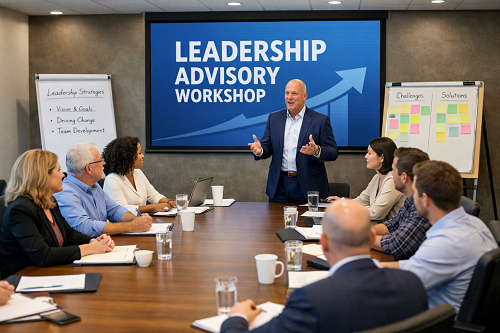
Governance Advisory for SMEs Explained
Governance is often associated with large corporations, public companies, and complex board structures. However, governance principles are equally important for small and medium-sized enterprises. In many cases, governance becomes even more critical as businesses begin to scale.
SMEs frequently operate with informal decision-making structures during their early stages. Founders or senior managers may make most decisions personally, often relying on intuition and experience. While this approach can support agility in the beginning, it becomes more difficult to sustain as the organisation grows.
Governance advisory helps businesses introduce the systems and oversight structures required to manage growth responsibly.
Rather than restricting flexibility, effective governance provides clarity. It defines how decisions are made, how performance is reviewed, and how leaders remain accountable for organisational outcomes.
What Governance Advisory Involves
Governance advisory focuses on strengthening leadership oversight and organisational accountability.
Consultants working in this area typically assist organisations in developing governance structures that support long-term stability. These structures help leaders balance strategic ambition with responsible management.
Governance advisory commonly includes:
- defining board roles and responsibilities
- improving decision-making processes
- strengthening financial reporting structures
- clarifying accountability across leadership teams
- establishing regular strategic review mechanisms
These improvements help organisations operate with greater transparency and discipline.
When governance systems are clearly defined, leadership teams can focus on strategic priorities without becoming overwhelmed by operational complexity.
Governance in Growing SMEs
As SMEs grow, their governance needs evolve.
During early stages, founders often manage most aspects of the business directly. As the organisation expands, however, responsibilities begin to distribute across leadership teams. New managers may join, departments may develop, and external stakeholders may become involved.
Without governance structures, these transitions can create confusion.
Governance advisory therefore helps businesses introduce frameworks that clarify how leadership responsibilities are shared.
This may involve establishing formal board meetings, defining reporting standards, or introducing strategic review processes that ensure leadership decisions remain aligned with organisational goals.
These structures support sustainable growth while preserving the agility that SMEs value.
The Relationship Between Governance and Strategy
Governance and strategy are closely connected.
Strategy defines where the organisation intends to go. Governance ensures that the journey toward that destination is disciplined and transparent.
Without governance, strategy may remain theoretical. Leaders may discuss long-term plans but struggle to monitor progress or manage risk effectively.
Governance advisory therefore ensures that strategic initiatives are reviewed regularly and supported by measurable performance indicators.
This alignment allows organisations to adapt their strategy when necessary while maintaining accountability.

When Should a Board Seek External Strategy Support?
Boards and leadership teams often reach moments when internal expertise alone is no longer sufficient to address complex strategic challenges. At these times, seeking external strategy support can provide valuable perspective and guidance.
External advisors bring experience from working with multiple organisations and industries. This perspective allows them to identify patterns, risks, and opportunities that may not be visible from within the organisation.
Seeking external strategy support does not indicate weakness. On the contrary, it reflects leadership maturity and a commitment to informed decision-making.
Recognising Strategic Turning Points
Organisations often seek external strategy support during major transitions.
Common turning points include:
- rapid organisational growth
- entry into new markets
- significant changes in competitive dynamics
- leadership succession
- mergers or acquisitions
During these periods, decisions carry significant long-term consequences. External advisors help boards evaluate options carefully before committing to a particular direction.
By providing objective analysis, consultants help reduce the risk associated with major strategic moves.
Bringing an Independent Perspective
One of the greatest benefits of external strategy support is independence.
Internal teams may become accustomed to existing practices or assumptions. Over time, these assumptions can limit strategic thinking.
External advisors bring fresh perspectives that challenge conventional thinking.
For example, a consultant may identify opportunities in market segments that the organisation previously overlooked. Alternatively, they may highlight operational weaknesses that require attention before pursuing expansion.
This independent viewpoint helps leadership teams evaluate their strategy more critically.
Facilitating Structured Strategic Discussions
External consultants often facilitate strategic discussions between board members and senior executives.
These discussions help clarify organisational priorities and ensure that leadership teams share a common understanding of the organisation’s direction.
Structured strategy sessions may involve:
- reviewing market trends and competitive dynamics
- evaluating long-term financial performance
- identifying growth opportunities
- assessing organisational capabilities
Through these discussions, boards gain greater clarity about which strategic initiatives deserve priority.
Strategic governance guidance provided by organisations such as the Institute of Directors offers valuable frameworks for boards seeking to strengthen oversight and leadership accountability.

When Businesses Benefit from Strategic Management & Governance Support
Strategic management and governance support becomes essential as complexity increases and informal leadership structures begin to fail.
Common situations include:
• scaling beyond founder-led decision making
• leadership teams becoming misaligned on priorities
• preparing for board formation or investor involvement
• entering new markets with increased risk exposure
• inconsistent reporting and lack of performance visibility
Business Strategy Advisor vs Executive Coach
Leaders often encounter both strategy advisors and executive coaches during periods of organisational growth. While these roles sometimes overlap, their focus and methods are different.
A business strategy advisor concentrates primarily on the organisation’s direction. Their work involves analysing markets, evaluating strategic options, and helping leadership teams design plans that support long-term growth.
An executive coach, by contrast, focuses on the leader rather than the organisation itself. Coaching strengthens the decision-making capability, communication style, and leadership behaviour of individual executives.
Both roles can contribute significant value. The difference lies in where the intervention occurs.
Focus of a Business Strategy Advisor
A business strategy advisor examines the organisation from a strategic perspective.
Typical areas of focus include:
- long-term growth direction
- competitive positioning
- market expansion strategy
- resource allocation
- strategic partnerships
Advisors analyse how these elements interact and help leadership teams determine the best path forward.
For example, a company considering expansion into international markets may engage a strategy advisor to evaluate opportunities, assess risks, and develop an expansion roadmap.
In this context, the advisor works primarily with organisational strategy rather than individual leadership development. This includes a strong focus on Business Development for SMEs.
Focus of an Executive Coach
An executive coach focuses on strengthening the leadership capabilities of senior managers.
This work often involves helping executives improve:
- decision-making clarity
- communication with teams
- leadership presence
- accountability discipline
- strategic thinking
Where a strategy advisor helps define what the organisation should do, an executive coach helps leaders improve how they think and act when making those decisions.
Over time, coaching strengthens the leadership capacity required to implement strategy effectively.
Many organisations complement strategic advisory support with structured Executive Coaching for Senior Leaders to strengthen leadership decision-making during periods of growth.
When Organisations Need Both
In many cases, organisations benefit from both advisory and coaching support.
For instance, a leadership team may develop an ambitious expansion strategy with the assistance of a strategy advisor. However, implementing that strategy may require changes in leadership behaviour, communication, or accountability.
Executive coaching helps leaders adapt to these new demands.
When these services work together, organisations gain both strategic clarity and leadership capability.
This combination can significantly improve the likelihood that strategic initiatives succeed.
Situations Where Businesses Need Governance
Governance becomes critical in situations such as:
- scaling beyond founder-led control
- expanding leadership teams
- preparing for investment
- increasing regulatory or financial risk
- managing multiple departments
These are structural challenges.
Why Experienced Advisors Matter for SME Growth
Strategic and governance decisions carry long-term consequences. Experience reduces avoidable risk.
Advisors who have worked with growing SMEs understand:
• how governance structures evolve with scale
• where strategy typically breaks down during growth
• how to align leadership teams under pressure
• how to balance expansion with risk control
Independent perspective improves decision quality by challenging assumptions and introducing structured thinking.
Board Structures for Growing Businesses
As businesses expand, leadership responsibilities become more complex. Decision-making must incorporate broader perspectives, and accountability systems must become more structured.
At this stage, many organisations introduce formal board structures.
Boards provide strategic oversight, support leadership accountability, and help ensure that major decisions are evaluated carefully before implementation.
For growing SMEs, establishing the right board structure can significantly improve governance and strategic clarity.
In many cases, organisations also benefit from the perspective of a trusted business advisor in Ireland who can help leadership teams evaluate long-term strategy objectively.
Purpose of a Board
A board’s primary role is oversight rather than daily management.
Board members help guide the organisation by reviewing strategic plans, monitoring performance, and challenging leadership assumptions when necessary.
Typical board responsibilities include:
- reviewing long-term strategy
- monitoring financial performance
- assessing organisational risk
- supporting leadership accountability
- providing external perspective
These responsibilities help ensure that leadership decisions remain aligned with the organisation’s long-term interests.
Founders and senior leaders may also benefit from experienced business mentoring services, where advisors share insight drawn from real leadership experience.
Types of Board Structures
Growing businesses may adopt several types of board structures depending on their size and stage of development.
Advisory Boards
An advisory board provides informal guidance to leadership teams. Advisory board members typically bring industry experience, strategic insight, or professional expertise.
Unlike formal boards of directors, advisory boards do not usually hold legal authority. Instead, they act as trusted advisors who help leaders evaluate strategic decisions.
For many SMEs, advisory boards represent the first step toward structured governance.
Formal Boards of Directors
As organisations grow further, they may establish formal boards of directors.
Directors hold legal responsibilities for overseeing the organisation’s governance and ensuring that leadership decisions align with shareholder interests.
Formal boards typically include a combination of:
- executive directors (internal leadership)
- non-executive directors (independent oversight)
- chairpersons who guide board discussions
This structure strengthens accountability and ensures that strategic decisions are reviewed from multiple perspectives.
External Non-Executive Directors
Non-executive directors can bring valuable independence to board discussions.
Because they are not involved in daily operations, they can evaluate strategic proposals objectively. Their external perspective helps leadership teams identify risks that may otherwise be overlooked.
Non-executive directors often contribute expertise in areas such as finance, industry knowledge, governance, or international expansion.
Their involvement can significantly strengthen organisational governance.
Many organisations strengthen board effectiveness through structured Business Advisory for SME Owners support that helps leadership teams refine governance practices.

Defining Decision Rights in Leadership Teams
As organisations grow, leadership teams expand. New executives join, departments become more specialised, and responsibilities become more distributed across the organisation. While this evolution is necessary for growth, it can also create confusion if decision rights are not clearly defined.
Decision rights determine who has the authority to make particular decisions within the organisation. Without clear decision rights, leaders may unintentionally duplicate work, delay important actions, or create unnecessary conflict.
Strategic management therefore includes defining how decisions are made and who is responsible for them.
Why Decision Clarity Matters
Decision clarity improves both speed and accountability.
When leaders know exactly who holds responsibility for a particular area, decisions can be made quickly and confidently. Teams also understand where to seek guidance when challenges arise.
Without this clarity, several problems commonly occur:
- decisions are postponed because no one feels responsible
- multiple leaders attempt to control the same area
- employees escalate issues unnecessarily to senior leadership
- strategic initiatives stall due to uncertainty
These situations often appear gradually as organisations grow. Establishing clear decision rights early prevents these issues from becoming embedded in organisational culture.
Defining Leadership Responsibilities
Strategic governance frameworks typically clarify responsibilities across several leadership roles.
These may include:
- chief executive officer
- finance leadership
- operational leadership
- commercial leadership
- human resource leadership
Each role carries authority within a defined area while remaining accountable to the broader leadership team.
By clarifying responsibilities, organisations strengthen both leadership alignment and operational efficiency.
Clear decision rights also support effective Personal Advisory for Business Leaders discussions, particularly when founders transition from operational control to strategic leadership roles.
Risk Oversight Frameworks for SMEs
Every strategic decision carries some degree of risk. While risk cannot be eliminated entirely, effective governance ensures that it is identified, evaluated, and managed responsibly.
Risk oversight frameworks provide leadership teams with structured methods for monitoring potential threats to organisational stability.
These frameworks allow leaders to balance opportunity with caution.
Identifying Key Risks
Strategic risk management begins by identifying the areas where the organisation may face exposure.
Common risk categories include:
- financial risk
- operational risk
- market competition
- regulatory compliance
- reputational risk
Understanding these categories allows leadership teams to prioritise oversight efforts.
For example, a business expanding into new markets may face regulatory risks that were not previously relevant. Similarly, rapid growth may introduce operational risks related to staffing or delivery capacity.
Recognising these risks early allows organisations to plan accordingly.
In situations involving sensitive governance or leadership decisions, confidential private advisory support may also help leaders examine strategic risks carefully.
Monitoring and Reporting Risk
Once risks are identified, governance frameworks ensure that they are monitored regularly.
Risk monitoring often involves:
- periodic risk assessments
- internal reporting systems
- leadership review meetings
- mitigation planning
These processes help leadership teams detect potential issues before they escalate into serious problems.
When risk monitoring becomes part of regular governance discussions, organisations gain greater confidence in their strategic decisions.
Research on SME governance from organisations such as the OECD highlights the importance of structured risk oversight in growing businesses.
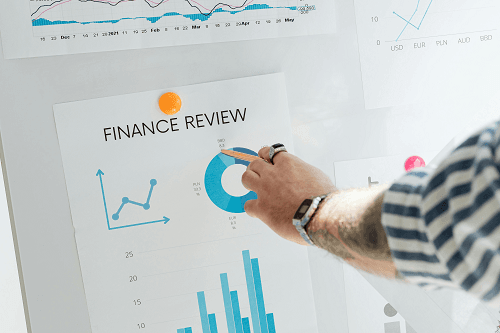
Governance vs Management: Clear Distinctions
Although governance and management are closely connected, they serve different purposes within an organisation.
Management focuses on day-to-day operations. Managers oversee tasks, coordinate teams, and ensure that projects are delivered efficiently.
Governance, on the other hand, focuses on oversight.
Governance structures guide how decisions are made, how performance is reviewed, and how leaders remain accountable to stakeholders.
Understanding the distinction between governance and management helps organisations maintain balance between operational execution and strategic oversight.
Information Integrity and Reporting at Board Level
Effective governance depends heavily on the quality of information available to leadership teams. Strategic decisions require accurate data, clear reporting, and reliable analysis.
If reporting systems are weak or inconsistent, leaders may struggle to evaluate organisational performance.
Information integrity therefore becomes a critical component of governance.
At this stage, many leadership teams engage a business consultant for SMEs to help strengthen decision structures, accountability, and governance discipline.
Importance of Reliable Reporting
Reliable reporting provides leaders with a clear understanding of the organisation’s performance.
Board-level reporting often includes:
- financial performance metrics
- operational indicators
- strategic progress updates
- risk assessments
These reports allow leadership teams to monitor progress and identify emerging challenges.
When reporting systems are transparent and consistent, decision-making becomes more informed.
Strengthening Data Integrity
Consultants often help organisations strengthen reporting systems by improving:
- financial reporting accuracy
- performance dashboards
- internal data collection processes
- communication between departments
These improvements ensure that board discussions are based on reliable information rather than assumptions.
Accurate reporting supports more confident decision-making and strengthens governance accountability. Where systems need improvement, organisations often explore the Business Consulting for Growing SMEs.

When Should You Invest in Strategic Management & Governance Support?
Consider structured support when:
• Growth is accelerating
• Strategy feels disconnected from execution
• Board effectiveness is unclear
• Risk exposure is increasing
• Reporting reliability is questioned
Early intervention prevents structural damage.
FAQ
Strategy defines direction. Governance ensures disciplined execution and accountability.
Yes. Once teams grow and decisions decentralise, governance prevents confusion and risk.
Typically during rapid growth, investor involvement, or increased risk exposure.
No. Consultants design strategy. Advisors provide ongoing oversight.
Poor governance can. Well-designed governance improves speed and decision clarity.
Work With an Experienced Business Advisor
f your business is growing and decisions are becoming more complex, the risk is not lack of effort. It is lack of structure.
Strategic management and governance provide:
• clear direction under uncertainty
• disciplined decision-making
• accountability across leadership
• controlled, sustainable growth
Explore our private advisory services and introduce the structure required to scale with confidence.
This is not theory.
This is strategic control.