Small businesses operate in an environment where every decision carries weight. Resources are limited, teams are lean and leadership responsibility often sits with a small number of people. As a result, strategic mistakes can have a greater impact than they would inside larger organisations.
In growing SMEs, founders begin by speaking with a small business consultant in Ireland who understands the operational and leadership challenges facing growing SMEs.
Small business consulting provides structured support. It strengthens planning, decision-making, and operational stability before problems arise. Consultants apply disciplined analysis and practical guidance. They identify bottlenecks, clarify priorities, and build systems that support consistent, sustainable growth.
Consulting does not replace leadership. Instead, it supports decision-makers by introducing external perspective and proven frameworks. When implemented correctly, small business consulting strengthens organisational resilience while allowing founders to maintain control of their vision.
What Is Small Business Consulting?
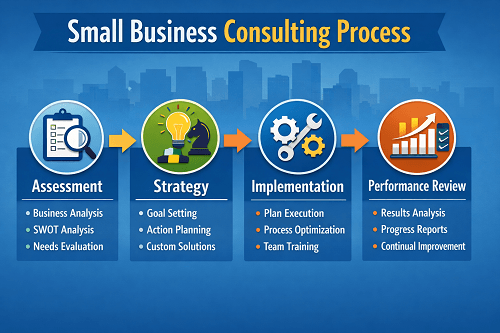
Small business consulting is a structured professional service focused on improving how a business operates.
Consultants work with founders and leadership teams to:
- analyse current processes
- identify inefficiencies
- design improvements
- implement systems
- improve performance
It is not theoretical advice. It is practical, structured intervention.
Unlike the Business Coaching for SME Owners, which improves how leaders think, consulting improves how the business functions.

Core Areas Small Business Consultants Address
Consultants typically work across several areas at once. These areas often include:
• Business strategy development
• Financial planning and forecasting
• Operational efficiency
• Market positioning
• Leadership structure
• Growth planning
Each of these areas influences the stability of the business. When one weakens, the others often suffer as well.
Situations Where Small Businesses Need Consulting
- Scaling beyond founder-led decision making
- Expanding into new markets or launching new products
- Profitability declining despite stable or growing revenue
- Hiring increasing without clear structure or accountability
- Preparing for external investment or formal governance
Practical Role of a Consultant
In practice, small business consultants help organisations move from reactive management to structured leadership.
They often assist with:
• Diagnosing operational challenges
• Clarifying growth strategy
• Designing improved reporting systems
• Establishing measurable performance indicators
• Supporting leadership decision-making
As these systems improve, founders gain greater visibility over the business. This visibility strengthens confidence and reduces uncertainty.
Where strategic guidance begins to extend beyond operational improvements, organisations often benefit from structured Business Advisory for SME Owners support.
Long-Term Strategic Support
Consulting engagements vary in length. Some focus on short-term challenges, such as preparing for expansion or resolving operational inefficiencies. Others develop into longer partnerships where the consultant supports ongoing strategic development.
In these longer engagements, consultants may assist with:
• Growth planning
• Leadership development
• Market expansion
• Financial strategy
• Operational scaling
Over time, this relationship can strengthen both the structure of the business and the confidence of its leadership.
Why Small Businesses Seek Consulting Support
Consulting becomes valuable when growth introduces complexity.
As companies expand, the systems that supported early success may no longer be sufficient. Informal communication structures begin to strain. Decision-making slows. Financial oversight becomes more demanding.
Consulting provides structure during this transition.
Growth Creates Structural Pressure
Growth introduces operational pressure.
For example:
• Teams become larger
• Reporting becomes more complex
• Customer expectations increase
• Competition intensifies
Without appropriate systems, these pressures create instability. Consulting helps introduce the structures required for sustainable expansion.
External Perspective
One of the greatest advantages of consulting is perspective. Internal teams often become too close to operational challenges. As a result, inefficiencies may go unnoticed.
Consultants provide independent analysis. They ask questions that internal teams may overlook and challenge assumptions that have become routine.
This external perspective often reveals opportunities for improvement that were previously invisible.
Where organisational challenges begin to involve leadership behaviour and decision-making patterns, structured Business Consulting for Growing SMEs can reinforce long-term improvement.
When Consulting Becomes Most Valuable
Although consulting can be helpful at any stage, it tends to deliver the greatest value during key transition periods.
These often include:
• Rapid growth phases
• Market expansion
• Leadership restructuring
• Financial performance decline
• Strategic repositioning
During these moments, clear external guidance can help organisations avoid costly mistakes.
Consulting introduces structure when uncertainty increases.
Small Business Mentor vs Consultant: What’s the Difference?
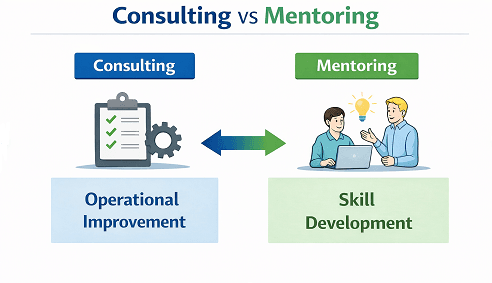
Small business consulting and business mentoring services are often confused. At first glance, both roles appear similar. Each involves helping organisations improve performance and strategy. However, the way they operate can be quite different.
A small business consultant usually works on specific operational or strategic challenges. The work is often project-based and focused on solving a defined problem.
A business mentor, on the other hand, often works with leadership over a longer period. Instead of focusing on a single issue, the mentor supports broader strategic direction and governance decisions.
Although the two roles overlap, understanding the distinction helps organisations choose the right support.
The Focus of a Small Business Consultant
Consultants typically concentrate on solving practical challenges inside the organisation. Their work often includes analysing systems, identifying inefficiencies and recommending improvements.
Common consulting assignments may involve:
• Reviewing operational processes
• Improving financial reporting systems
• Designing growth strategies
• Assessing marketing performance
• Identifying cost reduction opportunities
These projects usually have clear objectives and timelines. Once the problem is addressed and systems are improved, the engagement may conclude.
Consulting therefore focuses strongly on implementation and measurable outcomes.
The Role of a Business Mentor
Business mentors usually operate at a more strategic level. Instead of concentrating on a single operational issue, they work alongside leadership to support decision-making over time.
Typical mentoring support may include:
• Long-term strategy discussion
• Governance guidance
• Leadership decision support
• Risk evaluation
• Market positioning advice
Because of this broader scope, mentoring relationships often continue for several years.
Mentors provide perspective rather than direct operational intervention.
Organisations seeking long-term strategic guidance often complement consulting projects with structured Business Mentoring for SME Owners support.
When Businesses Need Both
In practice, many growing organisations benefit from both services.
For example, a consultant may help redesign operational systems. At the same time, a business mentor may help leadership evaluate long-term strategy and governance.
Together, these services strengthen both structure and direction.
Consulting improves how the business operates today.
Mentoring strengthens how the business plans for tomorrow.
Small Business Consulting Services: What Do They Include?
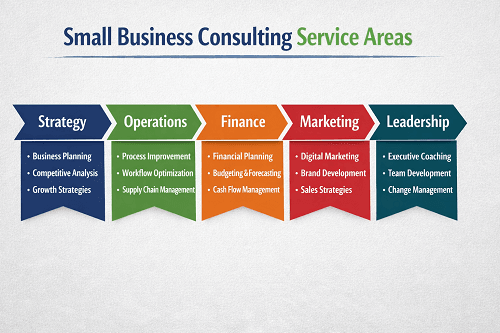
Small businesses face many different challenges as they grow. Because of this, consulting services often vary depending on the needs of the organisation. Some engagements focus on operational improvement, while others support strategic planning or financial stability.
The most effective consulting approach examines the business as a whole. A marketing challenge may be connected to pricing strategy. Operational inefficiencies may affect profitability. Leadership structure may influence productivity.
For this reason, consultants often work across several service areas.
Strategic Planning and Business Direction
One of the most common consulting services involves helping organisations clarify their strategic direction.
Small businesses often grow quickly in the early stages. However, rapid growth can create confusion about priorities. Teams may pursue multiple opportunities at once without clear focus.
Consultants help leadership define:
• long-term business objectives
• target markets
• competitive positioning
• realistic growth plans
With clear strategy in place, decision-making becomes easier. Teams understand where the organisation is heading and how their work contributes to that direction.
Where strategic planning becomes central to leadership decision-making, structured Strategic Management & Governance for SMEs frameworks can strengthen long-term organisational discipline.
Operational Efficiency and Process Improvement
Operational consulting focuses on improving how the business functions day to day. Many organisations develop processes gradually as they grow. Over time, these processes may become inefficient or outdated.
Consultants analyse workflows and identify opportunities for improvement.
This may include:
• simplifying operational procedures
• improving reporting systems
• clarifying staff responsibilities
• reducing operational costs
Even small improvements can have significant impact when applied consistently.
For example, improving inventory management or workflow coordination can reduce delays and increase productivity across the organisation.
Financial Planning and Performance Monitoring
Financial clarity is essential for sustainable growth. Many small businesses struggle with financial planning, particularly during expansion.
Consultants often support organisations by improving financial visibility. This includes:
• forecasting revenue and expenses
• analysing profitability across products or services
• improving budgeting systems
• identifying cost management opportunities
Better financial insight allows leaders to make decisions based on reliable data rather than assumptions.
Small business financial planning guidance is widely supported by resources from the UK Government’s business support services.
Marketing and Market Positioning
Consultants may also help organisations refine how they present themselves in the marketplace.
This work often includes:
• analysing customer behaviour
• reviewing marketing channels
• clarifying brand positioning
• improving customer acquisition strategy
Small adjustments in marketing strategy can significantly increase visibility and customer engagement.
Consultants therefore focus on aligning marketing activity with overall business strategy.
Leadership and Organisational Structure
As businesses grow, leadership structure becomes more important. Founders often carry many responsibilities in the early stages. Over time, however, responsibilities must be distributed more effectively.
Consultants help clarify:
• leadership roles
• reporting relationships
• decision authority
• team responsibilities
When structure improves, communication becomes clearer and execution becomes faster.
In many cases, companies also work alongside a trusted business advisor in Ireland who can provide strategic perspective on growth, governance, and organisational development.
When Should a Small Business Hire a Consultant?
Many business owners hesitate before hiring a consultant. Founders often prefer to solve problems internally whenever possible.
However, there are moments when external expertise becomes particularly valuable.
Consulting is most effective when organisations are experiencing transition or uncertainty.
Rapid Growth
Rapid growth is exciting, but it can also create instability. Systems that worked well for a small team may struggle when the organisation expands.
Typical growth challenges include:
• increased operational complexity
• communication breakdowns
• unclear responsibilities
• financial pressure
Consultants help businesses stabilise these transitions by introducing clearer structures.
Strategic Uncertainty
Some businesses reach a stage where growth slows or opportunities become unclear. Leadership may debate several possible directions without reaching consensus.
Consultants help analyse available options objectively.
They may examine:
• market trends
• competitor positioning
• internal capabilities
• financial feasibility
This analysis helps leadership select the most viable path forward.
Operational Challenges
Consultants are often engaged when operational problems begin to affect performance.
Examples include:
• declining customer satisfaction
• delayed project delivery
• rising operational costs
• inconsistent product quality
Rather than addressing each issue separately, consultants examine the broader system to identify underlying causes.
Once the root cause is addressed, multiple problems may improve at the same time.
Preparing for Expansion
Consulting is also valuable when businesses plan significant expansion. Entering new markets or launching new products introduces risk.
Consultants help organisations prepare by analysing:
• market demand
• operational capacity
• financial exposure
• competitive landscape
This preparation reduces uncertainty and improves the likelihood of successful expansion.
Research published by the Chartered Management Institute highlights the importance of structured planning for sustainable business growth.
This strengthens credibility around management practice and planning.
Objective Perspective
Finally, one of the most valuable contributions of consulting is objectivity.
Internal teams often become deeply involved in day-to-day operations. As a result, it can be difficult to step back and evaluate the organisation from a strategic perspective.
Consultants provide that distance.
They bring external experience, fresh analysis and independent judgement.
This perspective can reveal opportunities that internal teams may overlook.
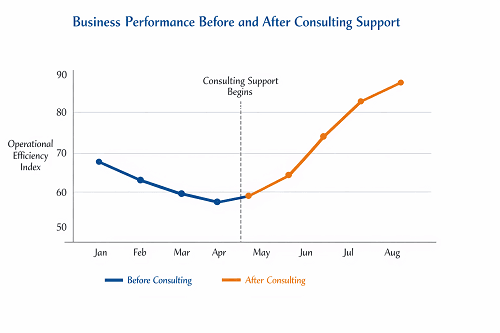
How Small Business Consulting Improves Profitability
Small business consulting is not simply about solving operational problems. At its best, it improves how a business generates value, manages resources and converts effort into financial performance.
Profitability rarely improves through a single change. Instead, it grows through a combination of clearer strategy, better operational discipline and stronger decision-making across leadership.
Consultants help owners and leadership teams examine the business through a structured lens. This allows them to identify where profit is being lost, where processes are inefficient and where opportunities for growth remain underdeveloped.
In many SMEs, the biggest barrier to profitability is not the market itself. The challenge often lies inside the organisation.
Strategic Clarity and Profit Drivers
Profitability improves when leaders understand which activities truly drive value in the business.
Consultants therefore begin by examining the economic engine of the organisation.
This includes analysing:
• revenue sources
• cost structures
• pricing models
• product or service margins
• customer acquisition costs
Once these elements are visible, leaders can focus attention where it matters most.
In some cases, the most profitable improvement is not growth but removal of inefficiencies.
Operational Efficiency and Cost Discipline
Operational inefficiency is one of the most common profit drains in small businesses.
Processes often evolve organically during early growth. Over time, however, informal systems become obstacles.
Consultants therefore examine:
• workflow structures
• operational duplication
• communication bottlenecks
• supplier cost structures
• technology usage
By streamlining operations, businesses reduce waste while improving output.
Even small improvements in operational efficiency can significantly increase profit margins.
For example:
Reducing project delivery time by ten percent can increase capacity without hiring additional staff.
Similarly, improving procurement processes may reduce supplier costs across the entire organisation.
These changes accumulate over time, strengthening profitability and financial resilience.
Leadership Decision Discipline
Profitability also improves when leadership decisions become more deliberate.
In many growing SMEs, founders carry a heavy decision load. As the organisation expands, however, reactive decision-making becomes risky.
Consultants introduce decision frameworks that support better judgement.
This includes:
• structured financial review
• performance dashboards
• strategic planning cycles
• defined accountability for outcomes
These structures create consistency.
Instead of reacting to problems as they appear, leaders begin to anticipate them.
This shift from reactive management to proactive leadership is one of the most powerful outcomes of consulting support.
For businesses seeking to strengthen leadership decision-making further, structured genius unlocked programmes can reinforce these improvements over time.
Professionalising a 5–30 Person Business
Businesses with between five and thirty employees often face a critical transition phase.
At this stage, growth has moved beyond the founder’s direct control. Yet formal management systems may still be underdeveloped.
The result is organisational tension.
Processes may be inconsistent. Decision authority may be unclear. Employees may rely heavily on the founder for direction.
Professionalising the business means introducing structure while preserving entrepreneurial agility.
Small business consulting helps organisations make this transition smoothly.
At this stage, many organisations benefit from working with a business consultant for SMEs who can help establish stronger structure, accountability, and decision-making discipline.
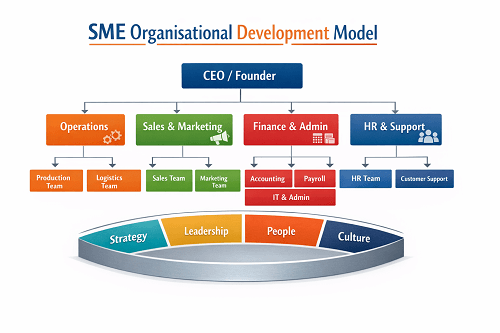
Building Management Structure
As headcount increases, leadership responsibility must be distributed across the organisation.
Consultants help clarify management roles and reporting relationships.
This includes defining:
• department responsibilities
• reporting lines
• decision authority
• performance accountability
Without this clarity, employees often seek direction from the founder even when managers are present.
Establishing a structured leadership hierarchy reduces confusion and supports faster decision-making.
Creating Operational Consistency
Professionalisation also requires consistent operational processes.
Consultants work with leadership teams to document and standardise critical procedures.
These may include:
• sales processes
• client onboarding
• project management workflows
• financial reporting routines
When processes are consistent, performance becomes predictable.
Teams understand expectations. Managers can monitor results more effectively.
Ultimately, this consistency allows the business to grow without losing control.
Strengthening Leadership Capability
As organisations grow, leadership demands evolve.
Founders must move from direct execution toward strategic oversight.
Managers must learn to lead teams rather than simply perform technical work.
Consulting support often includes leadership development initiatives that strengthen these capabilities.
For deeper behavioural work with leadership teams, businesses may also explore Executive Coaching for Senior Leaders programmes that complement consulting engagement.
Implementing KPIs in Small Businesses
Key Performance Indicators (KPIs) provide measurable insight into how well a business is performing.
Without clear metrics, leaders rely on intuition rather than evidence.
Small business consulting introduces KPI frameworks that align performance measurement with strategic objectives.
Selecting the Right KPIs
Not every metric deserves equal attention.
Consultants help businesses focus on indicators that truly influence performance.
Typical SME KPIs include:
• revenue growth rate
• gross profit margin
• customer acquisition cost
• sales conversion rate
• project delivery time
These metrics reveal patterns that might otherwise remain hidden.
Aligning KPIs with Strategy
Metrics must support strategic goals rather than exist in isolation.
If a company aims to expand into new markets, customer acquisition metrics become particularly important.
If operational efficiency is the priority, delivery time and cost indicators become more relevant.
Consultants therefore align KPIs with the broader strategic direction of the organisation.
This alignment ensures that performance measurement supports progress rather than distracting from it.
Clarifying Roles and Responsibilities in SMEs
Ambiguity in roles is one of the most common challenges in growing businesses.
When responsibilities overlap, accountability weakens. Important tasks may fall between departments or remain unresolved.
Small business consulting addresses this issue by clarifying organisational roles.
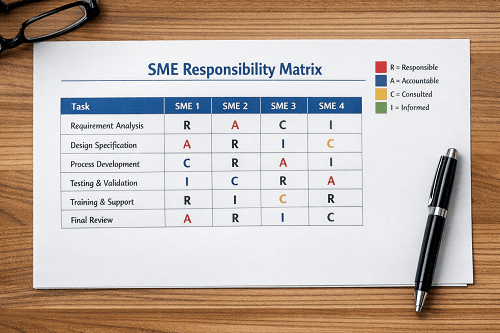
Defining Ownership of Key Functions
Consultants work with leadership teams to assign ownership of critical functions.
This includes areas such as:
• sales leadership
• financial oversight
• operations management
• customer relationship management
Once responsibilities are clearly defined, accountability improves.
Managers understand their authority. Teams know where to escalate decisions.
This clarity reduces internal friction and strengthens organisational efficiency.
Founder Delegation Systems
Delegation becomes essential as businesses grow. Yet many founders struggle to relinquish control.
The issue is rarely lack of trust. Instead, it often reflects concern about maintaining standards or visibility.
Consulting engagement helps founders design structured delegation systems.
Designing Delegation Frameworks
Delegation works best when it follows clear principles.
Consultants therefore help founders establish systems such as:
• decision authority levels
• reporting structures
• performance review cycles
• escalation protocols
These systems ensure that delegation does not reduce control but rather distributes it effectively.
As leadership capacity expands, founders gain time to focus on strategy and growth.
When leadership challenges involve sensitive strategic decisions, confidential private advisory discussions may also support clearer thinking.
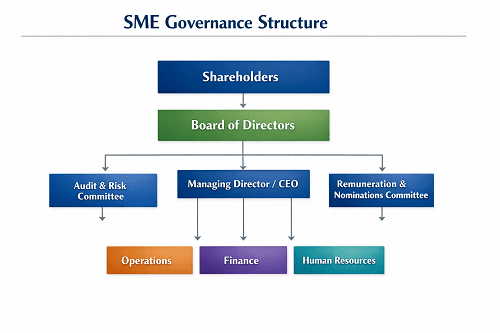
Avoiding Common SME Governance Mistakes
Governance may sound like a corporate concept, yet it is equally important for small businesses.
Without governance discipline, organisations become vulnerable to financial risk, operational confusion and leadership conflict.
Small business consulting strengthens governance frameworks before these risks escalate.
Some founders also strengthen leadership awareness through development programmes such as genius unlocked, which focuses on mindset, leadership clarity, and strategic thinking.
Common Governance Mistakes
Consultants frequently encounter governance weaknesses such as:
• unclear reporting lines
• lack of financial transparency
• informal decision processes
• limited performance oversight
These issues may remain manageable during early growth. However, they become dangerous as the business scales.
By introducing governance structures early, organisations create stability that supports long-term success.
Why Experienced Consultants Matter for SME Growth
Experienced consultants bring pattern recognition that internal teams often lack.
They have seen similar growth challenges across multiple organisations and can quickly identify what is not working.
This experience allows them to:
• Identify root issues faster
• Avoid costly trial-and-error decisions
• Apply proven frameworks to new situations
• Challenge assumptions with confidence
• Introduce structure without unnecessary complexity
For growing SMEs, this reduces risk and accelerates decision quality.
When Should You Invest in Small Business Consulting?
Invest in small business consulting when:
• Systems are straining under growth
• Leadership capacity is stretched
• Profitability lacks consistency
• Governance risk is rising
• Accountability feels unclear
Consulting is not a sign of weakness. It is a maturity decision.
FAQ
Costs vary depending on scope, but most SME consulting is structured as project-based or monthly advisory engagements.
Most projects run between 3–6 months, depending on complexity and implementation scope.
No. Many SMEs engage consultants during growth phases to prevent problems before they arise.
Consulting improves systems and operations. Coaching focuses on leadership behaviour and decision-making.
Targeted consulting often delivers strong ROI by improving efficiency, profitability and decision clarity.
Work With an Experienced Business Advisor
If your business is growing but operations feel inconsistent, the constraint is not effort alone. It is structure.
Small business consulting strengthens how your business:
- improves operational clarity
- builds systems that support daily execution
- aligns resources with strategic priorities
- delivers consistent, measurable performance
Without structured systems, growth creates pressure instead of stability.
Explore our private advisory services and implement the structures required for sustainable, controlled growth.
This is not advice.
This is execution.