
Business development defines how a business grows, where opportunities come from, and how they are converted into sustainable revenue. It goes beyond sales activity. It shapes market positioning, partnerships, and long-term growth direction.
Many SMEs in Ireland reach a point where growth becomes inconsistent or unpredictable. At this stage, working with a business consultant in Ireland helps introduce structure into how opportunities are identified and converted.
When business development is unstructured, activity increases but results remain inconsistent. Structured business development introduces clarity, discipline, and repeatability.
In this guide, we explore what business development involves, how it works in practice, and when SMEs need structured support.
What Is Business Development?

Business development is the structured process of creating sustainable growth by identifying opportunities, converting them into revenue, and building the internal capability to deliver consistently.
It focuses on long-term growth architecture rather than individual transactions.
Key questions include:
- which markets should we focus on
- which clients are most valuable
- how should we position our services
- what partnerships can accelerate growth
- what internal systems must improve
The Three Pillars of Business Development
Although business development can involve many activities, most successful growth strategies rest on three core pillars.
1. Opportunity Identification
The first step in business development is identifying the right opportunities.
This involves analysing markets, industries, and customer segments to determine where the organisation can create the most value.
Opportunity identification therefore requires:
- market research
- competitive analysis
- customer profiling
- trend evaluation
- partnership exploration
2. Opportunity Conversion
Once opportunities are identified, the business must convert them into revenue.
This stage includes the commercial activities that move a prospect from initial awareness to a committed client relationship.
Typical elements include:
- relationship building
- value proposition development
- proposal creation
- negotiation
- contract agreement
3. Capability Development
Sustainable growth requires more than winning contracts. The organisation must be capable of delivering consistently.
Capability development therefore focuses on strengthening the internal systems that support expansion.
These systems may include:
- operational processes
- leadership structure
- performance management systems
- financial controls
- delivery frameworks
By building these capabilities deliberately, business development ensures that growth remains manageable.
Why Business Development Matters for SMEs
Many SMEs rely on referrals and founder relationships. While effective initially, this creates unpredictable revenue. Structured business development replaces this with a deliberate, repeatable pipeline.
A referral-based pipeline is unpredictable. When referrals slow down, revenue can drop suddenly.
Instead of waiting for opportunities to appear, the organisation actively creates them. Markets are selected deliberately. Relationships are cultivated strategically. Partnerships are explored carefully.
Companies that implement structured business development often experience:
- more predictable revenue
- stronger market positioning
- improved client relationships
- higher profitability
- greater leadership confidence
Growth becomes something the organisation designs rather than something it hopes for.
For a broader understanding of how structured guidance supports long-term growth, many organisations explore a comprehensive business advisory guide. It explains how advisory frameworks strengthen decision-making and governance.
Situations Where Businesses Need Structured Business Development
Businesses typically invest in structured business development when growth becomes inconsistent or difficult to sustain.
Common scenarios include:
• scaling beyond founder-led sales and relationships
• entering new markets without a clear expansion strategy
• revenue growth without corresponding profit improvement
• inconsistent pipeline with unpredictable deal flow
• over-reliance on a small number of key clients
In these situations, growth requires structure, not just increased activity.
Business Development Consultant: What Do They Do?
A business development consultant diagnoses how growth currently occurs and designs structured improvements to increase consistency and profitability.
Diagnosing the Growth Engine
The first step in most consulting engagements is understanding how growth currently happens.
Consultants analyse several areas, including:
- lead generation channels
- conversion rates
- pricing strategies
- client acquisition costs
- customer retention patterns
Clarifying Target Markets
A consultant helps identify the organisation’s ideal client profile.
This includes analysing:
- industry sectors
- company size
- decision-maker roles
- common client challenges
- purchasing behaviour
By narrowing the focus to the most suitable clients, businesses improve both efficiency and profitability.
Strengthening the Value Proposition
A strong value proposition explains why clients should choose your business over alternatives.
Many organisations struggle to clearly articulate their value.
Consultants work with leadership teams to refine the value proposition by examining:
- the organisation’s unique expertise
- the specific problems it solves
- the measurable outcomes clients receive
- the evidence that supports these claims
Once the value proposition becomes clearer, marketing and sales efforts become far more effective.
Improving Pipeline Discipline
Consultants help introduce pipeline discipline by defining stages such as:
- prospect identification
- initial contact
- needs assessment
- proposal development
- negotiation
- contract agreement
Each stage includes measurable indicators that help leadership track progress.
This visibility improves forecasting accuracy and exposes pipeline risk earlier.
Businesses seeking stronger strategic direction often begin with the Business Consulting for Growing SMEs, which explains how advisory support improves organisational performance.
Aligning Growth with Delivery Capacity
One of the most overlooked aspects of business development is operational alignment.
Winning new clients creates pressure on delivery teams. If systems are not prepared, service quality may decline.
Consultants therefore examine whether the organisation has the resources, processes, and leadership capacity required to support growth.
This may involve:
- improving operational workflows
- strengthening project management systems
- refining staffing plans
- improving communication between teams
When growth and delivery are aligned, businesses can expand confidently without sacrificing quality.
Business Growth Consultant Ireland: What to Look For
Businesses searching for growth support in Ireland often encounter a wide range of advisors, consultants, and coaches.
A business growth consultant focuses specifically on helping organisations design and implement strategies that increase revenue while protecting operational stability.
Many founders also benefit from experienced business mentoring services, which provides practical insight drawn from real entrepreneurial journeys.
Commercial Experience
Commercially experienced consultants usually demonstrate familiarity with areas such as:
- revenue planning
- pricing strategy
- operational scaling
- leadership structure
- financial performance management
This experience allows them to move beyond theoretical advice and provide practical recommendations that work in real-world conditions.
Strategic Thinking
Growth consulting also requires strong strategic thinking.
Without a clear strategy, businesses often pursue opportunities that appear attractive but ultimately distract from long-term goals.
Strategic thinking may involve examining:
- market trends
- competitor positioning
- customer demand patterns
- industry developments
- organisational capabilities
By evaluating these factors together, consultants help businesses identify growth opportunities that align with their strengths.
The goal is not simply expansion. It is focused expansion.
Communication and Collaboration
A consultant therefore needs strong communication skills. They must translate complex ideas into practical steps that leaders and employees can implement confidently.
Effective consultants typically:
- facilitate structured workshops
- encourage leadership discussion
- clarify priorities
- translate strategy into action plans
This collaborative approach ensures that growth initiatives receive support across the organisation.
Understanding the Irish Business Environment
For organisations operating in Ireland, local context also matters.
The Irish business landscape includes unique regulatory frameworks, funding programmes, and industry clusters that influence growth opportunities. A consultant familiar with these dynamics can provide more relevant guidance.
For example, consultants may help businesses navigate programmes supported by Enterprise Ireland, which provides funding and development support to Irish companies seeking international growth.
Cultural Alignment
Growth decisions often involve difficult conversations about priorities, capabilities, and organisational change. Leaders must feel comfortable discussing these topics openly.
When the consultant’s working style aligns with the leadership culture, collaboration becomes far more effective.
Over time, this alignment allows strategic discussions to move from theory into disciplined execution.

Why Experienced Growth Advisors Matter for SMEs
Business development decisions shape long-term performance. Poorly structured growth can strain operations, reduce margins, and weaken customer experience.
Experienced advisors bring:
• practical exposure to scaling businesses
• understanding of commercial risk during expansion
• ability to prioritise high-impact opportunities
• discipline in aligning growth with operational capacity
Unlike theoretical guidance, experienced advisors apply proven frameworks that balance ambition with sustainability.
How Business Development Drives Profitability
Revenue growth alone does not guarantee financial success.
Business development addresses this risk by ensuring that growth initiatives strengthen the economic foundation of the organisation.
This happens through a combination of market focus, pricing discipline, operational efficiency, and strategic partnerships.
Improving Market Focus
Profitability improves when businesses focus on the markets where they create the most value.
Without deliberate market selection, organisations may accept projects that consume time but generate little profit.
Business development encourages leaders to analyse:
- customer profitability
- service margins
- demand patterns
- sector growth potential
When this analysis is performed carefully, businesses often discover that certain customer segments consistently produce stronger financial results.
Strengthening Pricing Discipline
Pricing plays a critical role in profitability, yet many SMEs struggle to maintain consistent pricing strategies.
Discounting often becomes the default approach when businesses compete for work. While discounts may help secure contracts in the short term, they frequently erode long-term margins.
Business development consultants help organisations strengthen pricing discipline by examining:
- the value delivered to clients
- competitive positioning
- cost structures
- perceived differentiation
When pricing reflects genuine value rather than pressure to win work, profitability becomes more sustainable.
Building Strategic Partnerships
Another way business development improves profitability is through partnerships.
Strategic partnerships allow organisations to access new markets, expand service offerings, and increase credibility without developing every capability internally.
Examples include:
- referral partnerships
- joint ventures
- channel partnerships
- collaborative service delivery
These partnerships allow businesses to grow more efficiently because they leverage existing networks and expertise.
Enhancing Client Retention
Winning new clients requires significant time and effort. Retaining existing clients, however, often produces higher returns.
Business development strategies therefore include structured client relationship management.
This involves:
- regular communication
- proactive problem solving
- identifying new opportunities within existing accounts
- maintaining service quality
When client retention improves, revenue becomes more stable and marketing costs decrease.
Many organisations also strengthen their growth strategy through structured Business Coaching for SME Owners, which helps leadership teams improve decision-making and maintain focus during expansion.
Aligning Growth With Operational Efficiency
Profitability also depends on operational efficiency.
If new clients require excessive time or resources to serve, margins decline. Business development therefore works closely with operational management to ensure that growth aligns with delivery capacity.
Consultants may help improve:
- workflow efficiency
- project management systems
- resource allocation
- communication between departments
These improvements ensure that growth increases profit rather than operational stress.

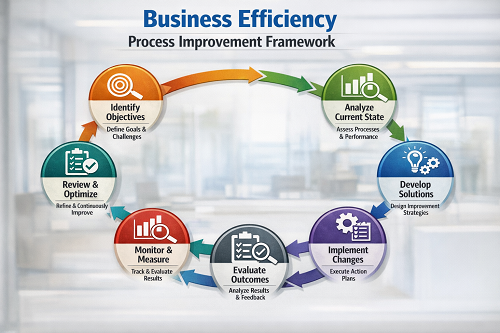
Business Efficiency Consultant: What Problems Do They Solve?
A business efficiency consultant improves how the organisation operates as it grows. Rather than concentrating purely on revenue growth, they examine the internal systems that support daily activities. Their objective is to ensure that the business operates efficiently as it grows.
Efficiency consulting therefore sits closely alongside business development. While development focuses on generating opportunities, efficiency consulting ensures that the organisation can deliver those opportunities consistently.
In practice, many companies work alongside a trusted business advisor in Ireland who can help leadership teams evaluate growth opportunities objectively.
Identifying Operational Bottlenecks
A bottleneck occurs when a particular process slows down the entire system. In growing businesses, bottlenecks frequently appear in areas such as project management, communication, or decision-making.
Efficiency consultants analyse workflows to identify where these delays occur.
This often involves reviewing:
- internal processes
- approval structures
- communication flows
- resource allocation
- technology usage
Once bottlenecks become visible, they can be addressed through improved structure and clearer responsibilities.
Improving Process Design
Many SMEs develop processes informally during their early years. While this flexibility can support rapid growth, it often leads to inconsistency as the business expands.
This may include improving:
- client onboarding procedures
- project management workflows
- reporting systems
- internal communication routines
- performance monitoring processes
When processes are documented and standardised, employees can perform tasks more consistently. This reduces confusion and improves overall productivity.
Reducing Operational Waste
Operational waste does not always mean financial loss. It can also involve wasted time, duplicated work, or unnecessary complexity.
Common sources of waste in SMEs include:
- repetitive manual tasks
- unclear decision ownership
- inefficient meeting structures
- excessive email communication
- poorly integrated software tools
By identifying these inefficiencies, consultants help businesses streamline operations.
Strengthening Organisational Structure
As businesses grow, roles evolve. Employees who once handled multiple responsibilities may now need to specialise. Without clear role definitions, however, confusion can emerge.
Efficiency consultants help leaders clarify:
- departmental responsibilities
- reporting relationships
- decision authority
- accountability for outcomes
This structural clarity ensures that tasks are completed efficiently and that employees know where to seek guidance.
Many organisations begin improving operational discipline through structured Business Consulting for Growing SMEs, which helps leaders clarify systems, roles, and performance expectations.
Growth Planning Frameworks for SMEs
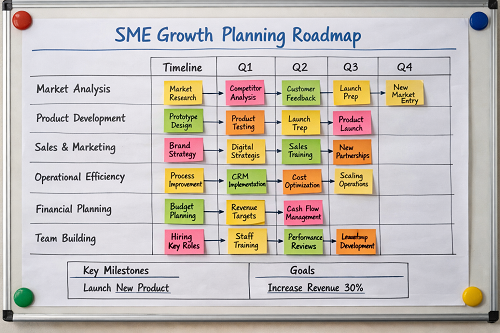
Sustainable expansion requires deliberate planning, clear priorities, and measurable milestones.
Many SMEs attempt to grow by pursuing opportunities as they appear. Without a structured plan, leaders can struggle to decide which opportunities deserve attention.
A growth framework provides a structured way to analyse opportunities, prioritise initiatives, and allocate resources effectively. It ensures that expansion supports the long-term direction of the business rather than distracting from it.
Strategic Growth Assessment
The first stage of growth planning is assessing the organisation’s current position.
Consultants typically begin by analysing several key areas:
- current revenue streams
- customer segments
- market positioning
- operational capacity
- financial performance
Once this baseline is established, leaders can begin identifying realistic growth opportunities.
For instance, a company might discover that its strongest margins come from a specific industry sector. Rather than expanding broadly, the business can prioritise that sector for future growth.
Defining Growth Objectives
After assessing the current situation, the next step is defining clear growth objectives.
These objectives should be specific and measurable. Vague ambitions such as “increase revenue” are rarely helpful. Instead, organisations should define goals such as:
- increasing revenue by a specific percentage
- expanding into a defined market segment
- launching a new service line
- improving customer retention rates
Identifying Strategic Initiatives
Once objectives are defined, the organisation must determine which initiatives will drive growth.
These initiatives may include:
- developing new partnerships
- expanding marketing channels
- introducing new products or services
- strengthening sales processes
- improving operational capacity
Consultants often help leaders prioritise initiatives based on potential impact and feasibility. This prevents organisations from pursuing too many projects simultaneously.
Establishing Performance Metrics
Growth plans require measurable indicators.
Consultants therefore help businesses establish performance indicators such as:
- pipeline growth
- conversion rates
- customer acquisition cost
- revenue per client
- customer retention rate
Tracking these indicators regularly allows leadership teams to adjust their strategy when necessary. Leadership teams often reinforce growth planning through Executive Coaching for Senior Leaders, which helps senior leaders maintain strategic clarity and focus during periods of expansion.
Implementing the Growth Plan
Designing a growth strategy is only the first step. Implementation determines whether the plan succeeds.
Successful implementation typically requires:
- clear leadership ownership
- regular progress reviews
- transparent communication with teams
- flexibility to adapt when conditions change
Consultants often facilitate structured review meetings where leaders evaluate progress against objectives and adjust priorities when necessary.
Expanding into New Markets Strategically
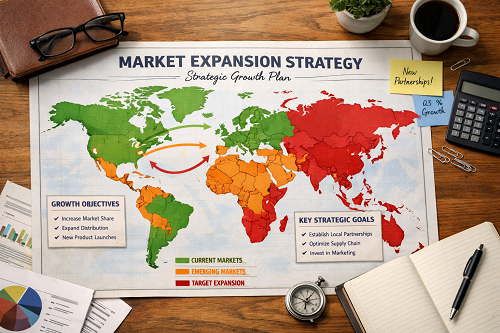
Many organisations pursue new markets too quickly. They assume that success in one sector or region will automatically translate into another. In reality, each market has its own dynamics, expectations, and competitive landscape.
Strategic expansion requires deliberate preparation.
Business development helps organisations evaluate new opportunities carefully before committing significant resources. This structured approach reduces uncertainty and improves the likelihood of success.
Evaluating Market Potential
Before entering a new market, businesses must understand its potential.
This involves examining several factors:
- demand for the product or service
- competitive intensity
- regulatory requirements
- cultural and purchasing behaviours
- pricing expectations
Market research can reveal whether the opportunity is realistic or merely attractive in theory.
Evaluating these factors early helps organisations avoid costly mistakes.
Testing the Market
Rather than committing fully to a new market immediately, many organisations benefit from a gradual entry strategy.
Testing the market allows businesses to learn before scaling.
Common testing approaches include:
- pilot projects
- strategic partnerships
- limited marketing campaigns
- targeted networking initiatives
These activities generate valuable insights into how the market responds to the organisation’s offering.
If the response is positive, the business can then invest more confidently in expansion.
Preparing Internal Capability
Winning new clients in unfamiliar markets often requires adjustments to marketing messages, service delivery models, or operational processes.
Business development consultants therefore examine whether the organisation has the capacity to support expansion.
This may involve reviewing:
- staffing levels
- delivery processes
- financial resources
- leadership bandwidth
When internal capability aligns with external opportunity, expansion becomes far more manageable.
Revenue Diversification Strategies
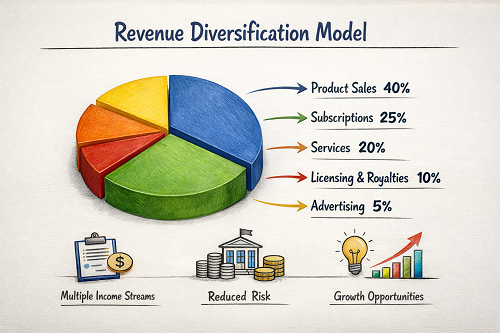
When organisations rely heavily on a single client segment, service line, or lead source, they become vulnerable to sudden changes in demand. A downturn in one area can quickly affect overall financial stability.
Diversification does not mean abandoning core strengths. Instead, it involves expanding the ways in which the organisation creates value.
Developing Recurring Revenue
Recurring revenue provides predictable income and reduces dependence on new client acquisition.
Examples include:
- advisory retainers
- ongoing consulting programmes
- subscription-based services
- long-term support contracts
Recurring revenue stabilises cash flow and allows organisations to plan growth more confidently.
Strengthening Strategic Partnerships
Collaborating with complementary organisations allows businesses to access new markets and capabilities without developing everything internally.
Examples of partnerships include:
- referral relationships
- joint service offerings
- strategic alliances
- distribution partnerships
These arrangements expand the organisation’s reach while maintaining focus on its core strengths.
Aligning Sales Structure with Growth Goals
Aligning the sales structure with growth goals ensures that the organisation’s commercial activities support its strategic direction.
In situations where strategic decisions involve leadership tension or sensitive organisational issues, confidential private advisory discussions may also be helpful.
Defining Sales Roles Clearly
Early-stage organisations may rely heavily on founders to generate new opportunities. While this approach can work initially, it becomes difficult to sustain as the business expands.
Creating defined sales roles helps distribute responsibility more effectively.
Typical sales roles may include:
- lead generation specialists
- business development managers
- account managers
- sales support staff
Each role contributes to a structured pipeline that supports consistent revenue generation.
Establishing Pipeline Visibility
Leaders must be able to see:
- how many opportunities exist
- where those opportunities sit in the pipeline
- which deals are likely to close
- where potential bottlenecks exist
This visibility allows organisations to forecast revenue more accurately and allocate resources effectively.
Supporting Sales with Marketing
Marketing activities generate awareness and attract potential clients. Sales teams then convert those prospects into business relationships.
Aligning these functions ensures that marketing messages reflect the organisation’s value proposition while sales teams receive qualified opportunities.
This collaboration strengthens the entire growth system.
Sustainable Growth Governance

Growth governance refers to the leadership structures that guide expansion responsibly. For governance alignment, leaders often review the Strategic Management & Governance for SMEs.
Strategic Oversight
Leadership teams must regularly review growth initiatives to ensure they remain aligned with long-term objectives.
This oversight often involves:
- quarterly strategy reviews
- performance analysis
- financial evaluation
- market trend monitoring
Regular oversight ensures that growth initiatives remain relevant and profitable.
Accountability Structures
Leaders responsible for growth initiatives must have clear responsibilities and measurable objectives. Regular reporting ensures that progress is transparent and that corrective action can be taken when necessary.
This accountability strengthens organisational discipline and improves decision quality.
Governance frameworks developed by the Institute of Directors provide valuable guidance for organisations seeking to strengthen leadership oversight during growth.
When Should You Invest in Business Development Support?
Business development support delivers strong return when:
• Growth feels inconsistent or reactive
• Revenue depends heavily on referrals or a small number of clients
• Expansion opportunities lack clear prioritisation
• Sales activity exists but lacks structure
• Leadership is unclear where future growth should come from
It does not deliver value when:
• Growth strategy is undefined
• Leadership avoids disciplined execution
• Opportunities are pursued without evaluation
• Accountability for growth is unclear
Organisations often engage a business consultant for SMEs to ensure that growth strategy, governance, and operational execution remain aligned.
FAQ
Sales focuses on closing deals. Business development defines where growth comes from and how opportunities are created and sustained.
Yes. SMEs benefit significantly because structured development reduces reliance on referrals and improves revenue predictability.
When growth becomes inconsistent, expansion decisions lack clarity, or leadership needs a structured growth strategy.
No. SMEs often benefit more because their growth systems are still forming and can be structured early.
Initial clarity can develop within weeks, but measurable revenue and pipeline improvements typically occur over 3–6 months.
Work With an Experienced Business Advisor
If your business is growing but results remain inconsistent, the issue is not effort. It is structure.
Business development creates pipeline clarity, strengthens positioning, and aligns growth with operational capacity.
Not later. Now.
Explore our private advisory services and implement a structured growth system built for predictable, profitable expansion.
This is not activity.
This is controlled growth.