Business coaching is one of the most misunderstood yet valuable tools available to business owners and senior leaders. When applied correctly, it strengthens decision-making, improves accountability and creates the structure required for sustainable growth.
Many SME owners looking for business coaching for SME owners across Ireland are not lacking strategy — they are lacking clarity in decision-making.
While mentoring, consulting and advisory services all provide support, business coaching focuses specifically on how leaders think, decide and act. It does not replace leadership. It strengthens the quality of leadership behind every decision.
Most SMEs don’t have a strategy problem. They have a leadership problem.
What looks like a need for better planning is often:
- inconsistent decision-making
- unclear accountability
- or pressure building at leadership level
Adding more sales without structure doesn’t fix this.
It creates pressure, not growth.
How Business Coaching Applies to SME Owners
At this stage, the issue is not effort.
It is how decisions are being made under pressure.
And this is where many SME owners get it wrong. They try to solve structural problems with more activity, instead of improving how decisions are made.
Most SME owners do not struggle with effort. They struggle with decision clarity, consistency and follow-through.
This usually shows up as:
• second-guessing key decisions
• slow execution despite clear strategy
• accountability drifting across the team
• growth creating pressure instead of momentum
At this stage, the issue is rarely knowledge. It is how decisions are being made under pressure.
This is typically where business coaching for SMEs in Ireland becomes essential.
What Is Business Coaching for SME Owners?
Business coaching is a structured professional process that improves how leaders think, make decisions and execute strategy.
Unlike informal advice, coaching follows a defined process with measurable outcomes.
Rather than solving problems directly, the coach creates an environment where:
• assumptions are tested
• blind spots are identified
• decisions are examined before execution
• behavioural patterns are challenged
This becomes critical during growth, where complexity increases faster than leadership capability.
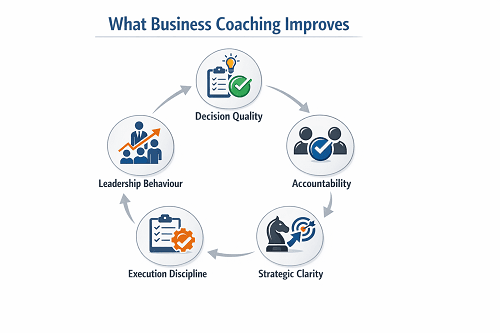
At its core, business coaching strengthens:
• strategic thinking
• leadership behaviour
• accountability discipline
• execution consistency
This often works alongside structured Business Mentoring for SME owners when experience-based guidance is required.
What Does a Business Coach Do?
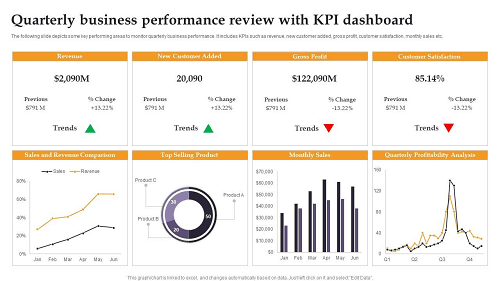
Professional business coaching operates across strategy, accountability, leadership behaviour and decision-making structure.
It does not remove complexity. It strengthens your ability to navigate it.
In more complex situations, this is where private advisory support becomes critical for high-level decisions.
Strategic Thinking Calibration
A coach helps structure decision-making under pressure.
For example:
A founder planning rapid hiring may be guided to assess:
• whether revenue is sustainable
• whether systems can support expansion
• whether leadership capacity is ready
This prevents reactive growth that later creates instability.
Accountability Architecture
Accountability weakens without structure.
Coaching introduces:
• clearly defined objectives
• measurable KPIs
• structured review cadence
• consequence awareness
This ensures consistency as the business grows.
Behavioural Governance
Many business challenges are behavioural, not technical.
Common patterns include:
• avoidance of difficult conversations
• unclear authority
• over-centralised decision-making
• defensive communication
Coaching addresses these before they impact performance.
For example, two directors may give conflicting direction to the same team. Both aligned in intention, but creating confusion in execution and slowing progress.
Why Work With Paul Davis (Business Coach Ireland)
Where Most Coaching Falls Short
Most business coaches focus on motivation.
Most consultants focus on strategy.
Very few operate where real business decisions are made. Under pressure, with real consequences.
That is where Paul Davis works.
As a business coach in Ireland working with SME owners, Paul combines coaching, consulting, and advisory into a single integrated approach.
This is not just coaching.
An Integrated Approach: Coaching, Consulting and Advisory
It is an integrated approach combining:
- coaching (how you think)
- consulting (how the business is structured)
- advisory (how decisions are made)
This is where the inner game of business becomes critical. How you think, decide, and lead under pressure.
Paul works not just as an advisor, but as a thinking partner inside the business. Helping you work through decisions in real time, not after the fact.
Most business consultants, coaches, and mentors operate within a single lens.
They focus on:
• strategy
• performance
• mindset
• or execution
And while each of these has value, real progress rarely comes from addressing just one part of the picture.
A More Integrated Approach
Working with Paul is not about choosing between mentoring, consulting, or coaching.
It’s about having one experienced advisor who brings all three together.
With over 24 years of experience across business growth, leadership, and personal development, Paul works at the point where:
• strategy meets reality
• decisions carry weight
• and the business can no longer be separated from the person leading it
Clients don’t come looking for theory, they come when something in the business is no longer working as it should.
A Thinking Partner Inside the Business
Most advisors stay at arm’s length.
Paul works differently.
He becomes:
• a sounding board for complex decisions
• a steady presence when things feel unclear
• and a partner in working through what’s really going on beneath the surface
This is particularly valuable at moments where:
• decisions are interconnected
• pressure is building
• or the next step isn’t obvious
Private advisory work, in particular, is built around creating a calm, confidential space for clear thinking – not more pressure or performance.
Commercially Grounded – Not Just Conceptual
This is not abstract advice.
Paul’s work is grounded in:
• real commercial experience
• scaling businesses
• improving profitability
• and navigating complex growth stages
Clients consistently report:
• significant revenue growth
• improved clarity and decision-making
• stronger leadership structures
• and better alignment across their business
In many cases, this translates into measurable outcomes. This includes multi-fold returns on investment and sustained growth over time.
The “Work Behind the Work”
The real constraint in a business is rarely the strategy – it’s the thinking behind it.
His approach integrates:
• commercial insight
• behavioural understanding
• and deeper alignment with purpose and direction
Clarity Without Noise
Many business owners don’t need more ideas.
They need:
• space to think
• clarity on what matters
• and confidence in their decisions
Paul’s role is not to overwhelm you with frameworks or instructions.
It’s to help you:
• separate signal from noise
• see what’s actually happening
• and move forward with clarity and certainty
A Relationship – Not a Transaction
Most consulting engagements are:
• project-based
• time-bound
• and transactional
This work is different.
It’s built on:
• trust
• continuity
• and deep understanding of your business over time
Which means:
• less explaining
• better decisions
• and more meaningful progress
This is typically where structured Business Coaching becomes valuable.
Best Business Coach: What Should You Look For?
At this stage, most SME owners move from understanding coaching to implementing structured change.
This is typically where:
- business consulting for SMEs becomes relevant for operational and structural improvements
- private advisory support becomes valuable for complex, high-level decision-making
The right approach depends on whether the constraint is structural, behavioural, or strategic.
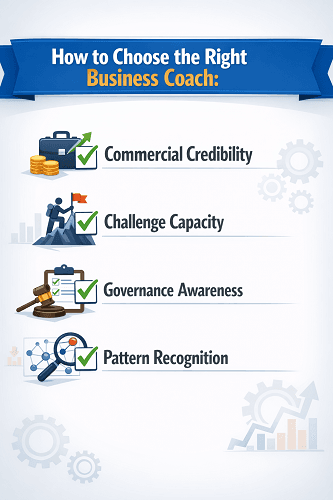
The relationship must balance commercial intelligence with constructive challenge.
Commercially Grounded, Not Theoretical
A credible business coach understands financial fundamentals. They recognise how cash flow pressure influences decisions. They understand how scaling affects margins, hiring risk and operational strain.
Without this grounding, coaching can become theoretical.
Experience within SME environments is particularly valuable. Smaller and mid-sized businesses operate with tighter margins and more concentrated authority. Decisions often carry immediate financial consequences.
A coach who understands this context can challenge more precisely.
Capacity to Challenge
Effective coaching involves tension. It should feel safe, but it should not always feel comfortable.
A strong coach:
• Questions assumptions
• Holds silence when needed
• Challenges avoidance
• Remains calm during difficult conversations
Support without challenge creates stagnation. Challenge without structure creates defensiveness. The right balance creates progress.
Pattern Recognition
Experienced coaches recognise recurring leadership patterns. These patterns often repeat across industries.
Common examples include:
• Conflict avoidance
• Over-centralised decision-making
• Defensive communication under pressure
• Growth without structural maturity
Identifying patterns shortens the learning curve. Instead of addressing isolated symptoms, coaching addresses root behaviour.
Why Experienced Advisors Matter for SME Growth
Experience plays a critical role in business coaching. An experienced SME consultant brings pattern recognition across different business scenarios, allowing issues to be identified quickly and addressed with precision.
They also provide independent perspective, which is often missing in growing organisations where decision-making becomes concentrated. This improves clarity, reduces risk and strengthens long-term decision quality.
Business Coach Dublin: How to Choose the Right One

If you are searching for a business coach in Dublin, local context matters, but capability matters more.
Look for:
• understanding of SME growth pressures
• commercial awareness
• governance understanding
• ability to challenge effectively
Proximity helps. Strategic depth drives results.
In many cases, growth pressure is not caused by the market. It comes from inside the business, where roles are unclear and decisions are not aligned.
Business Coach Near Me: Does Location Matter?
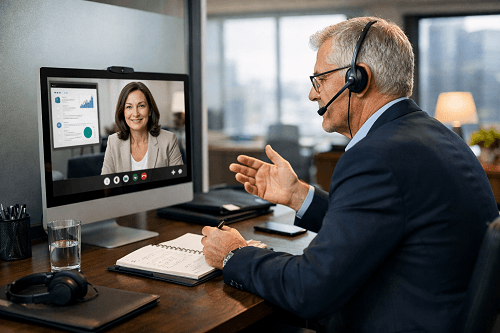
Modern coaching is often delivered virtually.
Advantages include:
• flexibility
• reduced time cost
• access to better expertise
• more structured conversations
In many cases, effectiveness increases with focus rather than proximity.
This often overlaps with Executive Coaching for Senior Leaders, especially at higher levels.
Certified Business Coach: Does Certification Matter?
Certification reflects professional standards.
However, what matters more is:
• real business experience
• commercial judgement
• governance understanding
• measurable results
Certification alone does not guarantee impact.
Business Coaching vs Consulting
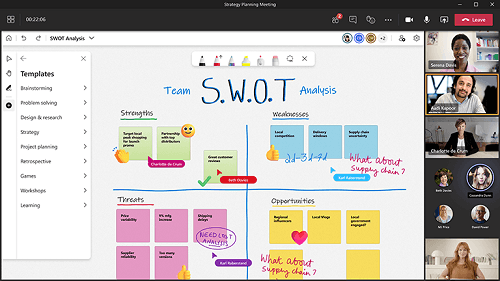
Business coaching and consulting serve different purposes.
Coaching builds leaders.
Consulting builds systems.
Consulting is appropriate when:
• systems need to be built
• processes require optimisation
• compliance frameworks are needed
Coaching is appropriate when:
• decision-making is inconsistent
• leadership behaviour is limiting growth
• accountability is weak
In many cases, both work together.
This is typically where structured strategic Business Advisory becomes necessary to support system-level change.
When Consulting Is More Appropriate
Consulting is usually more suitable when a clear technical gap exists. Examples include:
• Compliance frameworks requiring formal design
• Financial modelling or restructuring
• Process optimisation
• Governance architecture development
In these situations, expertise in system construction is required.
When Coaching Is More Appropriate
Coaching becomes appropriate when the bottleneck is behavioural rather than technical. Indicators may include:
• Persistent decision hesitation
• Delegation resistance
• Leadership conflict
• Strategy failing to translate into execution
• Over-centralised authority
Here, the problem is not the absence of knowledge. It is the way decisions are being made.
In many organisations, both services operate in parallel. A consultant may design structure while a coach strengthens the leadership capability required to sustain it.
The key is recognising which lever needs adjusting first.
Business Coaching vs Mentoring vs Consulting
These services are often confused.
Business Coaching
Improves how leaders make commercial decisions under pressure and act.
Business Mentoring
Provides experience-based guidance.
Business Consulting
Solves structural and operational problems.
At this stage, many SME owners move towards structured Business Advisory support.
Each has a role, but coaching focuses specifically on leadership behaviour.
One-to-One Coaching: How Does It Work?

Business coaching is structured and deliberate.
A typical engagement includes:
• regular sessions
• clear objectives
• measurable KPIs
• confidential discussion space
• structured reviews
This builds consistency and discipline over time.
This often overlaps with Executive Coaching for Senior Leaders at higher levels of responsibility.
Structure and Cadence
Effective one-to-one coaching follows a disciplined rhythm. That rhythm usually combines:
• Ongoing accountability review
• Periodic strategic recalibration
• Behavioural pattern examination
In practice, this might look like a monthly strategic session. It focuses on long-term direction. It is supported by shorter accountability check-ins. These check-ins ensure commitments are delivered.
Quarterly sessions are also held. They step back from immediate issues. They reassess the organisation’s direction. Also, they review risk exposure and leadership development.
Leadership development is also explored by McKinsey & Company, particularly in relation to organisational performance.
Each session typically examines:
• Key decisions pending
• Leadership behaviour under pressure
• Emerging risks
• Team dynamics
• Strategic alignment
Over time, this structure builds consistency. Leaders begin to anticipate scrutiny, which strengthens preparation and follow-through.
Confidential Strategic Space
Perhaps the most underestimated element of one-to-one coaching is the confidentiality it provides. Senior leaders rarely have neutral sounding boards. Conversations with colleagues carry political weight. Discussions with board members influence perception. Even informal exchanges may affect internal dynamics.
Coaching offers a protected environment in which difficult questions can be explored without consequence.
Within that space, leaders can:
• Test uncertain ideas
• Acknowledge hesitation
• Examine bias
• Challenge their own assumptions
When identity, personal risk or succession concerns arise, the work may overlap with elements of personal advisory. However, the core objective remains commercial clarity supported by behavioural maturity.
In one-to-one coaching, personal reflection is not separate from business performance. It underpins it.
Corporate Coaching: When Do Organisations Need It?
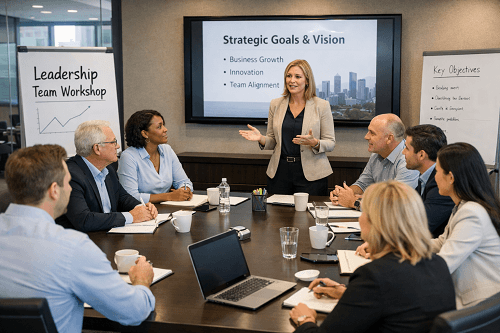
Corporate coaching is valuable during:
• rapid growth
• leadership misalignment
• succession planning
• governance changes
It improves:
• alignment
• decision clarity
• execution discipline
Often alongside Strategic Management & Governance for SMEs.
From Individual Coaching to Organisational Influence
Unlike one-to-one coaching, which focuses on a single decision-maker, corporate coaching operates at collective level. Its influence extends across:
• Leadership teams
• Senior management alignment
• Organisational culture
• Governance maturity
The shift is not simply about scale. It is about interaction. Individual capability may be strong, yet misalignment between leaders can weaken performance.
When Corporate Coaching Is Most Effective
Corporate coaching tends to be most valuable when symptoms begin to accumulate rather than during crisis itself. Early indicators often include:
• Leadership meetings that feel unproductive
• Strategy that fails to translate into execution
• Ambiguity around senior role accountability
• Escalating interpersonal friction
• Growth creating instability rather than confidence
Left unaddressed, these issues evolve into governance challenges. Addressed early, they become opportunities for structural strengthening.
In some cases, corporate coaching operates alongside Business Consulting for Growing SMEs to ensure that organisational systems support behavioural change. Structure without behavioural maturity rarely holds.
Coaching Leadership Teams
At team level, corporate coaching concentrates on interaction patterns rather than individual performance alone. Core focus areas typically include:
• Decision clarity
• Role definition
• Escalation discipline
• Accountability transparency
For example, a leadership team may state that it is aligned on strategic direction. However, when each member articulates priorities independently, inconsistencies emerge. These discrepancies often explain execution gaps more accurately than external market conditions.
Coaching creates space for these differences to surface constructively. Alignment becomes explicit rather than assumed.
Cultural Impact
Culture shifts through behaviour, not policy. When senior leaders demonstrate structured thinking, calm decision-making and disciplined accountability, those behaviours cascade through the organisation.
Conversely, when leaders react defensively under pressure, cultural instability follows.
Corporate coaching reinforces consistent behavioural standards at the top. Over time, that consistency becomes embedded in organisational norms.
The objective is not harmony for its own sake. It is disciplined alignment that sustains performance as complexity increases.
Entrepreneur Coach: How Is It Different?
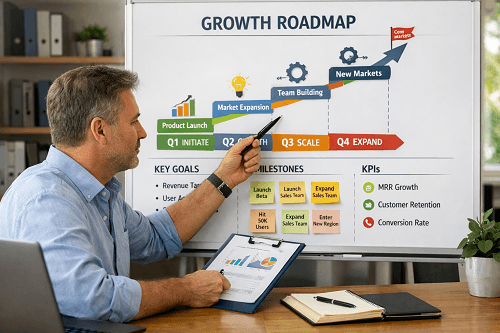
Business owners face unique challenges:
• decision isolation
• financial exposure
• identity attachment
• scaling pressure
A key issue is the founder bottleneck, where all decisions remain centralised.
Coaching supports:
• delegation
• leadership transition
• strategic thinking
Many founders also combine coaching with experienced business mentoring services to gain practical insight from leaders who have navigated similar challenges.
What many SME owners underestimate is the cost of delaying this.
It often shows up as:
• slower decision-making
• increased reliance on the owner
• leadership fatigue
• missed growth opportunities
Left unresolved, these issues compound. Quietly limiting the business long before external factors do.
Situations Where SME Owners Seek Business Coaching
Business coaching becomes relevant when:
• growth becomes inconsistent
• accountability weakens
• leadership teams misalign
• decisions slow down
• pressure increases
These are leadership challenges, not technical ones.
How to Measure the Impact of Business Coaching
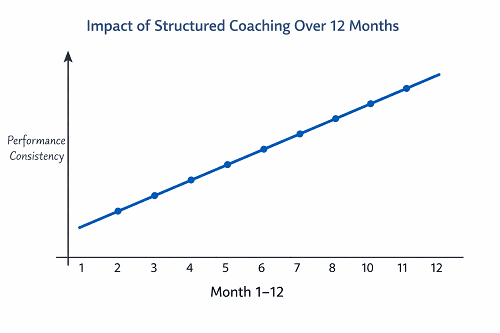
Impact is visible through:
• improved KPIs
• stronger delegation
• faster decisions
• consistent execution
• better leadership behaviour
Coaching should produce measurable change.
Research published by Harvard Business Review shows a clear link. It connects disciplined leadership behaviour with sustained organisational performance.
Why Experienced Advisors Matter for SME Growth
An experienced advisor brings:
• independent perspective
• pattern recognition
• commercial judgement
• governance awareness
This improves decision quality and reduces risk.
Is Business Coaching Worth It?
It delivers ROI when:
• leaders are open to challenge
• structure is followed
• accountability is maintained
It fails when:
• responsibility is avoided
• coaching is treated casually
When Should You Invest in Business Coaching?
You should consider business coaching if:
• Growth has become messy
• Accountability feels unclear
• Strategy is not translating into execution
• You feel personally stuck
• Leadership team conflict exists
• Decision quality is inconsistent
Coaching is most effective before crisis, not during collapse.
At this stage, many organisations seek support from a business mentoring guide who can help translate leadership development into stronger organisational structure.
FAQ
A business coach improves leadership thinking, decision-making and accountability.
Coaching improves how decisions are made, while consulting provides solutions.
When growth becomes complex or leadership pressure increases.
Most engagements run for several months depending on business needs.
Costs vary depending on scope, experience, and engagement structure.
Work With an Experienced Business Advisor
If your business is growing but performance feels inconsistent, the constraint is not strategy alone. It is how decisions are made under pressure.
Business coaching strengthens how you:
- make commercial decisions
- maintain accountability
- execute consistently
- lead through complexity
Without structured leadership discipline, growth creates pressure instead of momentum.
Explore our private advisory services and strengthen the decision-making structure that supports consistent, scalable performance.
This is not motivation.
This is execution discipline.