

Many business leaders focus heavily on external business growth while paying less attention to the internal thinking patterns shaping their decisions and behaviour.
However, as organisations grow, founders often realise that leadership challenges are not always caused by lack of intelligence, ambition or technical skill.
Instead, difficulties frequently emerge through mindset patterns involving fear, emotional reactions, limiting beliefs and behavioural habits.
This is why many leaders eventually begin asking: What Is Mindset Transformation?
At a practical level, mindset transformation involves changing the internal thinking patterns that influence how leaders:
- respond to pressure
- approach challenges
- make decisions
- communicate with others
- view growth and uncertainty
Mindset transformation is not about unrealistic positivity or motivational slogans.
Instead, it usually involves developing healthier perspectives that improve resilience, adaptability and long-term leadership effectiveness.
As businesses scale, leadership mindset often becomes directly connected to organisational culture, strategic thinking and sustainable growth.
For a broader overview of long-term leadership development, see Long-Term Growth Planning.
Leadership Behaviour Often Reflects Internal Mindset
Many leadership habits begin internally before becoming visible externally.
For example, founders operating from fear or insecurity may unintentionally become:
- overly controlling
- emotionally reactive
- resistant to delegation
- defensive during feedback
Meanwhile, leaders with healthier mindset patterns often become more:
- adaptable
- reflective
- emotionally balanced
- resilient under pressure
This is why mindset transformation often influences leadership behaviour significantly over time.
Without internal growth, external leadership improvement frequently becomes difficult to sustain.
Limiting Beliefs Often Restrict Leadership Growth
Many founders carry limiting beliefs without recognising how strongly these beliefs influence decisions.
Examples may include thoughts such as:
- “I must control everything myself.”
- “Mistakes mean failure.”
- “If I slow down, the business will collapse.”
- “Strong leaders should never struggle emotionally.”
Over time, these beliefs often create:
- emotional exhaustion
- poor delegation
- communication tension
- leadership inconsistency
Mindset transformation helps leaders challenge unhealthy assumptions and replace them with more sustainable perspectives.

Mindset Influences How Leaders Handle Pressure
Leadership pressure affects every founder differently.
Some leaders become:
- reactive
- fearful
- emotionally overwhelmed
- resistant to change
Others remain calmer and more adaptable during uncertainty.
Often, the difference is not intelligence or experience alone.
It is mindset.
Leaders with healthier thinking patterns often approach pressure with greater:
- perspective
- emotional discipline
- resilience
- strategic clarity
This usually improves leadership sustainability considerably.
For more insight into emotional regulation and resilience, see Building Emotional Resilience.
Growth Requires Psychological Adaptability
As businesses evolve, leadership requirements also change.
Founders who remain psychologically rigid often struggle adapting to:
- delegation
- organisational scaling
- leadership transition
- changing responsibilities
Mindset transformation helps leaders become more adaptable and open to growth.
This flexibility frequently improves:
- decision-making
- communication
- organisational leadership
- long-term strategic thinking
Importantly, adaptable leaders often build healthier organisations because they respond more effectively to change and uncertainty.
Fear Often Limits Organisational Growth
Many businesses eventually become limited not by external conditions, but by internal leadership fears.
This may include fear of:
- failure
- criticism
- delegation
- uncertainty
- losing control
Without awareness, fear-based leadership often creates:
- micromanagement
- inconsistent communication
- emotional tension
- reduced innovation
Mindset transformation helps leaders recognise and manage these fears more intentionally.
Over time, this often strengthens confidence and organisational stability significantly.
Research from the London Business School has explored how leadership mindset, adaptability and emotional intelligence influence executive performance and organisational growth.

Self-Awareness Supports Mindset Growth
Many mindset patterns operate automatically.
Founders may not initially recognise how beliefs and emotional habits influence behaviour.
Self-awareness helps leaders identify:
- emotional triggers
- behavioural patterns
- limiting beliefs
- reactive habits
more clearly.
This awareness often becomes the foundation for meaningful mindset transformation.
Without self-awareness, leaders frequently repeat unhealthy behavioural patterns unconsciously.
For more insight into behavioural awareness and leadership growth, see Self-Awareness in Leadership.
Mindset Transformation Often Improves Communication
Leadership mindset strongly influences communication quality.
Leaders operating from fear or insecurity may unintentionally communicate through:
- defensiveness
- emotional tension
- control
- frustration
Meanwhile, emotionally secure leaders often communicate with greater:
- calmness
- clarity
- openness
- confidence
This significantly improves:
- organisational trust
- team morale
- collaboration
- leadership credibility
Over time, communication improvements often become one of the most visible outcomes of mindset transformation.
Sustainable Leadership Requires Internal Growth
Many founders focus heavily on operational growth while neglecting internal leadership development.
However, long-term leadership sustainability usually depends heavily on:
- emotional resilience
- adaptability
- perspective
- psychological flexibility
Mindset transformation often helps leaders strengthen these capabilities more intentionally.
This usually improves both personal wellbeing and organisational effectiveness over time.
Reflection Helps Leaders Challenge Old Patterns
Mindset transformation rarely happens automatically.
Meaningful growth usually requires intentional reflection around:
- beliefs
- emotional reactions
- behavioural habits
- leadership assumptions
Trusted reflection often helps leaders recognise when outdated patterns are limiting growth and organisational effectiveness.
Research from IMD Business School has also explored how reflective leadership development and adaptive mindset improve resilience, leadership agility and organisational sustainability.
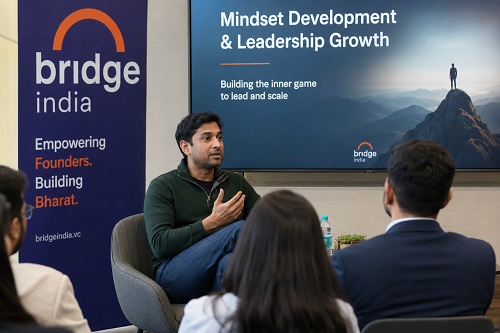
How Mindset Transformation Connects with Broader Leadership Development
Mindset transformation often overlaps with:
- emotional resilience
- personal development
- leadership coaching
- executive growth
- strategic leadership
Understanding these overlaps helps founders build healthier and more sustainable leadership structures as organisational complexity increases.
In more advanced situations, leaders may also benefit from broader support through Mindset for SME Leaders.
Final Thoughts
So, what is mindset transformation?
At its core, mindset transformation involves changing the internal thinking patterns that influence leadership behaviour, emotional resilience and long-term growth.
Without healthy mindset development, leaders often become vulnerable to fear-based decision-making, emotional exhaustion and organisational inconsistency.
Ultimately, founders who intentionally strengthen mindset often become calmer, more adaptable and more effective as leadership responsibility and organisational complexity continue increasing.