
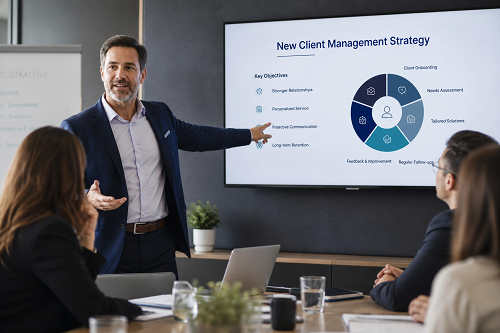
Many business owners understand the concept of coaching, but are less clear about what a business coach actually does on a practical level.
Some assume a coach provides answers. Others expect detailed business advice or operational solutions. While these may occasionally form part of the conversation, effective business coaching is usually focused on something more important.
A business coach helps owners think more clearly, make better decisions and become more effective leaders.
Rather than taking responsibility for the business, a coach helps strengthen the owner’s ability to navigate challenges, evaluate opportunities and lead with greater confidence.
For a broader overview of coaching and its role in business growth, see our guide to Business Coaching for SME Owners in Ireland.
Coaching Creates Space for Strategic Thinking
One of the most valuable things a business coach provides is perspective.
Business owners spend much of their time managing customers, employees, finances and operational issues. As organisations grow, these responsibilities often leave little time for strategic thinking.
A coach creates a structured environment where business owners can step back from daily pressures and focus on the bigger picture.
Through regular conversations, leaders can explore challenges, test assumptions and evaluate important decisions before acting on them. This often leads to greater clarity and more confident decision-making.
Many owners who are new to coaching also find it useful to understand What Is Business Coaching and how the process supports leadership development.

A Coach Helps Identify Blind Spots
Every business owner has blind spots.
These are assumptions, habits or behaviours that may be limiting growth without being immediately obvious.
An effective coach challenges existing thinking by asking questions that encourage a different perspective. Rather than providing quick answers, they help owners examine issues more objectively and consider alternatives they may not have recognised.
This process often uncovers opportunities for improvement in leadership, communication, delegation and accountability.
Many SME owners discover that some of the greatest barriers to growth are internal rather than external.
Coaching Supports Leadership Development
As businesses grow, leadership becomes increasingly important.
What worked when a business employed five people often becomes less effective when it employs twenty-five. Communication becomes more complex, accountability becomes more important and decisions affect a larger group of people.
A coach helps business owners adapt to these changing demands.
The goal is not simply to solve today’s challenges. The goal is to strengthen leadership capability so future challenges can be managed more effectively.
Business owners comparing different types of support may also find our article Professional Business Coach vs Consultant: What’s the Difference? useful.

Accountability Helps Turn Plans Into Action
Many business owners already know what they should be doing.
The challenge is often maintaining focus while balancing competing priorities.
A business coach helps create accountability around goals, commitments and strategic priorities. Regular conversations encourage business owners to review progress and remain focused on actions that support long-term objectives.
Research from the Institute of Directors highlights the importance of effective leadership and accountability within growing organisations.
Final Thoughts
A business coach does not run the business or make decisions on behalf of the owner.
Instead, they help business owners improve the way they think, lead and make decisions.
As organisations grow, leadership challenges become increasingly complex. For many SME owners, coaching provides the perspective, challenge and clarity needed to navigate those responsibilities successfully.
Organisations such as Enterprise Ireland also provide useful resources for business owners seeking to strengthen business performance and leadership capability.
Need an Independent Perspective?
Many business owners do not seek coaching because something is wrong. More often, they seek support because leadership responsibilities have increased and important decisions carry greater consequences than they once did.
Having access to an experienced advisor who can provide perspective, challenge assumptions and help evaluate critical decisions can be extremely valuable as a business grows.
Whether you are managing organisational change, preparing for future growth or looking to strengthen your leadership effectiveness, an independent perspective can help bring greater clarity to the decisions that matter most.
Learn more about our Business Mentoring services and how they support SME owners facing increasingly complex business and leadership challenges.
FREQUENTLY ASKED QUESTIONS
Does a business coach give advice?
Sometimes, but coaching is primarily focused on helping business owners improve their own decision-making capability rather than creating dependence on external advice.
Can coaching help an established business?
Yes. Many established businesses benefit from coaching because leadership challenges become more complex as organisations grow.
How often should coaching sessions take place?
The frequency depends on the needs of the business. Some owners meet monthly, while others prefer more regular engagement during periods of growth or change.
Is business coaching the same as consulting?
No. Consultants generally provide recommendations and solutions, while coaches focus on improving leadership capability and decision-making.
What results can business owners expect from coaching?
Common outcomes include clearer thinking, stronger decision-making, improved accountability, better delegation and increased leadership confidence.