
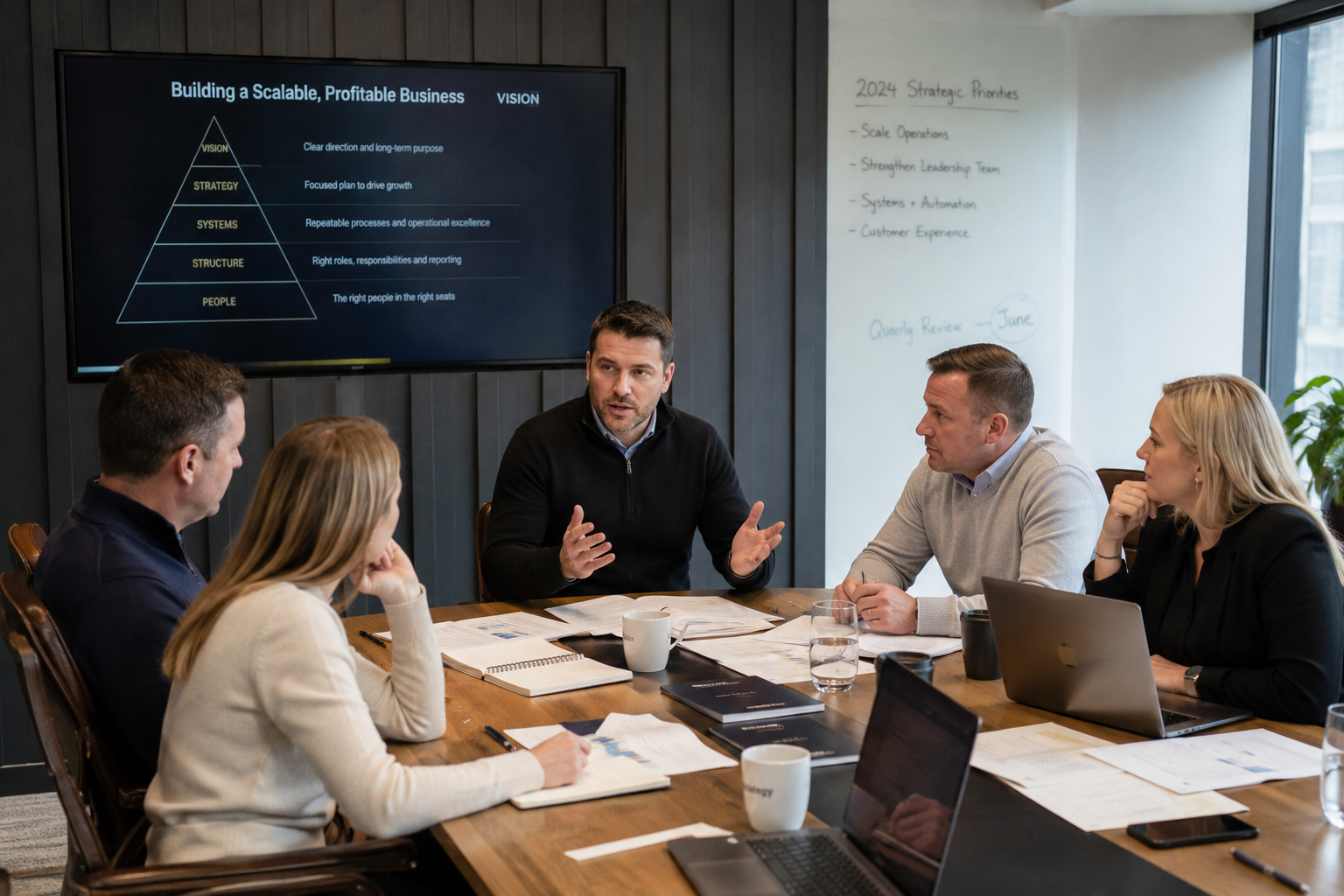
The transition from a small owner-managed business to a more structured organisation is often one of the most challenging stages of growth.
A business with five employees can often operate successfully through informal communication, direct supervision and rapid decision-making. However, those same approaches frequently become less effective as headcount approaches twenty or thirty people.
Growth introduces complexity. More employees create additional management requirements, communication becomes more difficult and accountability can become unclear if systems have not evolved alongside the business.
Professionalising the organisation helps ensure growth remains sustainable. It creates the structure, clarity and consistency needed to support stronger performance without sacrificing the agility that often contributes to a small business’s success.
For a broader understanding of consulting support during business growth, see our guide to Small Business Consulting for SMEs.
Growth Requires More Than Hard Work
One of the most common challenges faced by growing SMEs is relying on the same management approach that worked during the early stages of the business.
When the organisation is small, owners can often oversee most activities personally. Decisions happen quickly and communication flows directly between team members. As the business grows, this becomes increasingly difficult.
Owners frequently find themselves becoming a bottleneck. Staff depend on them for approvals, information and direction, reducing efficiency across the organisation.
Professionalisation involves creating systems and structures that reduce dependency on the founder while improving organisational effectiveness.
Business owners who are considering whether external support is needed may also find our article When Should a Small Business Hire a Consultant? helpful.
Clear Processes Improve Consistency
Growing businesses often experience performance inconsistencies.
Different employees may complete the same task in different ways, customer experiences may vary and operational standards can become difficult to maintain. These issues are rarely caused by poor intentions. More often, they result from a lack of documented processes and clear expectations.
Professionalising the business involves developing systems that create consistency without unnecessary bureaucracy. Clear procedures help employees understand expectations and reduce the risk of errors as the organisation expands.
This consistency often improves both efficiency and customer experience.
Leadership Structures Become Increasingly Important
As headcount grows, leadership capability becomes a critical factor in business performance.
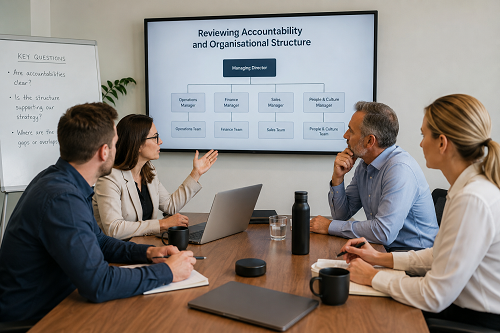
Founders who previously managed every aspect of the organisation often need to develop managers, delegate responsibilities and establish clearer reporting structures. Without these changes, growth can place unsustainable pressure on the owner and create confusion throughout the business.
Professionalisation often includes strengthening accountability, improving communication and ensuring managers understand their responsibilities. These improvements help create a more resilient organisation that can continue growing without relying excessively on one individual.
Research from the Chartered Management Institute highlights the importance of leadership development and organisational structure in supporting sustainable business growth.
Accountability Supports Better Performance
Businesses often reach a stage where informal accountability is no longer sufficient.
As teams expand, employees need clarity regarding responsibilities, objectives and expected outcomes. Professional organisations create accountability through clear reporting structures, performance expectations and regular communication.
This does not mean introducing excessive administration. Effective accountability systems are usually simple, practical and aligned with the needs of the business.
Business owners interested in strengthening organisational clarity may also find our article Clarifying Roles and Responsibilities in SMEs helpful.

Final Thoughts
Professionalising a 5–30 person business is not about creating unnecessary complexity. It is about ensuring that leadership, systems and processes evolve alongside organisational growth.
Businesses that fail to make this transition often experience communication challenges, operational inefficiencies and increased pressure on founders. Those that successfully professionalise their operations are generally better positioned to scale, improve performance and create sustainable long-term growth.
For many SMEs, professionalisation represents a critical stage in the journey from a small owner-led operation to a more structured and resilient organisation. The sooner these foundations are established, the easier it becomes to support future growth opportunities.
Need an Independent Perspective?
Growth often exposes weaknesses that were not visible when the organisation was smaller. Leadership structures, communication processes and operational systems may all require adjustment to support the next stage of development.
An experienced consultant can help assess existing structures, identify areas for improvement and implement practical systems that support growth without sacrificing flexibility. The objective is to create a stronger organisation capable of sustaining long-term success.
Learn more about our Business Consulting services and how they help SME owners strengthen leadership, improve organisational effectiveness and prepare for future growth.
FREQUENTLY ASKED QUESTIONS
What does it mean to professionalise a business?
Professionalising a business involves developing stronger systems, leadership structures, accountability measures and operational processes that improve efficiency and performance. It helps organisations move from informal approaches to more structured ways of working, enabling sustainable growth, better decision-making, improved employee performance and stronger foundations for long-term business success.
Why is professionalisation important for growing SMEs?
As SMEs expand, informal methods of managing people, processes and operations can become ineffective. Professionalisation introduces clarity, consistency and reliable systems that help businesses manage growth, improve productivity, strengthen internal operations and create a foundation for future development, competitiveness and long-term organisational success.
At what stage should a business begin professionalising?
Businesses can begin professionalising at different stages depending on their growth, goals and operational challenges. Many organisations start when they have between five and thirty employees, as increased responsibilities require clearer systems, defined roles, stronger management practices and improved processes to support continued expansion.
Does professionalisation mean creating more bureaucracy?
No. Professionalisation is not about adding unnecessary rules or complicated procedures. It focuses on creating practical systems, clear responsibilities and effective accountability structures that improve efficiency, communication and performance while allowing businesses to remain flexible, responsive and focused on achieving their strategic objectives.
How can consulting help professionalise a business?
Consultants support business professionalisation by identifying operational gaps, improving existing systems, strengthening leadership structures and developing effective processes. They provide expert guidance to help businesses establish better ways of working, enhance performance, improve decision-making and create sustainable strategies that support continued growth and organisational success.