
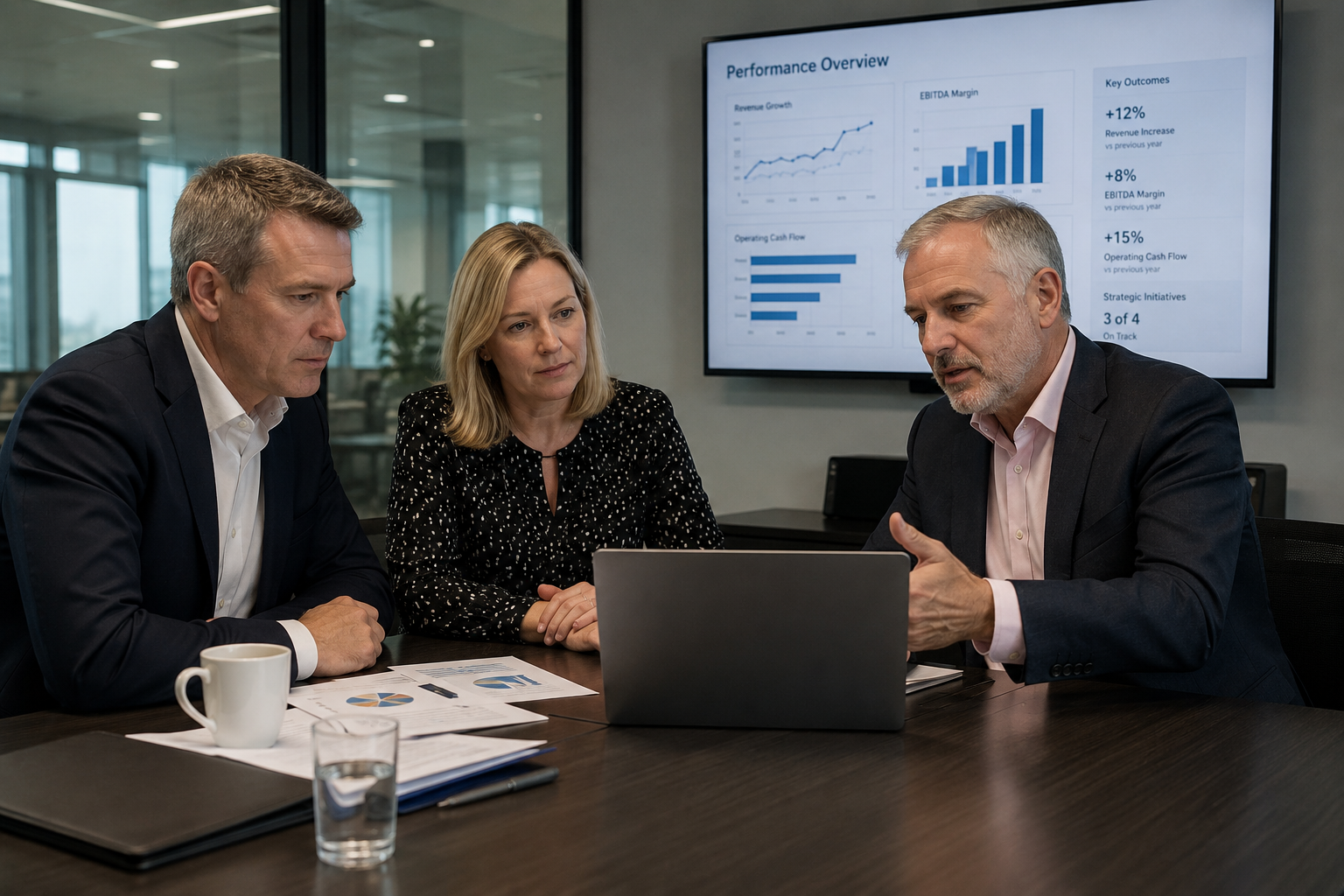
Many business owners invest in consulting support because they want to improve performance, solve challenges or prepare for future growth. However, once an engagement is underway, an important question often emerges.
How do you determine whether the consulting has actually delivered value?
The answer is not always as straightforward as measuring revenue growth or cost savings. While financial outcomes are important, the impact of consulting often extends beyond immediate results. Improvements in decision-making, leadership capability, operational efficiency and strategic clarity can all contribute to long-term success.
Measuring consulting impact therefore requires a broader perspective that considers both tangible and intangible outcomes.
For a broader understanding of consulting and its role in business development, see our guide to Business Consulting for Growing SMEs.
Start with Clear Objectives
The ability to measure consulting impact begins before the engagement starts.
Businesses should establish clear objectives that define what success looks like. These objectives may involve increasing profitability, improving operational efficiency, strengthening leadership capability or preparing for business growth.
Without clearly defined goals, it becomes difficult to evaluate whether consulting has delivered meaningful results. A consultant and business owner should therefore agree on priorities and desired outcomes at the outset.
This creates a framework against which progress can be assessed throughout the engagement.
Business owners who are new to consulting may also find our article What Is Business Consulting? useful.
Financial Results Are Important but Not the Only Measure
Many organisations naturally focus on financial outcomes when evaluating consulting effectiveness.
Revenue growth, profit improvement, cost reductions and productivity gains can all provide valuable indicators of success. Where consulting recommendations directly influence financial performance, these measures are often highly relevant.
However, not every consulting engagement is designed to deliver immediate financial results. Some focus on strategic planning, organisational development or leadership effectiveness, where the benefits may emerge over a longer period.
This is why businesses should avoid relying exclusively on financial metrics when assessing impact.

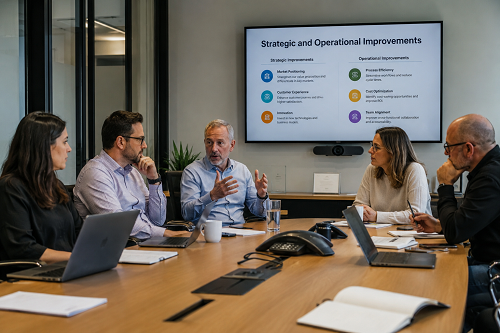
Operational and Organisational Improvements Matter
Consulting often creates value by improving how the organisation functions.
Operational efficiency, clearer accountability, stronger communication and improved decision-making can all have a significant impact on long-term performance. These improvements may not always be immediately visible in financial results, but they frequently contribute to future growth and stability.
Business owners should therefore assess whether consulting has helped create better processes, stronger management structures or more effective ways of working.
Research from the Chartered Management Institute highlights the importance of organisational effectiveness, leadership capability and continuous improvement in achieving sustainable business performance.
Leadership Development Can Create Long-Term Value
Some of the most valuable consulting outcomes are difficult to quantify.
Greater confidence in decision-making, improved leadership capability and enhanced strategic thinking may not appear on a financial report, yet they can influence the organisation for years. Stronger leaders often make better decisions, manage teams more effectively and respond more successfully to change.
These benefits should not be overlooked simply because they are less tangible.
Consulting often delivers value by improving the quality of leadership rather than focusing solely on operational performance.
Business owners exploring different consulting approaches may also find our article Strategic Management Consultant: What Do They Actually Do? helpful.
Final Thoughts
Measuring the impact of business consulting requires more than reviewing a single performance indicator. Effective evaluation considers financial results, operational improvements, leadership development and progress towards strategic objectives.
The most successful consulting engagements are those that create meaningful change within the organisation. Sometimes that change is reflected in revenue growth or profitability. In other cases, it appears through stronger leadership, better decision-making or more effective organisational structures.
For many SMEs, the true value of consulting becomes evident over time as improvements compound and contribute to long-term business performance. By establishing clear objectives and assessing a range of outcomes, business owners can gain a more accurate understanding of the value consulting has created.
Need an Independent Perspective?
Business improvement is most effective when progress can be measured and evaluated objectively. Whether the focus is growth, operational performance or strategic development, understanding the impact of decisions is essential for long-term success.
An experienced consultant can help businesses establish meaningful objectives, identify relevant performance indicators and develop strategies that support measurable improvement. The goal is not simply to implement change but to ensure that change creates lasting value.
Learn more about our Business Consulting services and how they help SME owners improve performance, strengthen leadership capability and achieve sustainable growth.
FREQUENTLY ASKED QUESTIONS
How do you measure the success of business consulting?
Success is typically measured against the objectives established at the beginning of the engagement. These may include financial improvements, operational efficiencies, leadership development or progress towards strategic goals. Clear benchmarking and agreed KPIs at the start help ensure results can be tracked and evaluated effectively throughout the consulting process it.
Should consulting always lead to increased revenue?
Not necessarily. Some consulting engagements focus on strategy, leadership development or organisational effectiveness. While these areas may contribute to future revenue growth, their primary objective may be different. Consulting value should therefore be assessed broadly, not solely through immediate financial return or short-term profit increases over time impact as well.
What non-financial outcomes should businesses measure?
Businesses should consider factors such as decision-making quality, leadership capability, employee engagement, operational efficiency and organisational alignment when evaluating consulting impact. These indicators help organisations understand long-term value beyond immediate financial performance and short-term revenue changes. Tracking them supports continuous improvement, better leadership decisions and stronger organisational culture overall development.
How long does it take to see results from consulting?
The timeframe varies depending on the nature of the engagement. Some operational improvements may produce results relatively quickly, while strategic and leadership-focused initiatives often create value over a longer period. Businesses should therefore set realistic expectations, recognising that measurable impact may appear at different stages of implementation and ongoing delivery.
Why is it important to define objectives before consulting begins?
Clear objectives provide a framework for measuring progress and evaluating outcomes. Without defined goals, it becomes difficult to determine whether the consulting engagement has achieved its intended purpose. This clarity also improves accountability, alignment and ensures both consultant and client remain focused on agreed results throughout the consulting process together.