
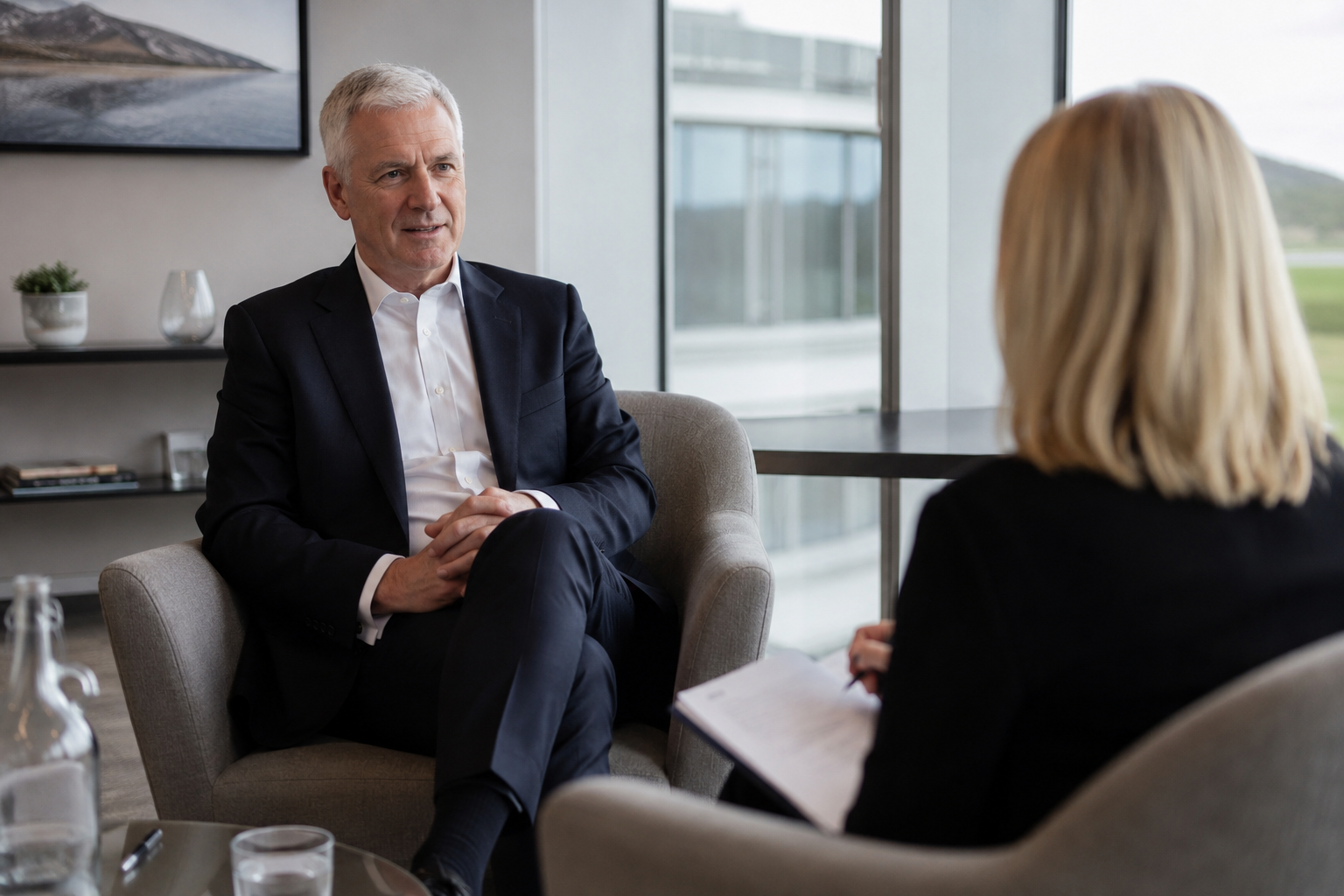
Executive Coaching Ireland: What Should Leaders Expect?
Leadership pressure often changes significantly as businesses grow.
In the early stages of leadership, many professionals focus mainly on operational delivery.
They manage projects.
Coordinate teams.
Solve immediate problems directly.
However, once leaders begin carrying broader organisational responsibility, the role changes considerably.
Decisions become more complex.
Communication becomes more sensitive.
Strategic pressure increases.
Leadership visibility becomes more difficult to maintain.
This is usually when leaders begin exploring Executive Coaching Ireland: What Should Leaders Expect?
Because executive coaching is not simply about motivation or career advice.
Strong executive coaching helps leaders improve:
- strategic thinking
- communication
- emotional discipline
- leadership behaviour
- organisational effectiveness
For many Irish business leaders, coaching becomes increasingly valuable as complexity and responsibility grow.
For a broader overview of executive leadership support, see Executive Coaching for Senior Leaders.
Executive Coaching Usually Focuses on Leadership Effectiveness
Executive coaching is highly focused on improving leadership performance within complex organisational environments.
This often includes helping leaders strengthen:
- communication clarity
- decision-making consistency
- strategic thinking
- emotional regulation
- leadership presence
Unlike traditional leadership training, executive coaching is highly personalised.
The conversations focus specifically on the leader’s real organisational challenges rather than generic theory.
This practical relevance is one reason executive coaching often becomes highly valuable for senior leadership roles.
Leadership Complexity Increases Rapidly
Many leaders underestimate how much complexity increases at senior levels.
As responsibility expands, leaders often manage:
- competing priorities
- organisational politics
- leadership alignment
- stakeholder pressure
- operational visibility challenges
Without reflection and external perspective, leaders can become increasingly reactive under pressure.
Executive coaching helps leaders slow down their thinking process enough to evaluate situations more strategically.
This often improves clarity significantly.

Coaching Helps Leaders Improve Communication
One of the most important aspects of executive coaching involves communication.
Senior leadership communication influences:
- organisational alignment
- morale
- accountability
- strategic clarity
- operational confidence
Small communication issues at leadership level can create significant organisational consequences.
For example:
Leaders may unintentionally create confusion through:
- inconsistent messaging
- unclear priorities
- reactive communication
- avoidance of difficult conversations
Executive coaching helps leaders improve communication discipline and clarity under pressure.
This often strengthens organisational cohesion significantly.
For more insight into communication and leadership effectiveness, see Communication Mastery for Leaders.
Executive Coaching Is Not the Same as Consulting
Executive coaching and consulting are often confused.
However, they operate differently.
Consultants usually focus on improving:
- systems
- operations
- workflows
- organisational structure
Executive coaching focuses more directly on improving leadership capability itself.
Rather than simply providing answers, coaches help leaders:
- reflect more objectively
- challenge assumptions
- improve behavioural awareness
- strengthen decision-making
The emphasis remains heavily focused on leadership effectiveness and strategic thinking.
For more insight into coaching versus consulting, see Executive Business Coach vs Leadership Consultant.
Executive Coaching Helps Leaders Become Less Reactive
Many senior leaders operate in highly reactive environments.
They constantly respond to:
- operational issues
- stakeholder demands
- organisational tension
- communication problems
Over time, this pressure can weaken:
- clarity
- patience
- emotional discipline
- strategic thinking
Executive coaching helps leaders improve:
- emotional regulation
- leadership composure
- strategic reflection
- communication consistency
As a result, leaders often become calmer and more deliberate operationally.
This usually improves organisational stability as well.
Leadership Isolation Is More Common Than Many Realise
Senior leadership can become surprisingly isolating.
As leaders gain authority, they often have fewer opportunities for honest reflection and open discussion.
This may create:
- decision fatigue
- emotional pressure
- leadership loneliness
- reduced objectivity
Executive coaching provides leaders with confidential space to discuss:
- strategic concerns
- organisational pressure
- leadership challenges
- communication difficulties
This perspective often becomes increasingly valuable as responsibility grows.
For more insight into leadership isolation and executive pressure, see Leadership Loneliness.
Research from the Center for Creative Leadership has also highlighted how executive coaching improves self-awareness, emotional intelligence and leadership effectiveness within complex organisational environments.

Executive Coaching Supports Better Decision-Making
Leadership decisions become more significant as organisational complexity increases.
Poor decisions at senior level often affect:
- teams
- culture
- operations
- financial performance
- strategic direction
Without structured reflection, leaders may become:
- emotionally reactive
- operationally overwhelmed
- strategically fragmented
Executive coaching helps leaders evaluate:
- assumptions
- priorities
- communication implications
- behavioural patterns
more carefully before acting.
This often strengthens decision-making consistency significantly.
Executive Presence Often Develops Through Coaching
Executive presence is not simply about confidence or presentation style.
Strong executive presence usually reflects:
- composure
- communication clarity
- emotional discipline
- strategic awareness
- leadership consistency
Leaders with strong executive presence often create greater trust and organisational stability.
Executive coaching helps leaders strengthen these qualities progressively over time.
This usually improves both internal and external leadership relationships.
Coaching Helps Leaders Navigate Organisational Growth
As organisations grow, leadership demands evolve rapidly.
Leaders may need to manage:
- larger teams
- broader accountability
- governance oversight
- organisational restructuring
- strategic planning
Executive coaching helps leaders adapt to these evolving responsibilities more effectively.
This support becomes especially valuable during periods of rapid growth or organisational transition.
For more insight into leadership scalability and organisational growth, see Professionalising a 5–30 Person Business.
Executive Coaching Often Improves Organisational Culture
Leadership behaviour strongly influences organisational culture.
When leaders become:
- reactive
- inconsistent
- unclear
- emotionally volatile
teams often experience:
- confusion
- reduced morale
- communication breakdowns
- operational tension
Executive coaching strengthens leadership consistency and communication clarity.
This usually improves organisational culture gradually over time.
Coaching Evolves Alongside Leadership Responsibility
Executive coaching usually becomes more sophisticated as leadership responsibility increases.
Over time, coaching conversations may focus increasingly on:
- governance
- strategic oversight
- leadership succession
- organisational influence
- board relationships
This evolution helps leaders continue adapting as complexity grows.
Research from Deloitte Insights has also explored how executive coaching and leadership development improve organisational resilience and long-term leadership performance.
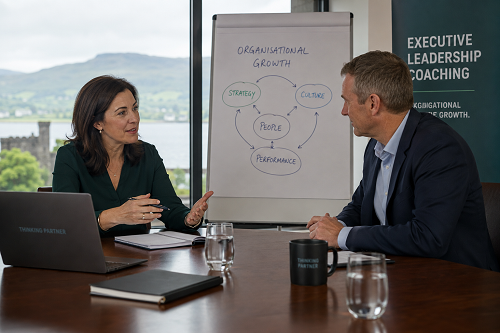
How Executive Coaching Connects with Broader Support
Executive coaching often overlaps with:
- governance advisory
- strategic consulting
- leadership development
- organisational planning
- executive mentoring
Understanding these overlaps helps organisations apply the right support at the right leadership stage.
In more advanced situations, leaders may also benefit from broader support through Strategic Management & Governance for SMEs.
Final Thoughts
So, what should leaders expect from executive coaching in Ireland?
At a practical level, executive coaching helps leaders improve:
- communication
- decision-making
- leadership behaviour
- strategic thinking
- emotional discipline
- organisational effectiveness
Because ultimately, leadership becomes increasingly complex as responsibility grows.
Executive coaching helps leaders navigate that complexity with greater clarity, confidence and consistency over time.