

Technical expertise and professional experience are important leadership assets, but they are not always enough to inspire confidence at senior levels.
As executives take on greater responsibility, they are often evaluated not only on what they know but also on how they communicate, influence and conduct themselves in high-pressure situations. This is where executive presence becomes increasingly important.
Executive presence is often described as the ability to project confidence, credibility and leadership authority. While some people assume it is an innate quality, executive presence can be developed through greater self-awareness, stronger communication and more intentional leadership behaviours.
For senior leaders, executive presence often influences how effectively they engage stakeholders, manage teams and represent their organisations.
For a broader understanding of leadership development support, see our guide to Executive Coaching for Senior Leaders.
Executive Presence Is More Than Confidence
Confidence is often associated with executive presence, but the two are not identical.
Some leaders appear confident yet struggle to inspire trust or influence others effectively. Executive presence involves a combination of factors including communication, emotional intelligence, credibility, composure and authenticity.
Leaders with strong executive presence tend to communicate clearly, remain calm under pressure and demonstrate consistency in their actions. They create confidence in others because their behaviour aligns with their responsibilities and leadership role.
This ability to influence perceptions often becomes increasingly important as leaders progress into more senior positions.
Executives interested in broader leadership development may also find our article What Is Executive Coaching? useful.
Communication Plays a Central Role
One of the most visible aspects of executive presence is communication.
Senior leaders are frequently required to present ideas, manage stakeholder expectations and communicate during periods of uncertainty. Their ability to convey messages clearly and confidently can significantly influence how those messages are received.
Executive presence development often focuses on improving communication skills, helping leaders become more concise, persuasive and impactful. This includes not only what is said but also how it is delivered.
Tone, body language, listening skills and composure all contribute to the overall impression a leader creates.
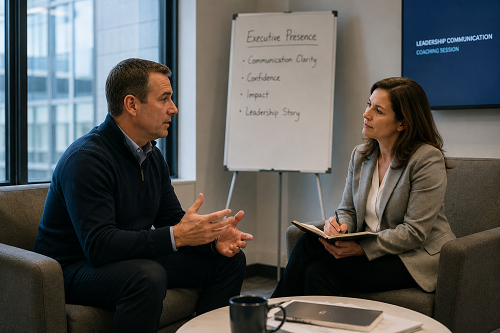
Influence Matters at Senior Levels
As leadership responsibilities increase, influence often becomes more important than authority.
Executives rarely achieve results through direct control alone. They must gain support from colleagues, stakeholders, boards and leadership teams. This requires the ability to build trust, communicate effectively and encourage alignment around important decisions.
Executive presence strengthens this capability by helping leaders engage others more effectively. When leaders project confidence, credibility and authenticity, they are often better positioned to influence outcomes and build stronger professional relationships.
Research from the Institute of Leadership highlights the relationship between leadership presence, communication and organisational effectiveness.
Executive Presence Can Be Developed
A common misconception is that executive presence is something people either possess or lack.
In reality, most leaders can strengthen their executive presence through focused development. Increased self-awareness, improved communication and greater understanding of leadership behaviours often contribute to significant improvements over time.
Executive coaching frequently plays an important role in this process. Coaches help leaders identify behaviours that strengthen or weaken their presence and provide structured feedback that supports development.
Executives seeking to strengthen broader leadership capabilities may also find our article Coaching Senior Leadership Teams helpful.

Final Thoughts
Executive presence is not about creating a particular image or adopting an artificial leadership style. It is about developing the confidence, credibility and communication skills that help leaders perform effectively in demanding environments.
As executives progress into more senior roles, the ability to influence others, communicate clearly and remain composed under pressure often becomes increasingly important. These qualities contribute significantly to leadership effectiveness and organisational impact.
For many leaders, executive presence development provides an opportunity to strengthen how they are perceived, improve stakeholder relationships and enhance their ability to lead with confidence. The result is often greater influence, stronger communication and improved leadership performance.
Need an Independent Perspective?
Leadership effectiveness is influenced by more than technical expertise. The ability to communicate confidently, build trust and influence others often plays a significant role in professional success.
An experienced executive coach can help identify opportunities to strengthen executive presence while providing objective feedback and structured development support. The goal is not to change who you are as a leader but to ensure your leadership capability is communicated as effectively as possible.
Learn more about our Business Mentoring services and how they help senior leaders strengthen executive presence, improve communication and enhance leadership effectiveness.
FREQUENTLY ASKED QUESTIONS
What is executive presence?
Executive presence is the combination of confidence, credibility, communication skills and leadership behaviours that shape how others perceive a leader. It influences a leader’s ability to inspire trust, command attention and communicate effectively. Strong executive presence helps leaders build influence, strengthen relationships and lead with greater impact.
Why is executive presence important?
Executive presence is important because it helps leaders establish trust, credibility and influence with employees, clients, stakeholders and board members. Leaders with strong executive presence often communicate more effectively, inspire confidence in their decisions and navigate complex business situations successfully, making them more effective in senior leadership roles.
Can executive presence be developed?
Yes, executive presence can be developed through self-awareness, leadership development, communication training and practical experience. Leaders can strengthen their presence by improving how they communicate, manage emotions, build confidence and engage with others. Executive coaching often helps accelerate this development by providing personalised feedback and guidance.
Is executive presence only about public speaking?
No, executive presence extends beyond public speaking. While communication skills are important, executive presence also includes emotional intelligence, authenticity, professional credibility, composure under pressure and the ability to influence others. It is reflected in how leaders behave, make decisions and interact in everyday leadership situations.
How does executive coaching help with executive presence?
Executive coaching helps leaders understand how their behaviours, communication style and leadership approach influence others. Through feedback, reflection and targeted development strategies, coaching helps strengthen confidence, improve communication effectiveness and enhance professional credibility. This enables leaders to develop a stronger and more authentic executive presence.