
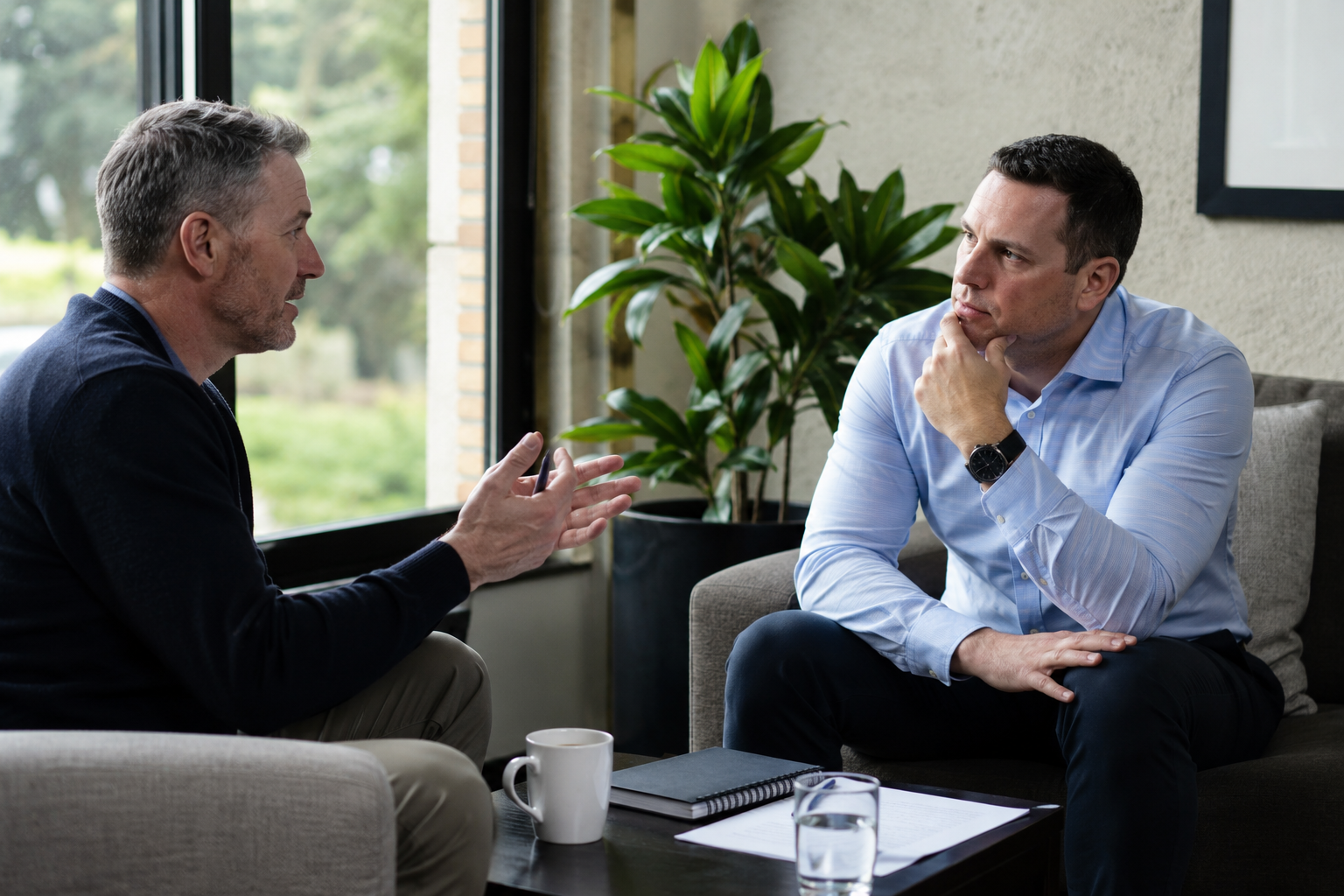
The coaching industry has grown significantly in recent years.
Business leaders, entrepreneurs and professionals increasingly seek external support to improve performance, achieve goals and navigate personal challenges. However, the variety of coaching options available can make it difficult to determine which type of support is most appropriate.
Two terms that are often used interchangeably are personal coach and life coach. While there are similarities between the two roles, there can also be important differences in focus, scope and outcomes.
Understanding these distinctions helps individuals select the type of support that best aligns with their needs and objectives.
For a broader understanding of leadership growth and self-development, see our guide to Personal Development for Business Leaders.
What Is a Personal Coach?
A personal coach typically works with individuals seeking improvement in specific areas of their personal or professional lives.
The focus may include leadership development, confidence, communication skills, productivity, decision-making or personal effectiveness. Coaching engagements are often tailored to the individual’s circumstances and objectives.
Personal coaches help clients identify goals, overcome obstacles and develop strategies for improvement. The relationship is usually centred on practical growth and measurable progress.
For business leaders, personal coaching often supports both professional performance and broader personal development.
Leaders exploring professional development support may also find our article Personal Development Consultant: What Do They Provide? helpful.
What Is a Life Coach?
Life coaching generally focuses on helping individuals improve overall life satisfaction and achieve personal goals.
Topics may include relationships, work-life balance, confidence, motivation, wellbeing and personal fulfilment. Life coaches often help clients clarify what they want from life and develop plans for achieving those outcomes.
The emphasis is usually broader than career or leadership performance. Instead, life coaching considers multiple aspects of an individual’s life and encourages alignment between values, goals and actions.
For many people, life coaching provides valuable support during periods of transition or personal change.

The Similarities Often Cause Confusion
Both personal coaches and life coaches help individuals achieve growth.
They encourage reflection, support goal-setting and provide accountability throughout the development process. Both approaches can improve confidence, self-awareness and personal effectiveness.
Because there is significant overlap, many coaching professionals use the terms interchangeably. In practice, the distinction often depends on the coach’s expertise, approach and areas of focus.
For this reason, individuals should look beyond job titles and evaluate whether a coach’s experience aligns with their specific objectives.
Research from the International Coaching Federation highlights the importance of selecting coaching support that matches individual goals and development needs.
Choosing the Right Coaching Support
The most appropriate coaching relationship depends on the outcomes an individual wants to achieve.
Someone seeking improved leadership effectiveness, communication skills or professional growth may benefit from a personal coach with leadership development expertise. An individual focused on life balance, personal fulfilment or broader life goals may find life coaching more suitable.
In many cases, the distinction is less important than the quality of the relationship and the relevance of the coach’s experience.
Effective coaching should help individuals gain clarity, take action and achieve meaningful progress.
Leaders interested in broader development outcomes may also find our article How Personal Development Impacts Leadership Performance helpful.
Final Thoughts
Personal coaches and life coaches both help individuals pursue growth and improvement, but their areas of focus may differ. Personal coaching often concentrates on performance, effectiveness and professional development, while life coaching typically addresses broader personal goals and fulfilment.
The right choice depends on the individual’s objectives, challenges and aspirations. Understanding these differences makes it easier to select support that delivers meaningful and lasting results.
For business leaders, the most valuable coaching relationships are often those that strengthen both personal growth and leadership effectiveness.
Looking to Accelerate Your Personal Growth?
Personal and professional development often benefit from external perspective and structured support. Whether the goal is stronger leadership, improved confidence or greater personal fulfilment, the right guidance can help accelerate progress.
An experienced advisor can help identify development priorities, clarify goals and create a practical plan for growth that aligns with your ambitions and values.
Learn more about our Private Advisory services and discover how we help business owners, founders and senior leaders achieve meaningful personal and professional development.
FREQUENTLY ASKED QUESTIONS
What is the difference between a personal coach and a life coach?
A personal coach typically focuses on helping individuals improve performance, confidence, leadership effectiveness and professional development. Their work is often connected to specific goals related to career progression, communication or personal growth. A life coach generally takes a broader approach, helping clients explore purpose, fulfilment, relationships, life direction and overall wellbeing across multiple areas of life.
Can business leaders work with a life coach?
Yes. Many business leaders work with life coaches to gain clarity, improve self-awareness and create better alignment between professional success and personal fulfilment. Life coaching can help leaders navigate transitions, manage competing priorities, strengthen relationships and develop a clearer sense of purpose while maintaining effectiveness in their professional roles.
Do personal coaches help with leadership development?
Many personal coaches support leadership development as part of their coaching practice. They may help clients improve communication skills, emotional intelligence, decision-making, confidence and executive presence. Through structured conversations and goal-focused development, personal coaches can help leaders strengthen their effectiveness and achieve better outcomes in both professional and personal settings.
Which type of coach is best for career growth?
The best coach depends on your specific goals and circumstances. A personal coach with expertise in leadership, performance improvement or professional development can be highly effective for career growth. If your career questions involve purpose, fulfilment or broader life direction, a life coach may provide valuable support in helping you make aligned decisions.
How do I choose the right coach?
Choosing the right coach begins with understanding your goals and desired outcomes. Consider whether you need support with leadership performance, career development, personal fulfilment or life direction. Review the coach’s experience, qualifications, coaching style and areas of expertise. The strongest coaching relationships are built on trust, alignment and a shared understanding of objectives.