
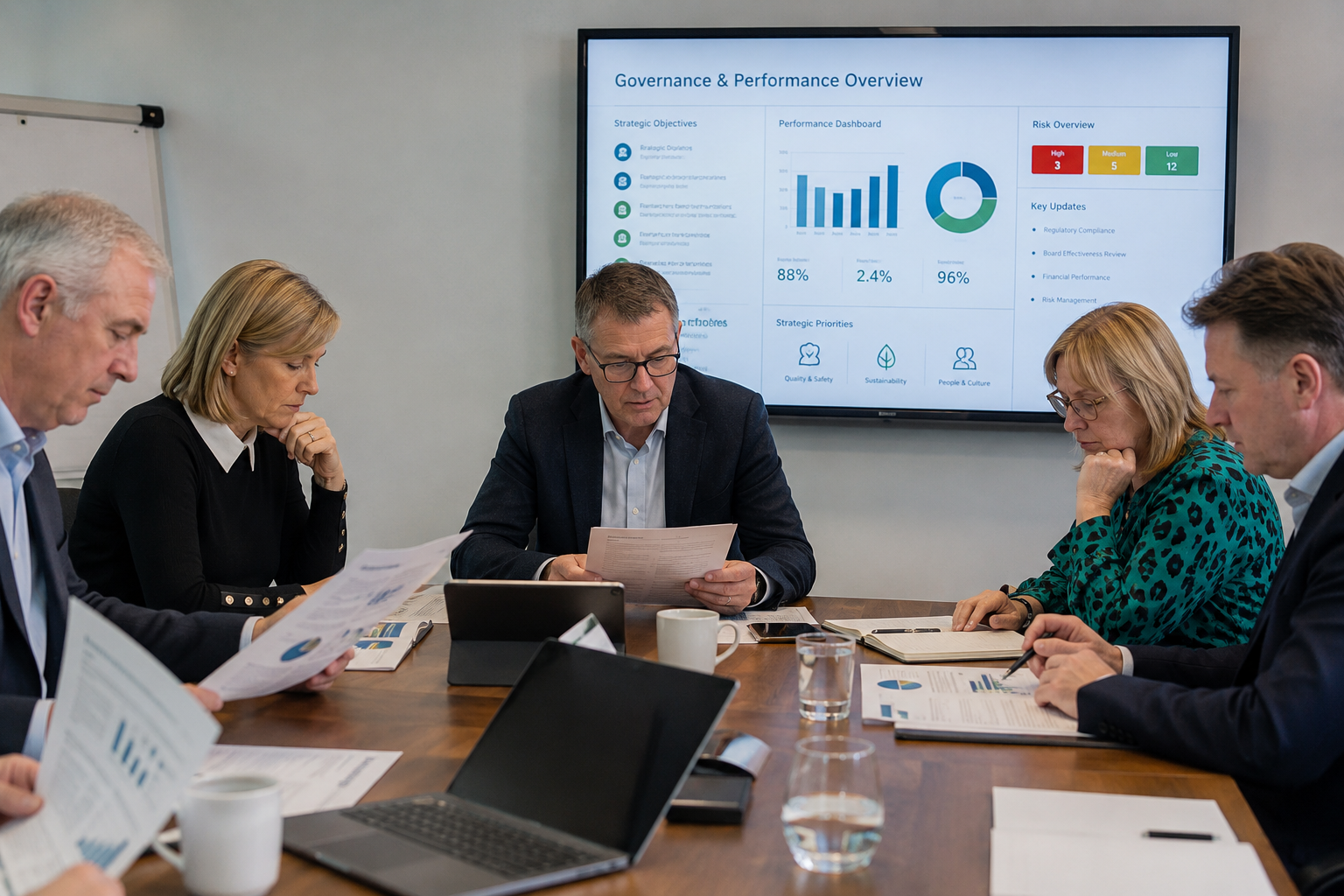
Boards rely on information to fulfil their responsibilities effectively.
Strategic decisions, risk oversight, performance monitoring and governance responsibilities all depend on the quality of information presented to directors. When information is accurate, timely and reliable, boards are better equipped to make informed decisions and provide effective oversight.
However, information integrity is often overlooked until problems emerge.
Incomplete reporting, inaccurate data, inconsistent performance measures and delayed information can all affect decision-making quality. Over time, these issues can weaken governance, increase risk and reduce organisational effectiveness.
Strong information integrity and reporting practices help ensure boards have the insights required to guide organisations confidently and responsibly.
For a broader understanding of governance and strategic leadership, see our guide to Strategic Management & Governance for SMEs.
Information Quality Influences Decision Quality
Boards can only make decisions based on the information available to them.
If reports contain inaccuracies, omit important details or present information inconsistently, directors may reach conclusions that do not reflect organisational reality. Even highly experienced boards can struggle when information quality is poor.
Effective reporting provides a clear and balanced picture of organisational performance. It highlights both achievements and challenges while ensuring directors receive the information needed to evaluate risks, opportunities and strategic priorities.
High-quality information supports better governance because it allows boards to focus on meaningful issues rather than questioning the reliability of the data itself.
Leaders interested in governance effectiveness may also find our article Governance vs Management: Clear Distinctions helpful.
Information Integrity Requires Consistency
Reliable reporting depends on consistency.
Performance indicators, financial measures and operational data should be collected and reported using clearly defined methods. Frequent changes to reporting formats or inconsistent measurement approaches can make it difficult for boards to identify trends and evaluate progress accurately.
Consistency also improves accountability because leadership teams and directors develop a shared understanding of how performance is measured and reported.
Over time, this creates greater confidence in organisational information and strengthens decision-making processes.
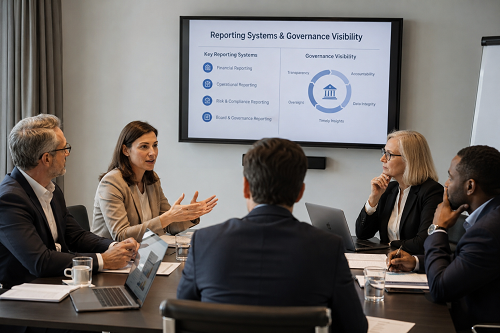
Timely Reporting Supports Effective Governance
Information is most valuable when it is available at the right time.
Boards that receive important information too late may struggle to respond effectively to emerging risks or changing circumstances. Delayed reporting can limit oversight and reduce the board’s ability to provide strategic guidance.
Effective governance frameworks establish clear reporting processes that ensure directors receive relevant information in a timely manner. This includes financial performance updates, risk reports, operational metrics and strategic progress reports.
Timeliness helps boards remain proactive rather than reactive.
Research from the Financial Reporting Council highlights the importance of accurate, transparent and timely reporting in supporting governance and board effectiveness.
Reporting Should Support Strategic Oversight
Board reporting should do more than provide data.
The most effective reports help directors understand what information means and how it relates to organisational objectives. Strategic context allows boards to focus on significant issues rather than becoming overwhelmed by excessive operational detail.
Reports should therefore support oversight, accountability and strategic discussion. They should help directors identify emerging trends, assess risks and evaluate whether the organisation remains aligned with its objectives.
Leaders focused on risk and governance may also find our article Risk Oversight Frameworks for SMEs helpful.

Final Thoughts
Information integrity is a fundamental component of effective governance.
Boards depend on accurate, timely and reliable information to fulfil their responsibilities and guide organisations successfully. When reporting processes are strong, decision-making improves, accountability strengthens and governance becomes more effective.
For SMEs, information integrity is not simply an administrative issue. It is a strategic capability that supports better leadership, stronger oversight and sustainable business performance.
As organisations grow and governance requirements become more sophisticated, investing in reporting quality often creates significant long-term value.
Need Support Strengthening Governance and Reporting?
Many governance challenges originate not from poor intentions but from insufficient information. Boards and leadership teams need reliable reporting systems that provide clarity, transparency and meaningful insight into organisational performance.
An experienced governance advisor can help review reporting frameworks, strengthen information integrity and improve board-level oversight. The objective is to ensure directors have the information required to make confident, informed decisions.
Learn more about our Business Consulting services and discover how we help SME owners, boards and leadership teams strengthen governance, improve reporting and achieve sustainable long-term success.
FREQUENTLY ASKED QUESTIONS
What is information integrity in governance?
Information integrity refers to the accuracy, consistency, reliability and completeness of information used to support governance decisions. Boards depend on trustworthy information to evaluate organisational performance, monitor risks and oversee strategy effectively. Strong information integrity reduces errors, improves accountability and enables leaders to make informed decisions with greater confidence and effectiveness.
Why is board reporting important?
Board reporting is important because it provides directors with the information required to oversee organisational performance and fulfil governance responsibilities. Effective reports help boards monitor strategic progress, identify emerging risks, assess financial results and evaluate operational performance. High-quality reporting supports informed decision-making, accountability and effective organisational oversight at every level.
What makes a good board report?
A good board report provides accurate, timely and relevant information that supports strategic decision-making. It focuses on key performance indicators, significant risks, financial outcomes and organisational priorities. Effective reports are clear, concise and consistent, enabling directors to understand important issues quickly and make informed governance decisions confidently.
How does poor reporting affect governance?
Poor reporting can significantly weaken governance by providing incomplete, inaccurate or outdated information. Directors may struggle to identify risks, monitor performance or evaluate strategic initiatives effectively. As a result, decision-making quality declines, accountability may be reduced and organisations become more vulnerable to operational, financial and governance failures.
How can SMEs improve board reporting?
SMEs can improve board reporting by establishing consistent reporting frameworks, improving data accuracy and focusing on information relevant to governance oversight. Clear performance measures, regular reporting schedules and reliable data collection processes help ensure reports support strategic decision-making, strengthen accountability and enhance overall governance effectiveness within organisations.