

Business owners often understand that consultants help organisations improve performance, but they are not always clear about what consulting services actually involve.
The answer depends on the needs of the business. Some organisations require support with growth planning, while others need assistance improving profitability, operational efficiency or leadership effectiveness. The most effective consulting engagements focus on identifying challenges, evaluating opportunities and implementing practical improvements that deliver measurable value.
Rather than offering generic advice, consultants work with business owners to understand the specific circumstances of the organisation and develop recommendations aligned with its objectives.
For a broader understanding of consulting support, see our guide to Small Business Consulting for SMEs.
Strategic Planning and Business Growth
One of the most common areas of consulting support involves strategy.
Business owners frequently become absorbed in daily operational demands, leaving limited time to focus on long-term planning. Consultants help organisations step back, assess their current position and evaluate future opportunities.
These discussions often focus on growth objectives, market opportunities, competitive positioning and resource allocation. By creating greater strategic clarity, businesses are often better positioned to make informed decisions and pursue growth more effectively.
Business owners interested in understanding the foundations of consulting may also find our article What Is Small Business Consulting? useful.
Improving Operational Performance
Operational challenges can limit growth even when demand for products or services remains strong.
Inefficient processes, unclear workflows and communication gaps often reduce productivity and create unnecessary costs. Consultants help identify these issues by reviewing how the organisation operates and where improvements can be made.
The objective is not simply to change processes for the sake of change. It is to improve efficiency, reduce waste and create systems that better support business performance.
In many SMEs, relatively small operational improvements can produce significant long-term benefits.
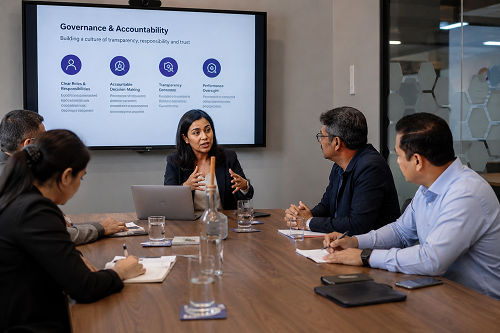
Leadership and Organisational Development
As organisations grow, leadership requirements often change.
Business owners who were once involved in every aspect of the business may need to delegate responsibilities, develop managers and strengthen accountability throughout the organisation. These transitions can be challenging without the right support.
Consultants frequently assist with organisational development by helping businesses improve communication, leadership capability and decision-making structures. These improvements often contribute to stronger performance and more sustainable growth.
Research from the Irish Management Institute highlights the importance of leadership development and organisational effectiveness in supporting long-term business success.
Financial Performance and Profitability
Consulting services also commonly focus on financial performance.
Profitability challenges are not always caused by insufficient sales. Pricing structures, operational inefficiencies, poor resource allocation or weak performance management can all influence financial outcomes.
Consultants help businesses identify the factors affecting profitability and develop practical strategies for improvement. These discussions often provide valuable insight into areas that may not be immediately obvious to business owners.
Business owners looking specifically at financial outcomes may also find our article How Small Business Consulting Improves Profitability helpful.

Final Thoughts
Small business consulting services can cover a wide range of areas, from strategic planning and operational improvement to leadership development and financial performance. The exact focus depends on the needs of the organisation and the challenges it is facing.
The most effective consultants do more than provide recommendations. They help business owners evaluate opportunities, identify obstacles and create practical solutions that support long-term success. As businesses grow, this external perspective often becomes increasingly valuable.
For many SMEs, consulting services provide access to expertise, objectivity and structured problem-solving that helps improve performance and strengthen the foundations for future growth.
Need an Independent Perspective?
Every business reaches points where external expertise can provide valuable insight. Whether the challenge involves growth planning, operational performance, leadership development or profitability, objective perspective can help uncover opportunities that may otherwise remain hidden.
An experienced consultant can help assess the current state of the business, identify areas for improvement and develop practical recommendations that support measurable results. Effective consulting is not about creating complexity. It is about helping business owners achieve greater clarity, stronger performance and sustainable growth.
Learn more about our Business Consulting services and how they help SME owners improve profitability, strengthen operations and prepare for future opportunities.
FREQUENTLY ASKED QUESTIONS
What are small business consulting services?
Small business consulting services provide expert guidance, strategic advice and practical solutions to help organisations improve performance, overcome challenges and achieve sustainable growth. Consultants evaluate business needs, identify improvement opportunities and recommend effective strategies that support better decision-making, operational efficiency, profitability and long-term business success.
What areas can a consultant help with?
Consultants can assist businesses in several key areas, including strategy development, operations improvement, leadership development, organisational effectiveness, financial performance and growth planning. They provide professional insights, identify areas requiring attention and help business owners implement practical solutions that improve efficiency, productivity and overall organisational performance.
How do consultants improve business performance?
Consultants improve business performance by analysing current processes, identifying inefficiencies and assessing opportunities for improvement. They provide expert recommendations, develop practical strategies and support implementation of changes that enhance productivity, reduce challenges, improve decision-making and help businesses achieve measurable results and sustainable growth.
Are consulting services suitable for established businesses?
Yes, consulting services are highly beneficial for established businesses. As organisations grow, they may experience new operational, leadership, financial or strategic challenges. Consultants provide an external perspective, identify improvement areas and offer professional guidance to help businesses adapt, remain competitive and continue achieving growth objectives.
How do I know if my business needs consulting support?
Your business may need consulting support if growth has become challenging, performance has declined, profitability requires improvement or important decisions need expert guidance. Consultants help identify underlying issues, develop effective solutions and provide strategies that strengthen operations, improve efficiency and support future business success.