

Selecting an executive coach is an important leadership decision.
The relationship often involves discussing sensitive challenges, evaluating significant decisions and exploring areas of leadership development that can influence both personal effectiveness and organisational performance. As a result, choosing the right advisor requires careful consideration.
While qualifications and credentials may play a role, they are rarely the only factors that determine whether a coaching relationship will be successful. Senior leaders often benefit most from advisors who combine experience, credibility and the ability to challenge thinking constructively.
Understanding what to look for can help executives identify a coaching relationship that delivers genuine value.
For a broader understanding of leadership coaching and executive development, see our guide to Executive Coaching for Senior Leaders.
Experience Matters, But Relevance Matters More
Business leaders are often drawn to advisors with impressive credentials and extensive experience.
While experience is important, relevance is equally valuable. An executive coach should understand the realities of leadership and the challenges associated with organisational growth, stakeholder management and decision-making.
Coaches who have worked closely with senior leaders are often better positioned to understand the pressures executives face. They can ask more insightful questions, provide more meaningful challenge and help leaders evaluate complex situations more effectively.
The objective is not to find someone who has experienced every situation personally. It is to find an advisor capable of helping leaders navigate those situations successfully.
Executives who are exploring coaching for the first time may also find our article What Is Executive Coaching? useful.
Trust Is Essential
The quality of the coaching relationship often determines the quality of the outcomes.
Executives need to feel comfortable discussing challenges openly, exploring uncertainties and examining leadership behaviours honestly. This level of openness is difficult to achieve without trust.
A strong advisor creates an environment where conversations remain confidential, objective and focused on development. Trust encourages leaders to engage more fully in the coaching process and often leads to more meaningful insights.
Without trust, coaching conversations tend to remain superficial and the value of the engagement may be limited.
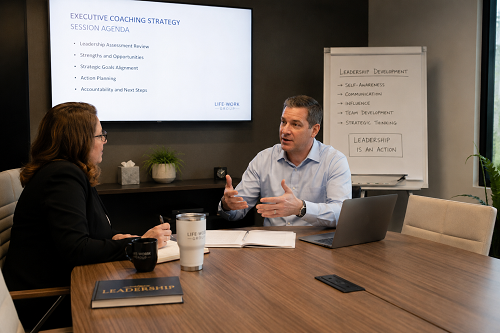
A Good Coach Challenges Constructively
Some leaders mistakenly assume coaching should always be supportive.
Support is important, but effective coaching also involves challenge. A coach should be willing to question assumptions, encourage deeper thinking and help leaders examine issues from different perspectives.
Constructive challenge often leads to greater self-awareness and better decision-making. It helps executives identify blind spots that may otherwise remain unnoticed and encourages more objective evaluation of opportunities and risks.
The most valuable coaches balance support with challenge, creating conversations that promote genuine development rather than simple reassurance.
Research from the European Mentoring and Coaching Council highlights the importance of reflective practice and constructive challenge in professional coaching relationships.
The Best Coaching Relationships Focus on Long-Term Development
Executive coaching should not be viewed solely as a solution to immediate problems.
While coaching can help leaders address specific challenges, the greatest value often comes from developing leadership capability over time. Strong coaching relationships focus on sustainable improvement rather than quick fixes.
Executives who invest in long-term development are often better prepared for future responsibilities and organisational challenges. This broader perspective helps ensure coaching continues to deliver value beyond any individual issue.
Leaders seeking to strengthen their leadership influence may also find our article Executive Presence Development helpful.

Final Thoughts
Choosing the right executive coach involves far more than reviewing qualifications or experience. The most effective coaching relationships are built on trust, constructive challenge and a genuine understanding of leadership.
Senior leaders often benefit from advisors who can provide objective perspective, encourage deeper thinking and support long-term leadership development. These qualities frequently have a greater impact than credentials alone.
For executives in Dublin and across Ireland, the right coaching relationship can strengthen decision-making, improve leadership effectiveness and enhance organisational impact. Investing time in selecting the right advisor is therefore an important step towards achieving meaningful and lasting development.
Need an Independent Perspective?
Leadership can be demanding, particularly when important decisions affect employees, stakeholders and organisational performance. Having access to a trusted advisor can provide valuable perspective during periods of growth, change and increased responsibility.
An experienced executive coach can help challenge assumptions, strengthen leadership capability and provide confidential support tailored to the realities of senior leadership. The objective is to help leaders perform more effectively while continuing to develop their long-term leadership potential.
Learn more about our Business Mentoring services and how they support senior leaders in strengthening leadership effectiveness, improving decision-making and achieving sustainable professional growth.
FREQUENTLY ASKED QUESTIONS
How do I choose the right executive coach?
Choosing the right executive coach involves evaluating their leadership experience, coaching approach and ability to challenge your thinking constructively. The best coaches create a confidential environment where honest conversations can occur while helping leaders develop practical strategies to improve performance, decision-making, communication and long-term leadership effectiveness.
Are coaching qualifications important?
Coaching qualifications can provide reassurance that a coach has received formal training and follows recognised standards. However, qualifications alone do not guarantee effectiveness. Leaders should also consider the coach’s experience, credibility, communication style and ability to build trust while supporting meaningful leadership growth and professional development.
Should an executive coach have business experience?
Business experience is often valuable because it helps coaches understand the realities of leadership, organisational challenges and strategic decision-making. While coaching skills remain essential, many executives prefer working with coaches who have firsthand experience of senior leadership responsibilities and can relate to complex business situations.
How long should an executive coaching relationship last?
The length of an executive coaching engagement depends on the leader’s goals, challenges and development needs. Some coaching relationships last a few months to address specific objectives, while others continue for longer periods to support ongoing leadership growth, accountability, performance improvement and organisational effectiveness over time.
What results can leaders expect from executive coaching?
Executive coaching can help leaders improve self-awareness, communication, confidence and decision-making abilities. Many executives also develop stronger leadership presence, better stakeholder relationships and greater resilience when managing complex responsibilities. The specific outcomes depend on individual goals, commitment to the process and the coaching relationship itself.