
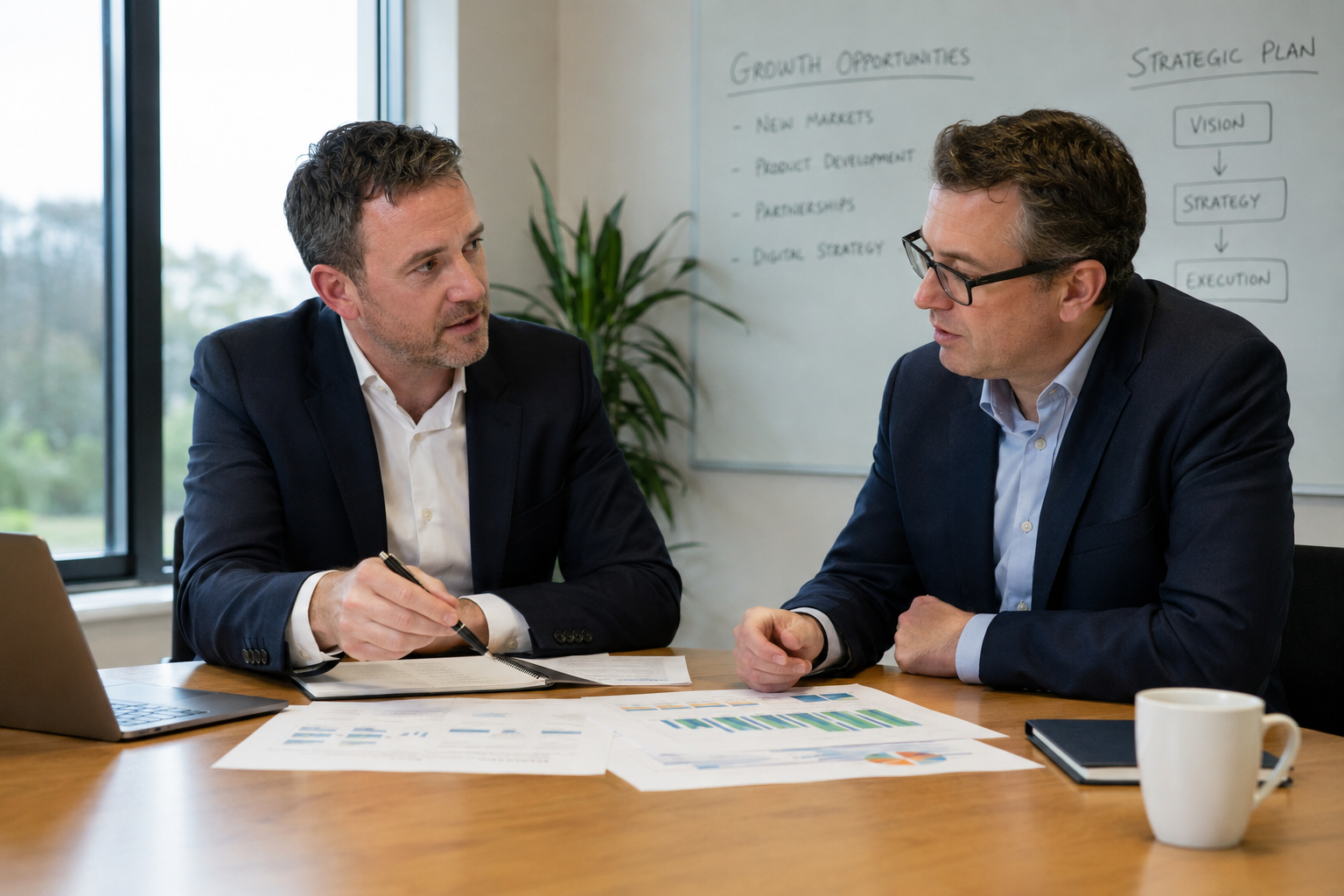
Growth does not happen simply because a business wants it to.
Sustainable growth requires deliberate action, strategic thinking and a clear understanding of where future opportunities exist. This is where business development plays an important role.
Business development is the process of identifying, creating and pursuing opportunities that help an organisation grow. While sales often focus on generating immediate revenue, business development takes a broader view by examining partnerships, markets, customer relationships, strategic initiatives and long-term growth opportunities.
For SMEs, effective business development helps create a structured approach to expansion while ensuring growth remains aligned with the organisation’s capabilities and objectives.
For a broader understanding of growth planning and strategic expansion, see our guide to Business Development for SMEs.
Business Development Is About Creating Future Opportunities
One of the most common misconceptions is that business development and sales are the same thing.
While the two functions are closely related, business development generally focuses on creating the conditions that support future growth. This may involve identifying new markets, developing strategic partnerships, strengthening customer relationships or evaluating opportunities for expansion.
The emphasis is often on long-term value rather than immediate transactions.
Successful business development helps organisations create a pipeline of opportunities that contribute to sustainable growth over time. Without this forward-looking approach, businesses can become overly dependent on existing customers, products or markets.
Business owners interested in understanding specialist growth support may also find our article Business Development Consultant: What Do They Do? helpful.
Growth Requires Strategy
Many businesses pursue growth without a clearly defined plan.
New opportunities emerge, customer demand increases or market conditions change, leading organisations to expand reactively rather than strategically. While this can sometimes produce short-term results, it often creates challenges as complexity increases.
Business development introduces structure to growth. It encourages organisations to evaluate opportunities carefully, assess risks and ensure expansion aligns with available resources and long-term objectives.
This strategic approach often helps businesses avoid costly mistakes while improving the likelihood of sustainable success.

Strong Relationships Support Growth
Business development is not solely about finding new customers.
Relationships often play a significant role in business growth. Strategic partnerships, professional networks, suppliers and existing clients can all contribute to future opportunities. Organisations that invest in these relationships are frequently better positioned to identify opportunities and respond to market changes.
This relationship-focused approach helps businesses create resilience while expanding their access to potential growth channels.
Strong relationships also improve credibility, which can become increasingly important when entering new markets or pursuing larger opportunities.
Research from the Small Firms Association highlights the importance of strategic planning, networking and business relationships in supporting SME growth and long-term development.
Business Development Supports Profitability
Growth alone is not always a measure of success.
Businesses can increase revenue while simultaneously reducing profitability if growth is poorly managed. Effective business development focuses on opportunities that contribute to both expansion and financial performance.
This requires careful consideration of resource requirements, operational capacity and long-term sustainability. The objective is not simply to grow but to grow in a way that strengthens the organisation.
Business owners focused on financial outcomes may also find our article How Business Development Drives Profitability helpful.

Final Thoughts
Business development is far more than sales activity or short-term revenue generation. It is a strategic process that helps organisations identify opportunities, strengthen relationships and create sustainable pathways for growth.
For SMEs, business development provides a framework for evaluating opportunities and ensuring expansion remains aligned with business objectives. By combining strategic thinking with practical action, organisations can improve their ability to grow while maintaining profitability and operational effectiveness.
As markets become increasingly competitive, businesses that invest in structured business development are often better positioned to identify opportunities, respond to change and achieve long-term success.
Ready to Strengthen Your Growth Strategy?
Business growth requires more than ambition. It requires clarity, planning and the ability to identify opportunities that align with your organisation’s capabilities and long-term objectives.
An experienced business advisor can help evaluate growth opportunities, strengthen strategic planning and create practical development initiatives that support sustainable expansion. The right support helps businesses grow with purpose rather than simply reacting to market conditions.
Learn more about our Business Consultant services and discover how we help SME owners identify opportunities, improve performance and achieve sustainable long-term growth.
FREQUENTLY ASKED QUESTIONS
What is the meaning of business growth?
Business growth is the process of identifying, developing and pursuing opportunities that help an organisation increase revenue, improve performance and achieve long-term objectives. It involves strategic activities that support sustainable expansion, stronger market positioning and increased organisational capability. Effective business growth helps companies adapt, compete and succeed in changing environments.
Is business expansion the same as sales?
No. Sales focuses on generating revenue through customer transactions and converting prospects into paying customers. Business expansion takes a broader strategic approach by identifying growth opportunities through partnerships, market development, customer relationships and innovation. While sales contributes to growth, business expansion encompasses multiple activities that support long-term organisational success.
Why is business expansion important for SMEs?
Business expansion helps SMEs identify new opportunities, reduce dependence on existing customers and strengthen long-term sustainability. By exploring new markets, services, partnerships and revenue streams, businesses can improve resilience and competitiveness. Effective expansion planning also supports strategic growth, helping organisations adapt to changing market conditions successfully.
What activities are included in business growth?
Business growth includes a range of activities designed to create new opportunities and improve performance. These activities may involve market expansion, partnership development, customer relationship management, strategic planning, product diversification and identifying additional revenue streams. Together, these efforts support sustainable growth and strengthen long-term business success.
How does strategic development improve profitability?
Strategic development improves profitability by helping organisations focus resources on opportunities that generate sustainable returns. Through effective planning, market analysis and performance evaluation, businesses can identify areas for growth while reducing inefficiencies. This balanced approach supports revenue generation, stronger decision-making and improved long-term financial performance and stability.